
Four New Labour Codes: A Historic Reform
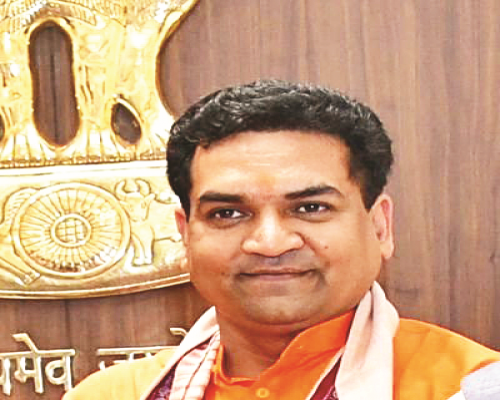
KAPIL MISHRA
India took a decisive leap on 21 November 2025, one that has been delayed for over seven decades. With the rollout of the four new Labour Codes, the Modi Government has finally swept away the tangled web of 29 outdated, colonial-era laws written in the 1930s to 1950s. Those laws belonged to a different epoch, one far removed from a ₹30-trillion economy aspiring to become Viksit Bharat by 2047. In one stroke, the old system was replaced with a transparent, digital, pro-worker, pro-industry framework designed for ambition, mobility and dignity. As the Prime Minister often says, “Naye Bharat ka shramik majboor nahin, majboot hai.”
For the first time, India’s labour landscape speaks to the new age. Wages now have one national definition, ending decades of confusion that let arbitrary payments and exploitation thrive. This single change is a historic reform carried out under the Code on Wages, 2020, which unified four earlier wage-related laws associated with local, outdated minimum wages regimes for every state. Minimum wages apply to every worker across sectors, overtime wages are no longer ambiguous, and gender discrimination is illegal. Full stop. Even transgender workers stand protected in law. This is the dawn of transparent, just framework that gives workers the linked economic dues they deserve. And this, too, is where Modi’s governance philosophy comes alive: fairness, rules, fair outcomes, and a system that treats every worker with respect.
The reforms go far deeper than the headline change in how wages are defined. Code, 2020 is just one of four Codes. The health committees mandated in factories, mandatory fixed-term employment benefits, centralised social security authority, a universal social security fund, a green signal to gig and platform workers’ safety net, and a bold push for justice. Nayi shamilata under the Modi Government has always meant an India that protects the weakest and encourages the engines of working and business.
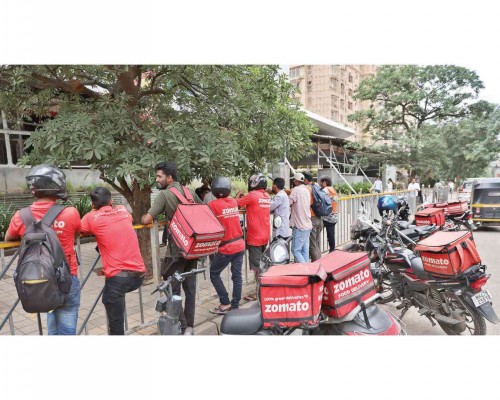
But perhaps the biggest shift is this: with the new Codes in place from 21 November 2025, India has become one of the first nations to bring gig and platform workers—delivery partners, cab drivers, app-based freelancers—into the formal safety net. A dedicated, modernised safety framework has replaced outdated laws from the 20th century that neither recognised nor supported them. India has now expanded family definitions for women employees reflect the contours of family in the 21st-century workforce. When a gig worker delivering food at midnight gets legal recognition and future protection, it signals a country whose development model includes everyone, not just the privileged few.
The gains of reforms are already visible in states that moved early. Gujarat recorded 13.36 per cent GSDP growth between 2022-23 and 2023-24, with manufacturing contributing an impressive 28.30 per cent, well above the national average.
Andhra Pradesh’s reforms helped create 1.3 lakh organised manufacturing jobs, the largest jump among all states. Uttar Pradesh added 1.5 lakh workers in the manufacturing sector last year. Rajasthan saw a reduction of 37 percent in fatal accidents at work, and Haryana’s women workforce has increased—with safer hours at night, simpler compliance rules and more flexibility.
These are not abstract numbers; these are lives. These are stories. They are outcomes that prove the Codes are not just laws; they are catalysts. They make business easier, labour parity smoother, and our pathways fairer.
In the new labour regime, haar parivartan ka kendr mein kaam karne wala insaan hai. Whether a worker or an employer, the goal is to nurture trust. When trust rises, productivity rises. When transparency rises, disputes fall. When compliance becomes easier, businesses grow.
The Prime Minister has long stood for ensuring proper safety and dignity for workers. The Codes allow industries across India to operate with reduced paperwork, single-window digital clearances, and easy compliance norms. A much-needed reform in high-risk sectors such as mining and construction has raised the bar for workplace health and safety; dangerous activities no longer remain beyond the norm. Even gig workers are now involved in hazardous activity if something goes wrong. The days of “adjust kar lo” workplace culture are over. The law now recognises the inherent dignity of labour.
Politically, this moment marks a clear end to a fractured past. PM Modi’s governance has moved India from an age of obstruction to an age of construction. Labour reforms have always been the hardest part of India's policy process. Complexities, pressure groups and inertia paralysed governments for decades. Yet, the Codes are a demonstration of India's new administrative will—clean, simplified, digitised, forward-looking. They show a State finally aligning India’s labour systems with modern global standards. Under the new Codes, India gains something priceless: the world’s confidence. With labour laws that are simple, predictable and uniform, investors feel reassured, MSME employers who were earlier overwhelmed by 29+ laws now feel empowered, and young India sees a future where enterprise is no longer trapped in red tape and anxiety. This is Bharat ka naya shram kanoon, where majdoor aur rozgaar dono surakshit hain.
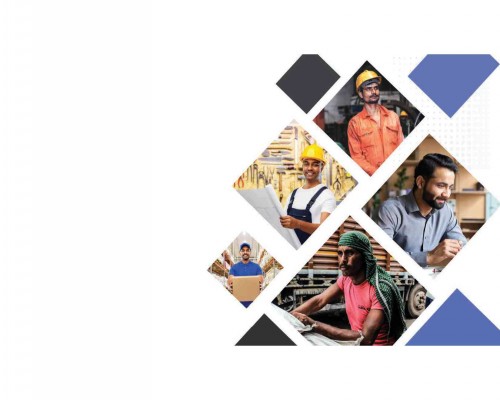
In the end, the new Codes must be seen as samagra parivartan—a holistic reform touching wages, safety, social security, ease of doing business, and workers' dignity.
This is not just an economic reform. It is the heartbeat of a rising nation. It is about recognising every worker’s dreams, ensuring every business grows faster, and every aspiration finds a fair chance.