
India and Israel Poised for Major Announcement in Sensitive Defence Technologies

India and Israel are expected to make a significant joint announcement in the field of sensitive defence technologies, marking a new phase in their strategic partnership. The development comes at a time when global security challenges are intensifying and nations are strengthening defence preparedness through advanced technological cooperation.
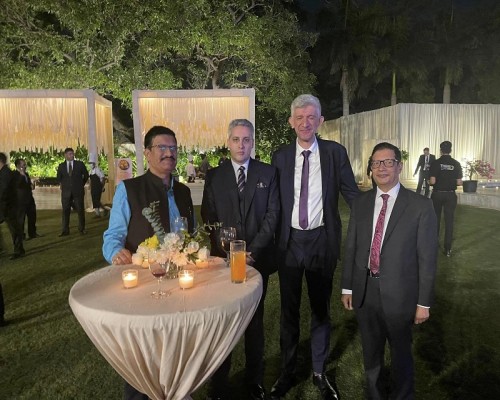
The anticipated announcement is likely to coincide with the high-level diplomatic engagements between the two countries. According to Reuven Azar, discussions between the leadership of both nations have reached an advanced stage, and concrete outcomes in the defence sector are expected. He indicated that the cooperation would extend beyond conventional defence equipment and include highly sensitive and advanced technological domains.
The visit of Prime Minister Narendra Modi to Israel is being viewed as a pivotal moment in bilateral relations. This visit follows his earlier landmark visit in 2017—the first by an Indian Prime Minister to Israel—which significantly elevated strategic ties. Since then, defence, agriculture, water management, cyber security, and innovation have become key pillars of cooperation.
Ambassador Azar noted that both countries are currently working on several crucial issues aimed at expanding the depth and scope of their partnership. He emphasized that the relationship has undergone a transformational shift in recent years, with defence collaboration emerging as one of its most dynamic components. The upcoming engagement is expected to further formalize a five-year roadmap that outlines future cooperation priorities.
India and Israel share a robust defence relationship built on mutual trust and strategic convergence. Israel has consistently been among India’s leading defence suppliers, providing advanced systems in areas such as missile technology, surveillance equipment, unmanned aerial vehicles, and electronic warfare systems. The partnership has steadily evolved from a buyer-seller framework to one emphasizing joint development, technology transfer, and co-production.
Particular attention is being given to sensitive defence technologies that require high levels of confidentiality, trust, and technical expertise. Officials suggest that collaboration in these areas will include both government-to-government arrangements and partnerships involving private-sector entities. The objective is to enhance indigenous capability while maintaining strict standards of security and operational integrity.
Recent years have witnessed significant procurement and modernization initiatives. A notable example includes decisions related to advanced fighter aircraft and missile systems to strengthen India’s air defence capabilities. The Indian armed forces have also engaged with Israeli defence manufacturers such as Rafael Advanced Defense Systems for sophisticated weaponry and precision systems. These engagements underscore Israel’s position as a reliable defence partner for India.
Strategic dialogues between defence ministries of both nations have also become institutionalized through regular high-level meetings. During these discussions, long-term collaboration frameworks are reviewed, including joint research, co-development of next-generation systems, and integration of advanced precision-guided munitions. There is a shared emphasis on ensuring that defence cooperation contributes to broader strategic stability and technological advancement.
The evolving geopolitical landscape, including emerging security challenges in Asia and the Middle East, has further reinforced the importance of this partnership. Both India and Israel recognize the value of combining technological innovation with strategic alignment to address contemporary threats. Their cooperation is no longer confined to transactional exchanges but is increasingly driven by shared research initiatives and technological innovation ecosystems.
Experts observe that India’s defence modernization strategy aligns closely with its broader objective of strengthening domestic manufacturing capabilities under self-reliance initiatives. Israeli firms, known for their cutting-edge research and rapid innovation cycles, are well-positioned to collaborate with Indian defence public sector undertakings and private manufacturers. This synergy is expected to enhance production efficiency, accelerate technology absorption, and build long-term capability within India.
Beyond hardware procurement, cooperation is expanding into domains such as cyber defence, artificial intelligence in military applications, border surveillance technologies, and counter-drone systems. These sectors represent the future of defence preparedness and are central to safeguarding national security interests.
The anticipated announcement in sensitive defence technology is therefore seen as more than a symbolic gesture. It represents the maturation of a partnership that has steadily grown in trust and strategic depth over the past decade. Analysts believe that the new initiatives will reinforce India-Israel ties as one of the most stable and forward-looking bilateral relationships in the global defence arena.
As both nations continue to navigate complex security environments, their collaboration demonstrates how strategic partnerships can evolve to address emerging threats through innovation, mutual respect, and long-term planning. The expected developments in defence technology are poised to further strengthen this alliance, underscoring the enduring strategic bond between India and Israel.