
Lay-off under the Industrial Relations Code, 2020 and Its Applicability to Factories, Mines and Plantation

The concept of lay-off has been recognized in Indian labour law for a long time. Earlier, the rules relating to lay-off were mainly governed by the Industrial Disputes Act, 1947.
However, with the introduction of the Industrial Relations Code, 2020 with effect from 21st November,2025 , the laws relating to industrial disputes, trade unions, lay-off, retrenchment, and closure have been consolidated into a single modern law i.e. Industrial Relations Code, 2020
The Industrial Relations Code provides specific provisions regarding lay-off. Important sections related to lay-off include:
- Section 2(t) – Definition of lay-off
- Section 65 – Industrial establishments to which the provisions apply
- Section 67 – Lay-off compensation
- Section 68 – To maintain muster-rolls of workers
- Section 69 –Situations where workers are not entitled to compensation
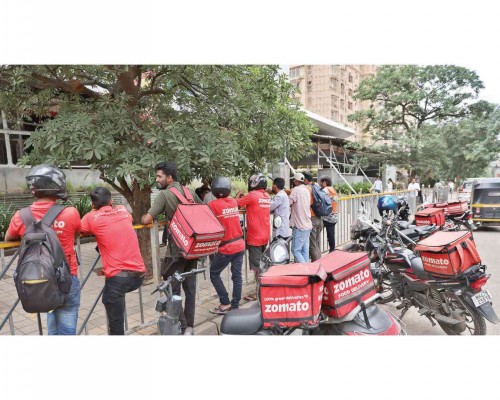
These provisions are also important for modern industries such as IT companies, call centres, and e-commerce businesses where temporary stoppage of work may occur, and the management may decide to lay off their workforce due to technological changes, including the adoption of artificial intelligence, or other operational reasons. However, it is advisable that before taking a decision to effect a lay-off, the employer should obtain legal advice from a labour law expert to avoid penalties as provided under Section 86 of the Industrial Relations Code, 2020.
Definition of Lay-off {Section 2(t)}
Under Section 2(t) of the Industrial Relations Code, 2020, lay-off means the failure, refusal, or inability of an employer to provide work to a worker
whose name is on the muster rolls of the industrial establishment and who has not been retrenched.
This situation may arise due to reasons such as:
- Shortage of power
- Shortage of raw materials
- Accumulation of stock
- Breakdown of machinery
- Natural calamity
- Any other reason beyond the control of the employer From this definition, some important points can be understood:
- There must be an employer-worker relationship.
- The worker’s name must be on the muster roll of the establishment.
- The employer is unable to provide work temporarily.
- The employment relationship continues, even though the worker is temporarily without work.
Applicability of Lay-off Provisions (Sections 67 to 69)
The applicability of lay-off provisions under the Industrial Relations Code depends mainly on two factors:
- Type of industrial establishment
- Number of workers employed
Meaning of Industrial Establishment (Section 65)
According to the explanation under Section 65, the term industrial establishment includes:
-
- A factory as defined under the Factories Act, 1948 (Section 2(m))
- A mine as defined under the Mines Act, 1952 (Section 2(1)(j))
- A plantation as defined under the Plantations Labour Act, 1951 (Section 2(f))
Lay-off Based on Number of Workers
If an establishment has less than 50 workers, the lay-off provisions under the Industrial Relations Code do not apply.
In such establishments:
-
- Section 67 (Lay-off compensation) – Not applicable
- Section 68 (Duty to maintain muster rolls) – Not applicable
- Section 69 (Worker not entitled to compensation in certain cases) –
Not applicable
Therefore, the employer may regulate employment according to the employment contract or other applicable labour laws.
If an establishment:
-
- Falls within the definition of factory, mine, or plantation, and
- Employs 50 to 299 workers
- If any industrial establishment does not fall within definition of factory, mine or plantation {Section 65(2)} , may do layoff without permission as well as without following Section 67 t0 69
Then the following rules apply:
-
- Sections 67 to 69 of the Industrial Relations Code apply.
- However, prior permission from the government is not required for lay-off.
In this situation, the employer may lay off workers but must comply with:
-
- Payment of lay-off compensation as Section 67
- Maintenance of muster rolls ( Section 68 )
- Workers are not entitled for compensation in certain cases ( Section 69)
- Other procedural requirements under the Code
- Establishments with 300 or More Workers
If an industrial establishment employs 300 or more workers, special provisions apply.
These are contained in Chapter X of the Industrial Relations Code, which deals with lay-off, retrenchment, and closure.
In particular:
-
- Section 77 and Section 78 regulate lay-off in such establishments.
In these cases:
Prior permission of the Appropriate Government is mandatory before effecting a lay-off.
However, there are certain exceptions where permission is not required, such as:
-
- Shortage of power
- Natural calamity
- In case of mines: fire, flood, explosion, or presence of excess inflammable gas
If the employer lays off workers without obtaining the required permission, the lay-off will be considered illegal.
Compensation : 50% of the total of the basic wages and dearness allowance ( Section 67 )
Lay-off Applicability at a Glance
|
Number of Workers |
Government
Permission |
Applicable Law |
|
Less than 50 Seasonal Establishment (no minimum worker threshold) |
Not required |
Lay-off provisions not applicable ( Section 65) |
|
50 – 299 workers in Factory, Mine, or Plantation covered under Section 65(2) |
Not required |
Sections 67 to 69 apply |
|
300 or more Factory , mine & Plantation Section 65(2) Exception : Shortage of power, Natural calamity In case of mines: fire, flood, explosion, or presence of excess inflammable gas |
Required ( Exception -not required ) |
Chapter X (Sections 77– 78) & Section 67 to 69 apply |
Conclusion
Therefore, if an industrial establishment falls within the definition of factory, mine, or plantation and employs more than 50 but less than 300 workers, the employer does not need prior permission from the government to lay off workers, although the employer must follow the compensation and procedural provisions under the Industrial Relations Code. However, if the industrial establishment employs 300 or more workers, the special provisions under Chapter X apply, and the employer must obtain prior permission from the appropriate government before implementing a lay-off, except in certain emergency situations such as shortage of power, natural calamity, and in case of mines: fire, flood, explosion, or presence of excess inflammable gas where prior permission is not required for effecting lay-off in the Industrial establishments.