
Mojtaba Khamenei Named Iran’s New Supreme Leader After Ayatollah Ali Khamenei’s Death
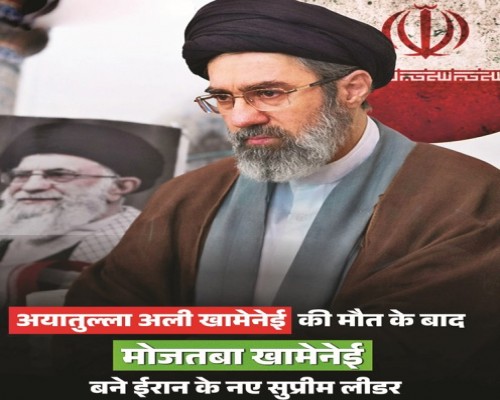
Iran has entered a new and highly consequential political chapter following the death of its long-serving Supreme Leader, Ayatollah Ali Khamenei, with his son, Mojtaba Khamenei, formally declared the country’s new Supreme Leader. The announcement marks one of the most significant leadership transitions in the Islamic Republic’s modern history and comes at a time of heightened regional instability and international scrutiny.
According to the report, 56-year-old Mojtaba Khamenei was selected by Iran’s Assembly of Experts, the constitutional body responsible for appointing the country’s highest religious and political authority. The decision was reportedly finalised after internal deliberations and has immediately placed Mojtaba at the centre of Iran’s political, military, and ideological command structure.
A Critical Transition During a Volatile Period
The succession has taken place amid intensifying military and diplomatic tensions involving Iran, the United States, and Israel. The leadership change is therefore being viewed not only as a domestic political event, but also as a development with far-reaching implications for the broader Middle East and international power dynamics.
The report indicates that soon after Mojtaba Khamenei’s elevation was announced, military pressure on Iran intensified, with references to renewed strikes and rising regional hostilities. This has added urgency to the transition and increased global attention on how the new Supreme Leader may shape Iran’s strategic direction.
Mojtaba Khamenei’s Rise to Power
Though Mojtaba Khamenei has maintained a relatively low public profile over the years, he has long been regarded as an influential figure within Iran’s political and clerical establishment. Observers have frequently pointed to his deep links with the country’s power centres, including ideological institutions, financial networks, and the Islamic Revolutionary Guard Corps (IRGC).
His emergence as Supreme Leader suggests continuity in the ideological framework established under his father, while also opening questions about how he may navigate Iran’s internal governance, economic pressures, and foreign policy challenges.
International Reactions Begin to Emerge
The leadership announcement has prompted early reactions from major global powers. Russian President Vladimir Putin reportedly extended congratulations to Mojtaba Khamenei on his appointment, reflecting Moscow’s continuing strategic ties with Tehran.
China also responded cautiously, describing the leadership change as an internal matter for Iran while emphasising the importance of respecting the country’s sovereignty, security, and territorial integrity. Such statements underline the careful diplomatic posture being adopted by nations with strong geopolitical interests in the region.
Iran Signals Continuity and Defiance
Iranian officials have framed the appointment as a moment of institutional stability rather than uncertainty. Senior figures in the Iranian establishment reportedly expressed confidence that the new leadership would strengthen national resilience and preserve the country’s political and ideological continuity.
Officials also signalled that Iran would continue to defend its sovereignty and security in the face of external pressure. Statements emerging after the transition suggested that Tehran remains committed to a posture of strategic resistance, particularly as tensions in the region remain unresolved.