
War in the Gulf: The Escalating Conflict Between the United States, Israel and Iran and Its Global Consequences
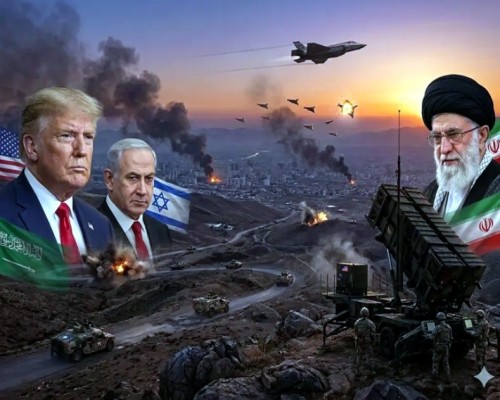
Military strikes, missile exchanges, rising civilian casualties and a fragile diplomatic landscape mark one of the most dangerous geopolitical confrontations in the Middle East in decades.
The Middle East has entered a new and volatile phase of conflict as tensions between the United States, Israel and Iran have escalated into open military confrontation. What began as a strategic standoff over Iran’s nuclear programme has now developed into a broader regional conflict involving airstrikes, missile attacks, retaliatory operations, mounting casualties and significant economic repercussions across the globe. The conflict reflects years of political mistrust, strategic rivalry and unresolved disputes surrounding nuclear development, regional influence and security concerns.
The immediate trigger for the current escalation occurred in late February 2026 when Israel launched a series of large-scale military strikes against targets inside Iran. Israeli authorities described the attacks as a “pre-emptive operation” aimed at preventing Iran from advancing its nuclear weapons capability and strengthening its ballistic missile arsenal. Israeli officials argued that intelligence assessments suggested Iran had accelerated its nuclear enrichment activities and was approaching a threshold that could significantly shorten the time required to develop a nuclear weapon.
The United States, which has long supported Israel’s security concerns regarding Iran, soon became directly involved in the military campaign. U.S. forces in the region provided logistical support and later conducted targeted strikes on strategic Iranian military infrastructure. American officials justified the intervention as part of a broader effort to deter Iranian aggression, defend regional allies and maintain stability in the Middle East.
However, Iran strongly rejected these accusations and characterized the attacks as acts of aggression and violations of international law. Iranian leaders insisted that their nuclear programme is intended for peaceful civilian purposes such as energy production and scientific research. In response to the Israeli and American strikes, Iran launched missile and drone attacks targeting Israeli cities and military installations as well as facilities in countries hosting U.S. military bases across the Gulf region.
The escalation has quickly transformed into one of the most serious military confrontations in the Middle East since the early 2000s. The exchange of attacks has intensified fears that the conflict could expand beyond the three principal actors and draw in other regional powers.
Origins of the Crisis
To understand the current war, it is essential to examine the long-standing tensions between Iran, Israel and the United States. Since the 1979 Iranian Revolution, relations between Washington and Tehran have remained hostile. The United States severed diplomatic relations with Iran after the revolution and imposed a series of economic sanctions over the following decades in response to Iran’s nuclear programme, missile development and regional activities.
Israel has been particularly concerned about Iran’s strategic ambitions. Israeli leaders have consistently warned that a nuclear-armed Iran would pose an existential threat to Israel’s security. As a result, Israel has repeatedly advocated for strict international measures to limit Iran’s nuclear capabilities and has at times conducted covert operations aimed at disrupting Iran’s nuclear programme.
Efforts to resolve the dispute through diplomacy have had mixed results. The Joint Comprehensive Plan of Action (JCPOA), signed in 2015 between Iran and major world powers, sought to limit Iran’s nuclear programme in exchange for sanctions relief. However, the agreement collapsed after the United States withdrew from the deal in 2018 and reinstated economic sanctions against Iran.
Following the collapse of the JCPOA, Iran gradually increased its uranium enrichment levels and expanded its nuclear infrastructure. International inspectors reported that Iran had accumulated large stockpiles of enriched uranium and installed advanced centrifuges capable of accelerating the enrichment process.
Over the past several years, diplomatic efforts to revive a nuclear agreement have repeatedly stalled. Negotiations mediated by European countries and regional intermediaries made limited progress but failed to bridge fundamental disagreements over sanctions relief, inspection regimes and restrictions on Iran’s missile programme.
The collapse of diplomatic negotiations created a climate of rising tension and uncertainty, eventually leading to the military confrontation that unfolded in early 2026.
The Israeli Offensive
Israel’s decision to launch strikes against Iran marked a dramatic escalation in the decades-long confrontation between the two countries. Israeli air and missile forces reportedly targeted a range of strategic facilities, including military bases, missile production sites and infrastructure believed to be linked to Iran’s nuclear programme.
Israeli officials claimed that the operation aimed to significantly degrade Iran’s military capabilities and delay its nuclear development. According to Israeli government statements, the strikes focused on command centers, air defence systems and facilities associated with missile development.
The Israeli leadership argued that waiting longer would have allowed Iran to strengthen its nuclear infrastructure beyond the point where conventional military action could effectively stop it.
The strikes represented one of the most direct attacks against Iranian territory by Israel in modern history, raising the stakes of the confrontation and making retaliation almost inevitable.
Death of Iran’s Supreme Leader
One of the most dramatic developments in the conflict was the death of Iran’s Supreme Leader, Ali Khamenei, who was killed during the initial wave of U.S.–Israeli airstrikes targeting senior Iranian leadership in Tehran.
According to multiple international reports and Iranian state media, Khamenei was killed on 28 February 2026 when a coordinated strike hit a high-level leadership meeting in the Iranian capital. The attack was part of a broader military campaign aimed at crippling Iran’s command structure and strategic military planning.
The Iranian government officially confirmed his death the following day and declared 40 days of national mourning, describing the killing as a “martyrdom” and a major crime committed by the United States and Israel.
Khamenei had ruled Iran since 1989, making him one of the longest-serving and most powerful political leaders in the Middle East. His death marks a historic turning point in Iranian politics and has created an immediate leadership vacuum at the highest level of the Islamic Republic.
Following the strike, Iranian authorities established a temporary leadership council to oversee state affairs until the country’s Assembly of Experts selects a new Supreme Leader.
The attack that killed Khamenei reportedly also resulted in the deaths of several senior Iranian military and political officials, including high-ranking commanders of the Iranian armed forces who were present during the meeting in Tehran.
The assassination of Iran’s top leader represents one of the most consequential targeted killings in modern geopolitical history. Analysts warn that the death of the Supreme Leader could significantly intensify the conflict, strengthen calls for retaliation within Iran, and reshape the political future of the country.
Across Iran, large public gatherings have been held both to mourn the longtime leader and to protest the foreign attack that killed him. At the same time, international reactions have been mixed, with many governments expressing concern that the killing of a sitting head of state could further escalate an already dangerous regional war.
Iran’s Retaliation
Iran responded swiftly to the Israeli and American attacks. Iranian forces launched waves of ballistic missiles and armed drones targeting Israeli cities and military bases. Air defense systems across Israel were activated to intercept incoming missiles, while emergency measures were implemented in major urban centers.
Iran also targeted military facilities linked to the United States in the Gulf region. Several countries hosting American military bases experienced missile alerts and security disruptions as Iranian forces sought to expand the scope of retaliation.
Iranian leaders framed the response as an act of national defence. Officials in Tehran declared that Iran would continue to retaliate against any country participating in attacks against Iranian territory.
At the same time, Iranian authorities attempted to signal that they did not intend to start a full-scale regional war. Iranian leaders stated that attacks on neighboring countries would stop unless those countries allowed their territory to be used for launching operations against Iran.
Despite these statements, the exchange of strikes has already widened the conflict and increased the risk of further escalation.
Humanitarian Consequences
The conflict has already produced a significant humanitarian toll. Reports from international observers and government officials indicate that hundreds of civilians have been killed and thousands more injured during the first weeks of fighting.
Iranian officials claim that more than a thousand civilians have died as a result of airstrikes on military and infrastructure targets located near populated areas. Hospitals in several Iranian cities have reported large numbers of casualties, placing significant strain on emergency services.
In Israel, Iranian missile strikes have caused civilian casualties and damage to residential areas. Air raid sirens and missile interceptions have become a frequent occurrence in several regions of the country.
The humanitarian impact extends beyond direct casualties. Infrastructure damage has disrupted electricity supplies, transportation networks and communication systems in some areas affected by the fighting.
International humanitarian organizations have warned that prolonged military operations could lead to severe shortages of medical supplies, food and essential services for civilian populations.
Diplomatic Reactions
The international community has reacted with alarm to the rapidly escalating conflict. The United Nations Security Council convened emergency meetings to discuss the crisis and called for immediate de-escalation.
Several countries have urged restraint and emphasized the need to return to diplomatic negotiations. European leaders have expressed concern that the conflict could destabilize the entire Middle East and trigger a broader war involving multiple regional actors.
Some governments have attempted to mediate between the parties in an effort to prevent further escalation. Diplomatic channels through neutral countries remain open, although the intensity of military operations has made negotiations extremely difficult.
The conflict has also sparked debate within the United States regarding the scope of American involvement. Some lawmakers have questioned whether the U.S. should engage in prolonged military action against Iran without formal authorization from Congress.
Despite these debates, the U.S. government has continued to provide military assistance to Israel and maintain a strong military presence in the region.
Economic and Energy Impacts
One of the most immediate global consequences of the war has been its impact on energy markets. The Middle East remains one of the most critical regions for global oil production and transportation.
The Strait of Hormuz, a narrow waterway through which a large share of the world’s oil supply passes, has become a focal point of concern. Shipping companies and energy traders fear that the conflict could disrupt oil shipments or lead to blockades that would restrict the flow of energy supplies.
Oil prices have already surged as traders react to the uncertainty created by the war. Energy analysts warn that prolonged instability in the region could drive prices even higher and increase inflationary pressures worldwide.
The conflict has also disrupted commercial shipping routes and raised insurance costs for vessels operating in the Gulf region. Businesses across multiple industries are closely monitoring developments as they assess potential risks to supply chains.
Regional Security Risks
The most significant danger associated with the conflict is the possibility of regional expansion. Several Middle Eastern countries host U.S. military bases or maintain security relationships with either the United States or Iran.
If additional countries become involved, the war could evolve into a much larger regional confrontation.
Armed groups aligned with Iran across the Middle East have already signaled their support for Tehran. Analysts fear that these groups could launch attacks against Israeli or American interests, further widening the conflict.
At the same time, regional governments are attempting to avoid being drawn directly into the fighting. Many countries in the Gulf depend on stable trade routes and economic partnerships with both Western powers and Iran.
Balancing these relationships while maintaining national security has become increasingly challenging as the conflict intensifies.
The Nuclear Question
At the heart of the crisis lies the unresolved dispute over Iran’s nuclear programme. Western governments argue that Iran’s enrichment activities could enable it to produce nuclear weapons if it chooses to do so.
Iran insists that its nuclear programme is intended solely for peaceful purposes and that it remains committed to international treaties governing nuclear technology.
Military strikes may slow Iran’s nuclear development, but experts widely agree that they cannot permanently eliminate the underlying political and technological factors driving the programme.
As a result, many analysts believe that a diplomatic settlement will ultimately be necessary to resolve the dispute.
An Uncertain Future
The war between the United States, Israel and Iran represents one of the most dangerous geopolitical confrontations of the modern era. The conflict combines military escalation, nuclear tensions, regional rivalries and global economic consequences.
At present, there is no clear path toward a ceasefire or diplomatic resolution. Military operations continue, and both sides appear determined to defend their strategic interests.
The coming weeks will likely determine whether the conflict remains a limited military confrontation or evolves into a broader regional war with far-reaching consequences for global security.
For now, the world watches as one of the most volatile regions on Earth stands on the brink of further escalation, with the outcome uncertain and the stakes extraordinarily high.