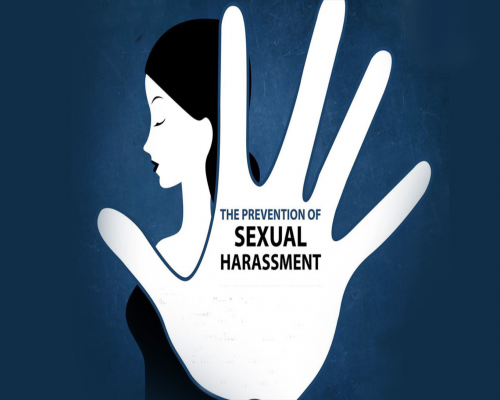

Zero-Tolerance Approach to Workplace Safety: Understanding the POSH Act and Compliance in India

Every employee has a shared responsibility to prevent workplace conflicts and promote culture of respect and cooperation. By practicing proactive behaviour and thoughtful communication, individuals can actively build a harmonious, inclusive, and positive organizational environment.
By:
S.K. Gupta, Advocate, Supreme Court of India
www.makeinindialawfirm
Email: skpfdelhi@gmail.com | M: 9891170907
REASONS & OBJECTS FOR ENACTING THE POSH ACT, 2013
1. Evolution of Law on Sexual Harassment at Workplace
Prior to statutory codification, the law relating to sexual harassment at workplace evolved primarily through judicial pronouncements. A watershed moment came with the judgment of the Hon’ble Supreme Court in Vishaka v. State of Rajasthan, wherein the Court, in the absence of enacted law, laid down binding guidelines under Article 32 of the Constitution of India.
The Court held that sexual harassment at workplace amounts to a violation of fundamental rights guaranteed under Articles 14, 19(1)(g), and 21 of the Constitution, thereby recognizing the right of women to work with dignity. The Vishaka Guidelines {1997 (6)SCC241} were declared mandatory and enforceable until suitable legislation was enacted.
The principles laid down in Vishaka (supra) were subsequently reaffirmed in Apparel Export Promotion Council v. A.K. Chopra,{(1999) 1SCC759} wherein the Hon’ble Supreme Court emphasized that even without physical contact, conduct amounting to sexual harassment would fall within the mischief of law.
Further, in proceedings initiated by Dr. Medha Kotwal of Aalochana (an NGO), the Supreme Court took cognizance of the ineffective implementation of the Vishaka Guidelines and issued directions for strict compliance across all States, observing that non-compliance would entitle the aggrieved person to approach the High Courts.
2. Enactment of the POSH Act, 2013
Pursuant to the directions of the Hon’ble Supreme Court, the Parliament enacted the Sexual Harassment of Women at Workplace (Prevention, Prohibition and Redressal) Act, 2013 (“POSH Act”), along with the Rules framed thereunder.
The Act was enacted with the twin objectives of:
- Preventing sexual harassment at workplace; and
- Providing a robust mechanism for redressal of complaints
The Act ensures that no woman shall be subjected to sexual harassment at any workplace, irrespective of the nature of employment or size of the organization. Importantly, the scope of “workplace” extends beyond the physical office to include any place visited by the employee during the course of employment.
The Act protects all women, whether employed directly or indirectly, including visitors, clients, and contract workers.
3. Meaning and Nature of Sexual Harassment
Sexual harassment at workplace constitutes any unwelcome conduct of a sexual nature, whether verbal, non-verbal, or physical, that:
- Interferes with work performance;
- Creates an intimidating, hostile, or offensive work environment; or
- Affects the dignity of a woman
Such conduct may range from subtle forms such as inappropriate remarks, innuendos, or gestures, to more severe acts including physical advances, molestation, or sexual assault.
4. Essential Element: “Unwelcome Conduct”
A defining feature of sexual harassment is that the conduct must be unwelcome.
The determination of whether conduct is unwelcome depends upon:
- The perception of the aggrieved woman; and
- Her response at the time of the incident
Courts examine whether the complainant, expressly or impliedly, indicated that the conduct was unwelcome. If the conduct is shown to be welcomed, the allegation of sexual harassment may not be sustained.
5. Legal Position Prior to 1997
Before the Vishaka judgment, victims of sexual harassment had limited recourse under the
Indian Penal Code, particularly:
- Section 354 ( 74 BNS,2023) – Assault or criminal force to outrage modesty of a woman
- Section 509 ( 79 BNS,2023) – Word, gesture or act intended to insult modesty
These provisions were narrow in scope and largely dependent on subjective interpretation by law enforcement authorities. The Vishaka judgment marked a paradigm shift by recognizing sexual harassment as a violation of fundamental rights and introducing preventive guidelines.
SUPREME COURT GUIDELINES ON SEXUAL HARASSMENT
In Vishaka v. State of Rajasthan, the Hon’ble Supreme Court defined sexual harassment as any unwelcome sexually determined behaviour, including:
- Physical contact and advances
- Demand or request for sexual favours
- Sexually coloured remarks
- Showing pornography
- Any other unwelcome physical, verbal, or non-verbal conduct
The Court imposed an obligation on employers to ensure a safe working environment and laid down preventive and remedial measures, including:
- Constitution of a Complaints Committee
- Explicit prohibition of sexual harassment
- Inclusion of such misconduct in service rules
- Awareness and sensitization measures
- Provision of appropriate working conditions
The guidelines were made applicable to all sectors—organized and unorganized—and covered women in all capacities, including students, contractual workers, and domestic helpers.
COMPREHENSIVE LEGISLATION: POSH ACT, 2013
The enactment of the POSH Act on 23 April 2013 provided a statutory framework for addressing sexual harassment at workplace.
Key Features:
- Mandatory constitution of Internal Complaints Committee (ICC) where employees ≥ 10
- Constitution of Local Complaints Committee (LCC) at district level
- Adoption of a formal anti-sexual harassment policy
- Time-bound and confidential inquiry mechanism
Any aggrieved woman may file a complaint before the ICC/LCC. The Committee is empowered to:
- Summon witnesses
- Record evidence
- Examine documents
The inquiry must be conducted in accordance with principles of natural justice.
The obligation of confidentiality has been emphasized in Maersk Line India Private Limited v. RP Television (India) Private Limited.
DEFINITIONAL FRAMEWORK UNDER THE ACT
Sexual Harassment [Section 2(n)]
Includes:
- Physical contact and advances
- Demand/request for sexual favours
- Sexually coloured remarks
- Showing pornography
- Any unwelcome conduct
Also includes circumstances such as:
- Threat of adverse employment consequences
- Hostile work environment
- Humiliating treatment affecting health or safety
Employee [Section 2(f)]
Includes:
- Regular, temporary, ad hoc employees
- Contract workers, trainees, probationers
- Volunteers (with or without remuneration)
Aggrieved Woman [Section 2(a)]
- Any woman, irrespective of age or employment status
Workplace [Section 2(o)]
Includes:
- Offices, branches, and units
- Private and public sector organizations
- Hospitals, educational institutions
- Any place visited during employment, including transport
- Dwelling places (for domestic workers)
PROCEDURE FOR COMPLAINT
- Filing of Complaint: Within 3 months (extendable)
- Inquiry: To be completed within 90 days
- Report: Submitted to employer
- Action: To be taken within 60 days
In C.A. Nitesh Parashar v. Institute of Chartered Accountants of India, it was held that delay beyond 90 days does not automatically vitiate proceedings.
CONCILIATION
- Permissible before inquiry at request of complainant
- Monetary settlement prohibited
FALSE COMPLAINTS [Section 14]
- Action lies only if complaint is malicious
- Mere inability to prove allegations does not attract penalty
DUTIES OF EMPLOYER
- Provide safe working environment
- Display penal consequences
- Conduct awareness programs
- Assist ICC
- Treat sexual harassment as misconduct
Failure to comply attracts penalty up to ₹50,000, with enhanced consequences for repeated violations.
IMPORTANT DECIDED CASE LAW :
1. Vishaka and Others Vs. State of Rajasthan & Others , 1997 (6) SCC 241
What constitutes 'sexual harassment'?
- Shanta Kumar v. Council of Scientific and Industrial Research (CDIR) & Ors, Delhi High Court ((2018) 156 FLR 719)
- K.P. Anil Rajagopal v. State of Kerela, Kerela High Court ((2018) 1 KLJ 106)
- Gaurav Jain v. Hindustan Latex Family Planning Promotion Trust and Ors. (2015 SCC OnLine Del 11026)
- Apparel Export Promotion Council Vs. A K Chopra , AIR SC 625
Filing of a complaint with the ICC or LCC
- Jaya Kodate v. Rashtrasant Tukdoji Maharaj Nagpur University (2014 SCC OnLine Bom 814)
- Shital Prasad Sharma v. State of Rajasthan and Ors. (2018 SCC OnLine Raj 1676)
- Sarita Verma v. New Delhi Municipal Corporation & Ors, (2016 LLR 785 (2)
- Ruchika Singh Chhabra v. Air France India and Anr. (2018 SCC Online Del 9340)
- Shital Prasad Sharma v. State of Rajasthan and Ors. (2018 SCC OnLine Raj 1676)
- Jaya Kodate v. Rashtrasant Tukdoji Maharaj Nagpur University, Bombay High Court (2014 SCC OnLine Bom 814)
Powers of the ICC or LCC
- Tejinder Kaur v. UOI (2017 SCC Online DeL 12221)
- Confidential v. Indian Institute of Corporate Affairs (2018 SCC Online Del 6801)
- Ashok Kumar Singh v. University of Delhi and Ors (2017 LLR 1014)
- Vidya Akhave v. Union of India, Department of Women & Children & Ors (2017 LLR 357)
No Right to be represented by the Legal person or co-friends
- Johney Reberio Vs. Union of India , WP ( C ) No. 14547 of 2022 , No
Conducting the inquiry proceedings:
- Tejinder Kaur v. UOI, Delhi High Court, (2017 SCC Online DeL 12221)
- K.Hema Latha v. State of Tamil Nadu, Madras High Court, (MANU/TN/1414/2018)
- Sibu v. Air India Limited, ((2016) 2 KLJ 434)
- Gaurav Jain v. Hindustan Latex Family Planning Promotion Trust and Ors. (2015 SCC OnLine Del 11026)
- Shital Prasad Sharma v. State of Rajasthan and Ors. (2018 SCC OnLine Raj 1676)
If inquiry is not completed within 90 days , no ground to quash
- C.A Nitesh Parashar Vs. Institute of C.A. of Indian 2023 Live Laws 20 (Delhi)
Employers' rights and territorial jurisdiction of the courts:
- Mohan Kumar Singh v. Chief Manager (HRD) Central Bank of India, (2017 SCC OnLine Pat 2483)
- Biplab Kumar Das v. IDBI Bank Ltd and Others, (2017 LLR 1148)
- Jaya Kodate v. Rashtrasant Tukdoji Maharaj Nagpur University (2014 SCC OnLine Bom 814)
Obligation for maintaining confidentiality on all parties - including the aggrieved employee.
- Maersk Line India Private Limited v RP Television (India) Private Limited (CS No 183 of 2016)
Any gender can file case before IC
- Dr. Malabika Bhattacharjee -versus Internal Complaints Committe, Vivekananda College & Ors. , WPA No. 9141 of 2020 , Calcutta High Court
ICC of the aggrieved woman’s workplace can inquire into complaints even if the respondent belongs to another organization/department
- Dr Sohail Malik vs Union Of India , SLP No. 14701/2023
ICC findings can be challenged before appropriate judicial/tribunal forums depending on service conditions
- 42605-B Cdr Yogesh Mahla vs Union Of India
Political Parties do come under POSH
- Yogamaya v State of Kerala, 2025 SCC OnLine SC 2011,
CONCLUSION
The POSH Act, 2013 is a beneficial and remedial legislation aimed at ensuring a safe and dignified workplace for women. It places a statutory obligation on employers and provides a structured redressal mechanism, thereby strengthening the constitutional mandate of gender equality and dignity at workplace.
Disclaimer:
The contents of this article are intended to provide general guidance on the subject matter. For advice tailored to specific facts and circumstances, professional legal consultation should be sought. The same may be obtained by writing to skpfdelhi@gmail.com, subject to applicable professional fees.