
Digital Access is an Inseparable Part of Right to Life and Liberty: Supreme Court
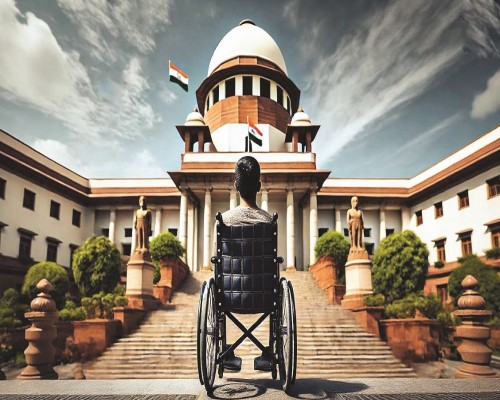
In a landmark judgment, the Supreme Court of India declared that digital access is an intrinsic component of the fundamental right to life and personal liberty under Article 21 of the Constitution. The Court directed the government to design a more inclusive and accessible digital ecosystem for all citizens, especially for the elderly, differently-abled, and marginalized communities.
The bench emphasized that in the digital era, public services, welfare schemes, financial systems, and even identity authentication are increasingly reliant on digital platforms. Hence, denying or limiting access to digital facilities can result in social and constitutional exclusion.
The Court was hearing a petition that challenged the mandatory linking of mobile numbers and Aadhaar, and the difficulties faced by people with disabilities and senior citizens in using biometric systems. The Court noted that any digital framework must be sensitive to diverse physical, cognitive, and economic conditions.
Key Supreme Court Directions:
- The government must ensure inclusive design of digital infrastructure using universal design principles.
- Biometric systems and app-based verifications should be designed to accommodate physical and mental disabilities.
- The government must consult experts, technologists, and affected communities while drafting digital access policies.
- Aadhaar authentication mechanisms must offer alternate processes for the elderly and persons with disabilities.
- Agencies such as UIDAI must enhance their grievance redressal systems for those excluded or inconvenienced by digital hurdles.
The Court also advised that digital services must be designed with empathy, and the state must avoid creating a “digital divide” that threatens the dignity or rights of any individual.
This historic verdict reinforces that equitable access to digital platforms is no longer a luxury but a constitutional necessity in the 21st century.