
Law Graduates Cannot Directly Appear for Judicial Exams Without Minimum Experience: Supreme Court
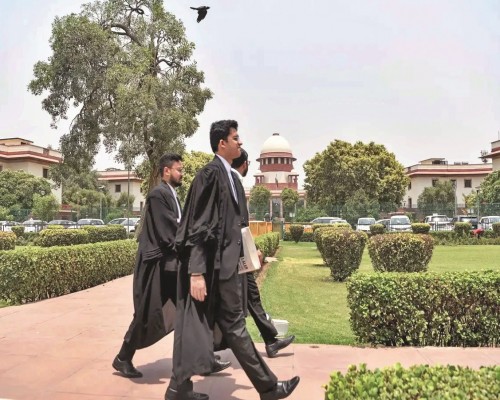
The Supreme Court has ruled that fresh law graduates cannot immediately appear for judicial service examinations. The apex court emphasized that a minimum of three years of legal practice is necessary before one can be eligible to become a judge.
This decision came during a hearing of a petition challenging the eligibility criteria for judicial services in various states. The Court stated that only having a law degree is not sufficient, as real-world legal experience is essential to serve effectively in the judiciary.
The bench, comprising Justice P.S. Narasimha and Justice Sanjay Karol, observed that judicial roles require more than academic knowledge—they demand practical understanding, maturity, and exposure to court procedures.
Key Highlights:
- Candidates must have at least 3 years of practice as advocates before applying for judicial posts.
- The reservation quota for preliminary judicial exams has been raised to 25% for economically weaker and marginalized sections.
- The Court also directed state public service commissions to design a framework ensuring fair and experience-based selection.
The decision aligns with recommendations made in various Law Commission reports, which emphasized the importance of courtroom exposure before joining the judiciary. The Court reiterated that the quality of justice delivery cannot be compromised by recruiting inexperienced candidates.
This verdict is expected to shape judicial recruitment policies nationwide and enhance the credibility and effectiveness of lower courts.