
No Compensation for Death Caused by Negligent Driving, Rules Supreme Court
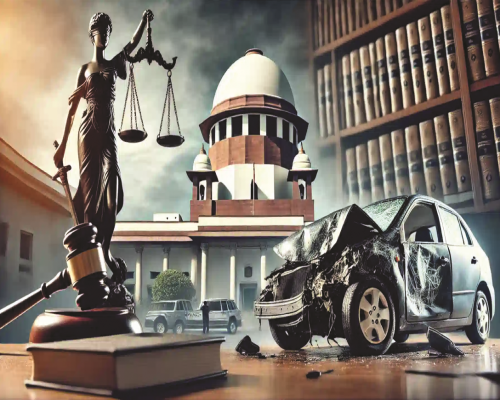
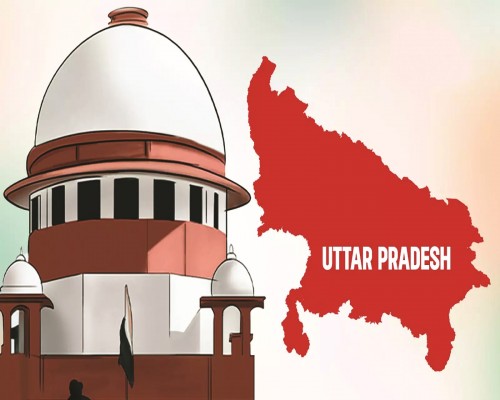
The Supreme Court has ruled that the family of a driver who dies due to his own negligent driving is not entitled to compensation from the insurance company. The court clarified that in such cases, insurers bear no liability, as the accident results from the insured’s own fault.
The ruling came in response to multiple appeals where the families of deceased drivers sought compensation under motor vehicle insurance claims. The court observed that the Motor Vehicles Act does not make insurance companies liable for self-inflicted accidents, especially when negligence is established.
In one case, the family of a driver who died after losing control of his vehicle and crashing sought ₹23 lakh as compensation. The tribunal initially awarded the amount, but the High Court upheld only part of it. The Supreme Court, however, reversed the decision entirely, stating that no compensation was payable since the deceased was solely responsible for the accident.
In another matter, involving a claim of ₹50,000 for an accident caused by the driver’s own negligence, the apex court maintained the same position, reiterating that insurers are liable only for third-party claims, not for self-caused fatalities.
The judgment is expected to have significant implications for motor insurance claims, as it reinforces the principle that insurance is meant to protect against third-party liability, not to benefit the insured’s own family in cases of proven negligence.
Legal experts have noted that the ruling aligns with the intent of the Motor Vehicles Act and the contractual terms of insurance policies, ensuring that compensation is granted only where liability is legally established.