
Shubhanshu Shukla Scripts History: First Indian to Dock with the International Space Station, Laying Groundwork for India’s Human Spaceflight Future
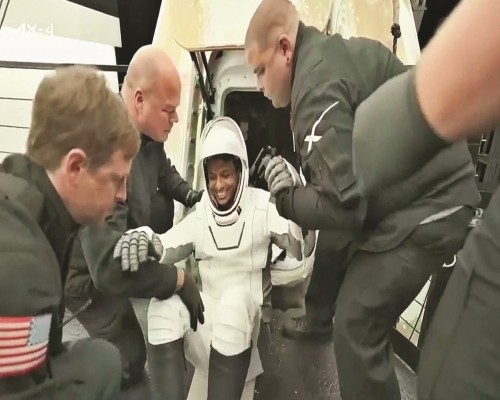
In a moment that will be etched into the annals of Indian scientific achievement, astronaut Shubhanshu Shukla has become the first Indian to arrive at the International Space Station (ISS). His journey marks India’s triumphant return to human space exploration, 41 years after Wing Commander Rakesh Sharma became the first Indian in space.
The historic mission began in the early hours of June 26, when a SpaceX Falcon 9 rocket carrying the Crew Dragon spacecraft lifted off from Launch Complex 39A at the Kennedy Space Center in Florida. At exactly 12:01 AM IST, the engines roared to life, propelling Shukla and his three fellow astronauts—Michael Reed, Hiro Tanaka, and Julia Summers—toward Earth orbit.
A Meticulous 28-Hour Journey
Once in orbit, the spacecraft embarked on a carefully choreographed sequence of six maneuvering phases designed to align it precisely with the ISS’s trajectory. The journey required intricate adjustments in speed and altitude, demonstrating the sophistication of modern spaceflight.
After nearly 28 hours of travel, the Dragon capsule approached the ISS at a relative velocity of just a few centimeters per second. The automated docking process culminated in a successful soft capture, confirmed by mission control, followed by the latching of the docking rings to create an airtight seal.
Mission engineers completed extensive leak checks and pressure equalization before giving the green light to open the hatch. As Shukla floated into the ISS, a wave of applause erupted at ISRO’s mission control and in living rooms across India.
A Moment of National Pride
Upon entering the station, Shukla’s first words, spoken in Hindi, captured the spirit of his mission:
“I have come here carrying the tricolor on my shoulders.”
This simple yet profound statement resonated with the entire nation, symbolizing India’s resolve to lead in science, technology, and innovation.
Science, Technology, and International Collaboration
Over the coming months, Shukla and his colleagues will conduct a suite of experiments in microgravity, including studies in human physiology, advanced materials, space medicine, and biotechnology. The data gathered will not only contribute to global scientific knowledge but will also inform the design of India’s upcoming Gaganyaan programme, the country’s first fully indigenous human space mission, targeted for 2027.
About the International Space Station
- The ISS orbits the Earth at an altitude of approximately 400 kilometers.
- It completes 16 orbits every 24 hours, travelling at a speed of 28,000 kilometers per hour.
- Built through cooperation between NASA, Roscosmos, ESA, JAXA, and CSA, the ISS has been continuously occupied since 2000.
- Weighing over 360 tonnes, it is considered the largest human-made structure in orbit.
- The station is projected to remain operational until 2030, after which new commercial platforms may take its place.
Back Home: Anxious Hours and Joyous Relief
For Shukla’s family, the mission was an emotional roller coaster. His mother shared that she spent the entire 28 hours of transit in prayer and worry, unable to rest until confirmation of a safe docking came through. “Only after hearing his voice did I find peace,” she said.
Recognition and Tributes
In the wake of the successful mission, authorities announced that a park and a road in Shubhanshu’s hometown will be named in his honor. Chief Minister Yogi Adityanath personally met Shukla’s parents, congratulating them and presenting a commemorative memento.
Prime Minister Narendra Modi lauded the mission as a “watershed moment for 140 crore Indians”, praising Shukla’s dedication and courage. Messages of congratulations poured in from leaders, scientists, and citizens across the country.
Foundation for the Gaganyaan Programme
Experts say this mission provides an invaluable operational template for India’s indigenous human spaceflight ambitions. Gaganyaan, slated for launch within the next two years, will see Indian astronauts trained domestically and flown aboard an Indian launch vehicle. Shukla’s experience in life support systems, docking protocols, and scientific operations in microgravity will directly contribute to mission planning and crew training.
A Symbol of India’s Aspirations
Shukla’s mission underscores India’s commitment to international collaboration and technological self-reliance. As the country builds upon this success, the dream of launching an Indian space station by 2035 seems ever more tangible.
Key Mission Facts
- Launch Vehicle: SpaceX Falcon 9
- Spacecraft: Crew Dragon
- Crew Members: 4 (including Shubanshu Shukla)
- Launch Date: June 26, 2025, 12:01 AM IST
- Docking Date: June 28, 2025
- Orbit Altitude: ~400 km
- ISS Orbits Per Day: 16
- Mission Duration: Several months
Shubhanshu Shukla’s journey is more than a technical feat—it is a testament to India’s ingenuity, ambition, and the unbreakable spirit of exploration. As the tricolor unfurls in orbit once more, a new generation looks to the stars with renewed inspiration and belief that no frontier is beyond their reach.