
Supreme Court Expresses Concern Over Delays in Bail Hearings, Says Fundamental Rights Are Being Affected
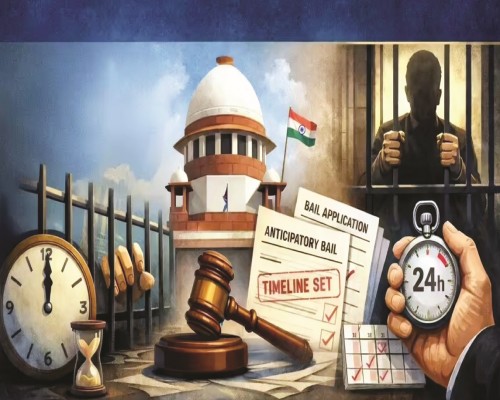
Apex Court Calls for Time-Bound Disposal of Bail Applications and Better Case Management Mechanisms
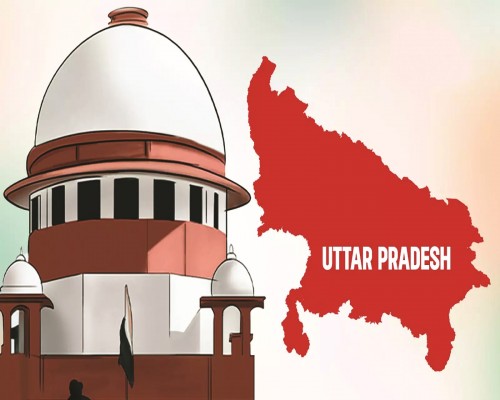
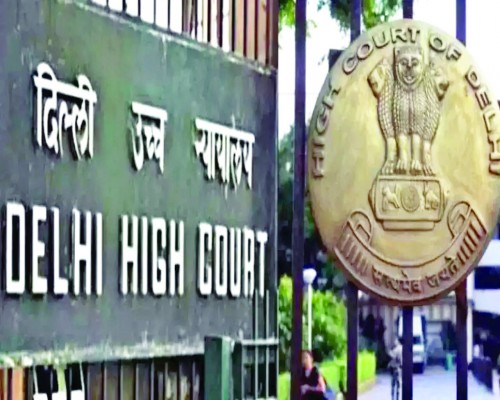
The Supreme Court of India has expressed serious concern over the growing backlog of pending bail applications in various High Courts across the country, observing that prolonged delays in hearing such matters can adversely affect the fundamental rights of accused persons.
Emphasizing the importance of personal liberty in the justice system, the Court noted that delays in deciding bail petitions can effectively undermine an individual's constitutional rights. The observations came during proceedings where the Court examined the issue of mounting pendency and the need for judicial reforms to ensure timely disposal of bail matters.
Delayed Bail Hearings Raise Constitutional Concerns
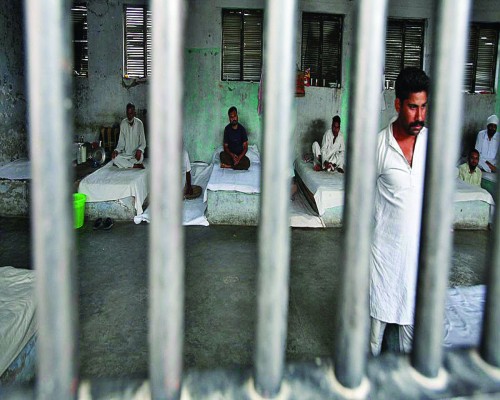
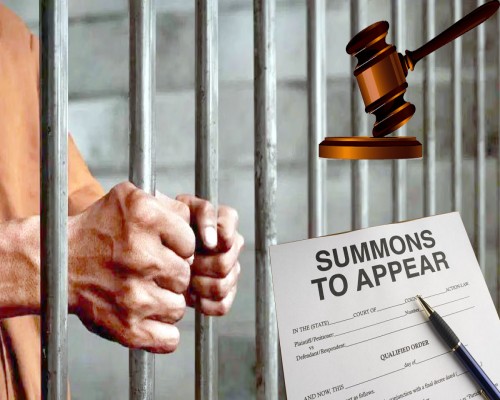
The Supreme Court observed that bail applications require urgent consideration because they directly involve an individual's liberty. When hearings are delayed for extended periods, accused persons may continue to remain incarcerated without a timely judicial determination of their plea for release.
The Court stressed that the right to personal liberty is a fundamental constitutional guarantee and that unnecessary delays in bail proceedings can have serious consequences for individuals and their families.
Judicial experts have long argued that prompt consideration of bail applications is essential for maintaining public confidence in the criminal justice system and ensuring that legal processes remain fair and effective.
High Courts Asked to Develop Efficient Hearing Mechanisms
To address the issue, the Supreme Court suggested that High Courts establish effective case-management systems and internal mechanisms to ensure that bail applications are listed and heard within a reasonable timeframe.
The Court emphasized the need for structured scheduling practices that would allow pending bail matters to be monitored regularly and disposed of more efficiently. Such systems could help reduce delays and prevent applications from remaining pending for prolonged periods.
Legal observers believe that improved case-tracking systems, dedicated hearing schedules, and better administrative coordination could significantly improve the disposal rate of bail petitions.
Need for Time-Bound Disposal
The Supreme Court underlined the importance of fixing reasonable timelines for hearing and deciding bail applications. It noted that courts should make every effort to ensure that such matters are addressed promptly, given their direct impact on personal freedom.
The observations reflect a broader judicial concern regarding the increasing burden on courts and the growing number of pending criminal cases across various jurisdictions.
Experts point out that while courts must carefully examine the merits of each case, procedural delays should not become a barrier to the timely administration of justice.
Concern Over Rising Pendency
Court also highlighted the worrying number of pending bail applications in several High Courts. Judicial data has frequently shown that a significant volume of criminal matters remains awaiting adjudication, placing additional pressure on court resources.
According to legal analysts, the problem is particularly acute in states with heavy litigation loads, where courts are often required to balance large numbers of criminal, civil, and constitutional matters simultaneously.
The Supreme Court's observations are expected to encourage High Courts to review their existing systems and explore ways to prioritize bail hearings more effectively.
Balancing Justice and Liberty
The Court reiterated that while ensuring public safety and maintaining the integrity of criminal investigations remain important considerations, the justice system must also protect the constitutional rights of individuals awaiting trial.
The principle that “bail is the rule and jail is the exception” has repeatedly been emphasized by Indian courts, particularly in cases where investigations have been completed and prolonged detention is not justified.
Legal scholars note that timely decisions on bail applications help maintain a balance between the interests of justice and the protection of individual liberty.
Call for Judicial Reforms
The Supreme Court’s observations are being viewed as part of a broader effort to improve judicial efficiency and reduce delays in the legal system. Experts believe that technology-driven case management, increased judicial capacity, and improved administrative procedures could play an important role in addressing the issue.
The Court's focus on timely disposal of bail applications highlights the growing recognition that judicial delays can have real-world consequences for citizens and that reforms are necessary to ensure quicker access to justice.
A Reminder of the Importance of Personal Liberty
The latest observations reinforce the judiciary’s commitment to safeguarding constitutional rights and ensuring that legal processes do not become unduly burdensome for individuals seeking relief from the courts.
As High Courts evaluate their procedures and implement measures to address pending cases, the Supreme Court’s remarks are likely to serve as an important reminder that access to timely justice remains a cornerstone of a democratic legal system.