
Supreme Court Launches AI-Powered Chatbot ‘Su Sahayak’ to Simplify Access to Case Information
New Digital Initiative Aims to Make Judicial Information More Accessible for Citizens
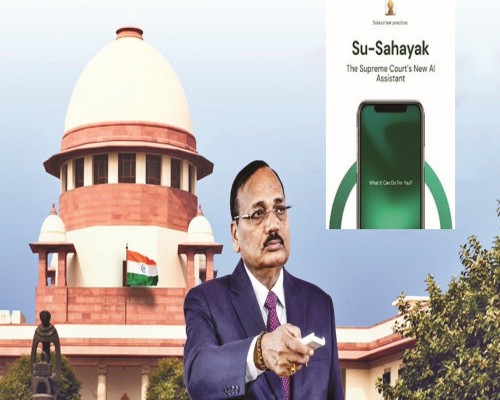
In a significant step towards modernizing judicial services and improving public access to legal information, the Supreme Court of India has launched an artificial intelligence-powered chatbot named ‘Su Sahayak’. The new digital platform is designed to help litigants, lawyers, researchers, and citizens obtain information about court cases and judicial services through a user-friendly interface.
The initiative forms part of a broader effort to leverage technology for enhancing transparency, accessibility, and efficiency within the Indian judicial system. Alongside the chatbot, the judiciary has also announced the implementation of a comprehensive “One Case, One Data” framework aimed at integrating case-related information across different levels of courts.
AI Chatbot to Provide Instant Case Information
The AI-based chatbot has been integrated with the Supreme Court’s digital ecosystem and is designed to provide users with quick access to information regarding cases pending before the apex court. Through a conversational interface, users can seek details related to case status, listings, procedural information, and other court-related services.
The chatbot functions as a virtual legal assistance platform that guides users in navigating judicial information more efficiently. By reducing the need for manual searches and simplifying access to information, the system is expected to improve the overall user experience for individuals interacting with the judiciary.
Officials have indicated that the chatbot is accessible through the Supreme Court’s website and has been developed to offer a more intuitive method of obtaining information about ongoing legal proceedings.
‘One Case, One Data’ Initiative to Improve Judicial Coordination
Along with the chatbot, the judiciary has introduced the concept of “One Case, One Data,” an initiative intended to create a unified digital framework for case information across India’s judicial hierarchy.
Under this system, data from High Courts, District Courts, and Taluka Courts will be integrated into a standardized digital structure. The objective is to eliminate duplication, improve consistency, and facilitate seamless sharing of information among judicial institutions.
Experts believe that the initiative could significantly strengthen case management systems by ensuring that all relevant information relating to a case remains synchronized across different levels of the judicial process.
Enhancing Public Access to Justice
The launch of the AI chatbot reflects the judiciary’s increasing focus on using technology to bridge the gap between citizens and legal institutions. Accessing court information can often be a complex and time-consuming process, particularly for individuals unfamiliar with legal procedures.
By providing a digital assistant capable of responding to queries in real time, the Supreme Court aims to make legal information more accessible to the general public. The initiative is expected to benefit litigants, advocates, law students, researchers, and other stakeholders who frequently require judicial information.
Technology experts note that AI-powered systems can help reduce administrative burdens, improve response times, and streamline interactions between courts and the public.
Developed with Advanced AI Technology
The chatbot has reportedly been developed using advanced artificial intelligence and natural language processing technologies, enabling it to understand user queries and provide relevant information in a conversational format.
The system is expected to evolve over time through continuous updates and improvements, enhancing its ability to assist users with a broader range of legal and procedural questions.
Officials involved in the project have emphasized that the chatbot serves as an informational tool and does not replace legal advice or judicial decision-making. Its primary purpose is to facilitate access to information and improve citizen engagement with the judicial system.
A Major Step in Judicial Digitalization
India’s judiciary has been steadily expanding the use of digital technologies through initiatives such as e-filing, virtual hearings, digital case records, and online access to judgments. The introduction of AI-driven assistance tools marks another milestone in this ongoing transformation.
Legal experts view the launch of ‘Su Sahayak’ as part of a larger movement toward creating a more efficient, transparent, and technology-enabled justice delivery system. By simplifying access to information and integrating court data, the initiative is expected to contribute to improved public trust and greater administrative efficiency.
Future of AI in the Judiciary
The introduction of AI-powered solutions within the judicial sector reflects a growing global trend of using technology to enhance legal services. While human judges and legal professionals remain central to the administration of justice, digital tools are increasingly being used to improve accessibility, case management, and information dissemination.
As India continues to expand its digital judicial infrastructure, initiatives such as ‘Su Sahayak’ and the “One Case, One Data” framework may serve as important building blocks for a more connected and citizen-friendly court system.