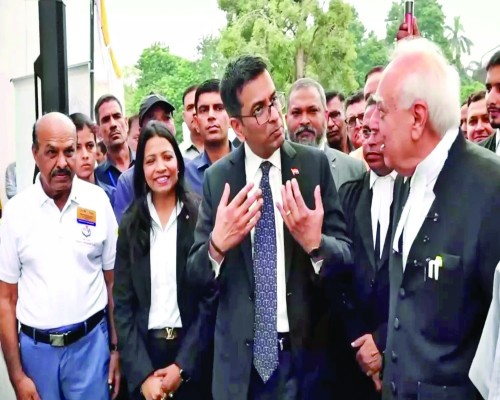

Supreme Court Raises Concern Over ‘Freebie Culture’, Questions Impact on Economic Development
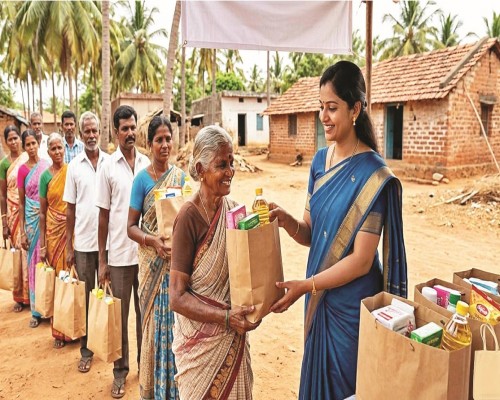
The Supreme Court has expressed serious concern over the growing practice of offering free services and subsidies by state governments, particularly in the period leading up to elections. The court questioned whether the increasing reliance on such schemes could discourage work and affect the long-term economic development of the country.
During the hearing of a petition related to electricity supply regulations, the court observed that governments should focus more on generating employment opportunities rather than expanding a culture of free benefits. The bench remarked that if essential services such as electricity, food, or other facilities are continuously provided free of cost, it could raise questions about the sustainability of public finances and the broader work culture within society.
The case before the court was filed by a power distribution company challenging certain provisions of the Electricity (Amendment) Rules, 2024. Under the disputed provisions, the gap between the actual cost of electricity supply and the amount recovered from consumers cannot exceed three percent. The company argued that the rule could affect financial stability in the power distribution sector.
While examining the issue, the court used the opportunity to reflect on the broader policy debate surrounding welfare schemes and electoral promises. The judges questioned how long governments could continue announcing large-scale free benefits and subsidies without affecting fiscal discipline. According to the bench, the financial burden of such schemes ultimately falls on taxpayers.
The court also observed that the final financial burden of providing free benefits is borne either by the public exchequer or by consumers who pay taxes. When governments promise free electricity, food, or other facilities, the cost must eventually be compensated through state finances. The judges remarked that such practices could put pressure on already strained state budgets and affect long-term development projects.
The bench highlighted that while welfare policies aimed at supporting economically weaker sections are necessary, the indiscriminate distribution of free services raises concerns about fairness and efficiency. The court noted that assistance should ideally be targeted at those who genuinely need support rather than being extended universally without proper assessment.
Another point raised during the hearing was the need to distinguish between people who genuinely cannot afford to pay for basic services and those who are financially capable of contributing. The court observed that providing free electricity or similar benefits to all consumers without such distinction could amount to an unjustified subsidy.
The judges also pointed out that governments have multiple responsibilities, including paying salaries to employees, funding healthcare systems, building infrastructure such as roads and hospitals, and supporting development initiatives. Excessive spending on free benefits, the court suggested, may reduce the funds available for these essential public services.
In its remarks, the court emphasized that governments should carefully balance welfare measures with fiscal responsibility. The bench observed that policies designed to support the poor must not unintentionally undermine economic productivity or long-term growth.
The discussion also reflected broader national debates over election-time welfare announcements. Critics argue that offering extensive free benefits can distort policy priorities and weaken financial discipline, while supporters maintain that such schemes provide necessary relief to disadvantaged sections of society.
Although the court’s observations were made in the context of a specific legal dispute, they have reignited discussions about the sustainability and impact of welfare-driven electoral promises. The remarks underline the need for policymakers to carefully evaluate the economic and social consequences of such schemes while ensuring that genuine welfare objectives continue to be met.