
Supreme Court Rehears 69,000 UP Assistant Teacher Recruitment Case; General Category Candidates Oppose High Court Ruling
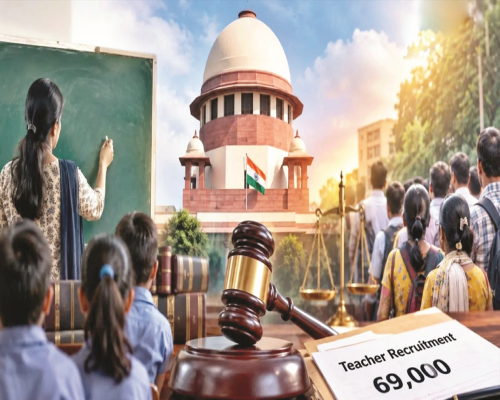
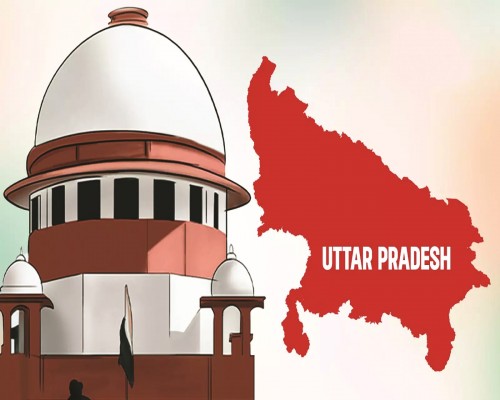
The Supreme Court has begun a fresh round of hearings in the long-running dispute concerning the recruitment of 69,000 assistant teachers in Uttar Pradesh, with candidates from the unreserved category opposing the Allahabad High Court’s decision to revise the selection process.
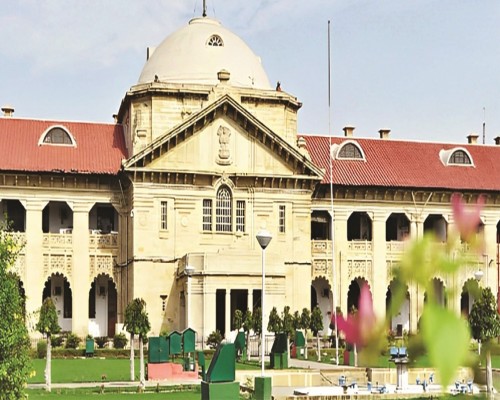
Representatives of the unreserved category argued before the apex court that implementation of the High Court’s order could result in several already-appointed candidates losing their jobs. The Allahabad High Court had earlier cancelled the existing selection list and directed the Uttar Pradesh government to prepare a fresh list within three months while ensuring compliance with applicable reservation rules.
Candidates belonging to reserved categories have also approached the Supreme Court through intervention applications, alleging that reservation norms were not properly followed during the recruitment process.
A two-judge Supreme Court Bench comprising Justice S.V.N. Bhatti and Justice N.V. Anjaria commenced a fresh hearing in the matter. The Bench is expected to hear arguments from all concerned parties over three consecutive days.
During an earlier hearing before a Bench headed by Justice Dipankar Datta, the Supreme Court had sought the state government’s response on whether eligible reserved-category candidates could be accommodated without removing candidates who are already employed.
The Court had also indicated that, if an appropriate solution were possible, it could consider exercising its extraordinary powers under Article 142 of the Constitution to ensure complete justice in the matter.
Uttar Pradesh Says Around 9,500 Candidates Could Be Accommodated
In a status report filed before the Supreme Court, the Uttar Pradesh government stated that approximately 9,500 candidates could potentially be accommodated.
The state government also submitted a list that reportedly included 4,946 candidates who were part of the merit-based selection category but had not earlier exercised the option for appointment. The possible inclusion of these candidates in a revised selection list had raised concerns among some parties as well as reserved-category candidates, who argued that such an exercise could further reduce opportunities available under reservation provisions.
The dispute stems from competing claims over the manner in which reservation principles were applied in the large-scale teacher recruitment exercise. While reserved-category candidates have sought correction of what they describe as irregularities in the implementation of reservation norms, candidates already selected under the existing process have emphasised the need to protect appointments made through the earlier selection list.
The Supreme Court’s fresh hearing is therefore expected to focus on whether a revised selection mechanism can balance reservation compliance with the employment security of candidates already serving as teachers.
The outcome of the proceedings is likely to have significant implications not only for thousands of candidates involved in the recruitment exercise but also for the interpretation and implementation of reservation principles in large-scale government recruitment processes.