

Supreme Court Says Cybercriminals Must Be Dealt With Strictly
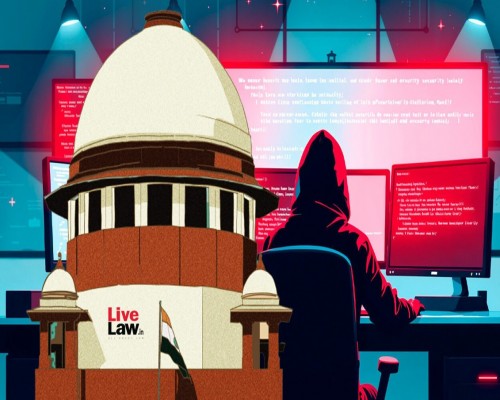
The Supreme Court has expressed serious concern over the increasing number of digital crimes in the country and has made strong observations against cybercriminals. The court said such offenders are dangerous for society and described them as “parasites” who deceive innocent investors and take away their hard-earned money through fraud.
The court made these observations while refusing to grant relief to an accused involved in cybercrime-related allegations. The accused had sought protection from arrest, but the Supreme Court declined to interfere and made it clear that such crimes cannot be treated lightly.
According to the court, cybercriminals cannot be dealt with in the same manner as ordinary offenders. The court observed that these offences are not limited to one locality or one state. Such criminals often operate across several states and use digital platforms to cheat people on a wide scale. Because of this, cybercrime has become a serious national-level concern.
The Supreme Court stated that victims of such offences are spread across the country. Many of them lose their life savings after being trapped by false promises, online investment schemes or digital fraud networks. The court said that, in the interest of society, strict action against such offenders is necessary.
The remarks were made by a bench of Justice Surya Kant and Justice N. Kotiswar Singh while hearing the petition of an accused woman from Haryana. The accused was allegedly linked to multiple FIRs registered in different states. According to the report, her accounts were connected with several cases of cyber fraud.
During the hearing, the court said that cybercriminals exploit innocent investors and must be treated seriously. The bench observed that such offenders extract money from people through organised deception and then disappear, making investigation and recovery difficult.
The court also noted that in several cases, cybercriminals first cheat people in one state and then move from one place to another. Their network often spreads across different regions, making it difficult for law-enforcement agencies to track them. Because of this, the court said that a soft approach cannot be adopted in such matters.
The Supreme Court refused to consider the petition for relief and rejected the plea. The court’s observations indicate that the judiciary is taking a firm view of cybercrime, especially cases involving financial fraud and cheating of investors.
The ruling is significant at a time when digital fraud cases are rising rapidly across the country. Online investment scams, fake trading platforms, fraudulent loan applications, phishing links, identity theft and social media-based cheating have become common threats for citizens. Many victims are misled through promises of high returns, easy loans, part-time jobs or quick profits.
The Supreme Court’s remarks underline the need for strict investigation, coordinated action among states and stronger legal enforcement against cybercrime networks. The court’s message is clear that people involved in organised digital fraud cannot expect leniency merely because the crime is committed online.