
Trial Courts Must Write Judgments in Either Hindi or English, Not a Mixture of Both: High Court

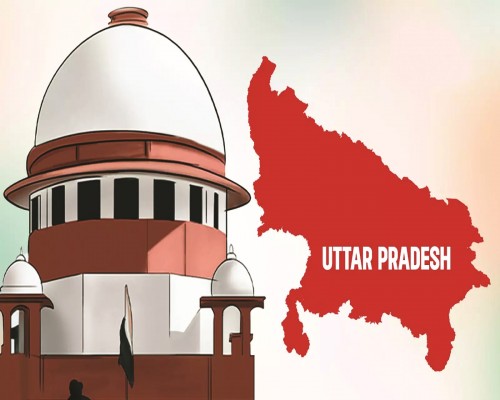
The Allahabad High Court has directed all trial courts in Uttar Pradesh to ensure that judicial orders and judgments are written either entirely in Hindi or entirely in English, and not as a mixture of both languages. The Court emphasised that combining Hindi and English within the same judgment leads to confusion, ambiguity, and unnecessary difficulty in understanding and interpreting judicial decisions.
The directive was issued in response to concerns raised about the growing practice in several district courts where orders are partly written in Hindi and partly in English. The High Court noted that such bilingual mixing creates a flawed judicial record and can affect the clarity of legal reasoning.
Clarity and Uniformity Essential in Judicial Orders
The bench observed that the integrity of the judicial process depends significantly on the clarity of written orders. Mixing two languages within the same text not only complicates proceedings but also hinders translation, legal review, and appellate scrutiny. The High Court stated that judicial officers must adhere to a uniform language structure when drafting judgments.
The directive instructs the Registrar General to notify all judicial officers across the state and make compliance mandatory.
Case That Triggered the Order
The matter arose from a trial court judgment in Agra, where the order relating to a 2021 murder case was written with sections alternating between Hindi and English. The High Court found that certain paragraphs began in Hindi and concluded in English, while other segments blended both languages mid-sentence.
Upon review, the bench remarked that such judgments become difficult for litigants, lawyers, and appellate courts to comprehend. It stressed that the purpose of a judgment is defeated if it cannot be followed with precision and clarity.
Statistical Findings Highlight Growing Issue
During the hearing, government counsels provided data showing widespread inconsistency in language use. Among examined judgments:
- 199 cases were written entirely in Hindi
- 63 cases were written entirely in English
- 125 cases contained mixed Hindi and English text
The High Court expressed disapproval of the mixed-language approach and reiterated that judicial discipline requires judgments to be written in a single, consistent language.
High Court: Mixed Language Makes Orders Unclear
The Court emphasised that orders written in hybrid language may lead to:
- Misinterpretation of legal findings
- Procedural complications during appeals
- Difficulties in obtaining authorised translations
- Ambiguity in understanding operative parts of the judgment
The bench clarified that if a judicial officer chooses to write in Hindi, the entire judgment must be in Hindi; likewise, if English is chosen, the entire judgment should remain in English.
Direction for Statewide Compliance
The High Court has ordered all district courts and presiding officers to ensure strict adherence to this guideline. The Registrar General has been directed to circulate the instructions to every judicial authority in the state without delay.
The Court concluded by stating that maintaining linguistic consistency is essential for judicial transparency, procedural fairness, and the effective administration of justice.