
Children of ESIC-Insured Workers Can Now Study MBBS for Just ₹4,000 Annually
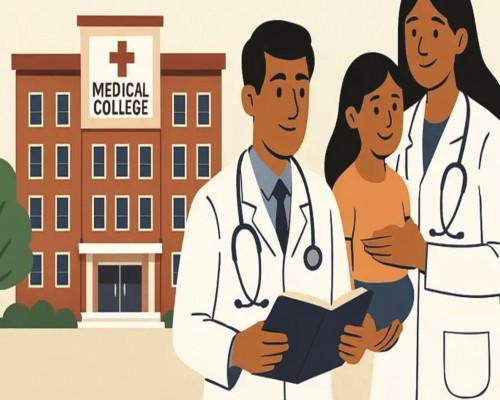
In a landmark decision to make medical education more accessible to the working class, children of families insured under the Employees’ State Insurance Corporation (ESIC) will now be able to pursue MBBS degrees at ESIC medical colleges across India for an annual fee of just ₹4,000.
The announcement came during the 183rd meeting of the ESIC governing body held on Tuesday, where several welfare schemes were reviewed and approved, with a focus on improving access to education and healthcare for insured workers and their dependents.
ESIC currently operates 11 medical colleges across the country, and soon, paramedical courses will be launched at the ESIC hospitals in Varanasi and Noida to expand healthcare education offerings.
Shortage of Specialists in UP ESIC Hospitals
Out of the 52 sanctioned posts for specialists across 10 ESIC hospitals in Uttar Pradesh, only 8 are currently functional, highlighting a significant gap in specialist availability. To address this, emphasis will be placed on recruitment and enhancing the quality of medical care in ESIC-run hospitals.
The Union Labour Minister, Mr. Bhupender Yadav, directed the ministry and corporation to intensify efforts in publicizing the various welfare schemes available to insured workers, including medical, educational, and social security benefits. He also stressed the need to open new ESIC hospitals and set up medical colleges in underserved regions.
Expansion and Employment Opportunities
As part of the initiative, ESIC is planning to add 34 new medical and paramedical courses and establish 75 new hospitals across different districts. This move will not only expand healthcare services but also generate employment for trained professionals.
Additionally, ESIC is in the process of finalizing online referral services and boosting infrastructure in hospitals to ensure insured beneficiaries receive cashless treatment and faster medical access.
The ESIC board also emphasized the skill development and training of staff to improve the efficiency of healthcare delivery in rural and semi-urban centers.