
Fourteen Industrial Units Sealed for Non-Compliance with Online Emission Monitoring Norms, Industry Raises Concerns
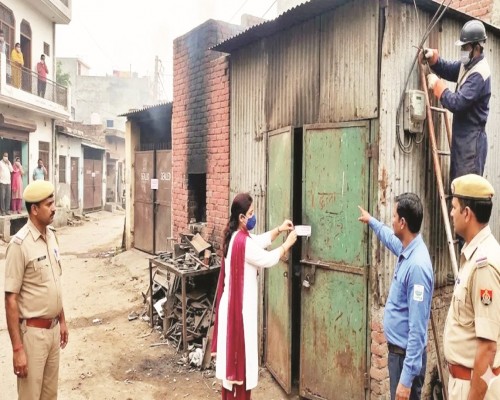
A major enforcement drive targeting environmental compliance led to the sealing of 14 industrial units and the disconnection of electricity supply to several others in industrial areas of Ghaziabad. The action was undertaken by a joint team of district administration officials, the Uttar Pradesh Pollution Control Board (UPPCB), and the electricity department as part of efforts to strengthen pollution monitoring and regulatory compliance.
The enforcement action focused on industrial establishments that had allegedly failed to install or properly operate Online Continuous Emission Monitoring Systems (OCEMS), which are designed to provide real-time monitoring of industrial emissions and help regulatory authorities ensure adherence to environmental standards.
According to officials, the Pollution Control Board had earlier identified units that were either not equipped with the required monitoring systems or were not operating them in accordance with prescribed norms. Following inspections and compliance reviews, a list of non-compliant units was prepared and forwarded to the district administration for further action.
A coordinated operation was subsequently launched across industrial clusters, including areas along Bulandshahr Road and Loni. Multiple inspection teams were deployed to different industrial zones to verify compliance status and take action against units found violating environmental regulations.
During the inspections, authorities reportedly discovered several establishments where monitoring systems were either absent, non-functional, or not transmitting data as required. As a result, electricity connections to a number of industrial units were disconnected, while fourteen factories were sealed for alleged non-compliance with environmental directives.
Officials stated that the affected units had been issued notices on multiple occasions and were given opportunities to comply with the prescribed requirements before enforcement measures were initiated. The action, they said, was intended to ensure stricter implementation of pollution control norms and improve environmental accountability among industrial operators.
The move, however, triggered strong reactions from the industrial community. Entrepreneurs and industry representatives expressed concern over the timing and manner of the enforcement drive. Several industrial associations argued that the action caused significant disruption to manufacturing operations and impacted businesses that were in the process of addressing compliance requirements.
Particular dissatisfaction was expressed over the fact that the operation was carried out on a weekly holiday, when many industrial units were closed and key management personnel were unavailable. Industry representatives claimed that some entrepreneurs had been under the impression that no coercive action would be taken during the holiday period and were therefore unable to respond immediately to the inspections.
Business leaders further contended that regulatory enforcement should be accompanied by adequate communication, clear timelines, and opportunities for corrective action before electricity disconnections and sealing proceedings are undertaken. They argued that environmental compliance is essential, but enforcement measures should also take into account operational realities faced by industrial units.
The incident has intensified discussions regarding the balance between environmental protection and industrial productivity. While environmental authorities maintain that strict enforcement is necessary to curb pollution and ensure compliance with statutory requirements, industry bodies are calling for a more consultative approach that encourages corrective action without causing abrupt disruptions to business operations.
Experts note that Online Continuous Emission Monitoring Systems have become an increasingly important component of environmental governance, enabling regulators to monitor emissions in real time and identify violations more effectively. As environmental standards continue to tighten, industries are expected to face greater scrutiny regarding compliance with pollution-control regulations.
The enforcement drive underscores the growing emphasis on environmental accountability in industrial operations. At the same time, it highlights the need for constructive engagement between regulators and industry stakeholders to ensure that environmental objectives are achieved while supporting sustainable industrial growth and economic activity.