
Trade Unions and Industrial Growth: Chief Minister Calls for a Balanced Approach
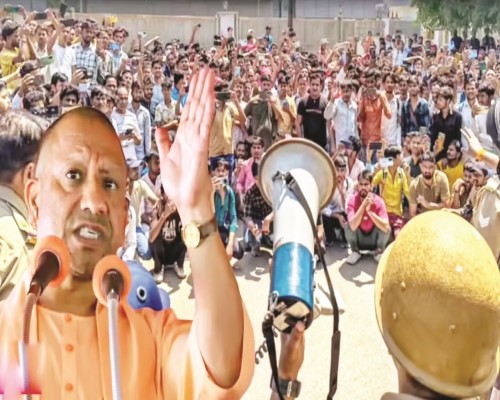
The Chief Minister of Uttar Pradesh has emphasized the need for a balanced relationship between labour welfare and industrial development, stating that prolonged labour disputes and excessive trade union intervention have, in several instances, contributed to the closure of industrial units. He stressed that while workers' rights must always be protected, industrial productivity and economic growth should not be compromised.
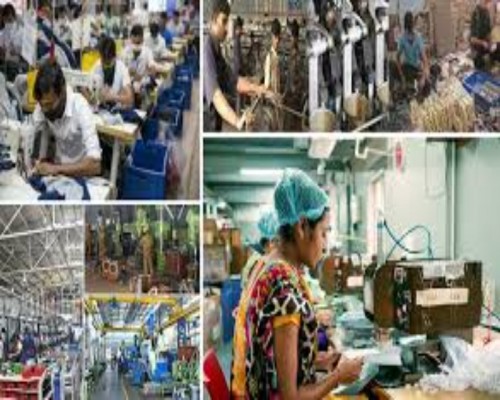
Addressing a gathering during a public interaction programme, the Chief Minister noted that industries serve as the backbone of employment generation and economic progress. He observed that whenever conflicts between management and labour escalate without constructive resolution, the consequences are often severe—not only for industrial establishments but also for workers and their families who depend on these industries for their livelihood.
He remarked that in some cases, labour organizations become so focused on confrontation that they lose sight of the larger objective of protecting employment. According to him, when an industry shuts down due to continuous disputes, workers suffer the most as jobs are lost and opportunities for future employment decline. He asserted that the ultimate goal should be the preservation and growth of industries while ensuring fair treatment and adequate welfare measures for employees.
The Chief Minister highlighted the transformation taking place in Uttar Pradesh's industrial landscape and said the state has been making significant efforts to attract investments, create infrastructure, and establish a business-friendly environment. These initiatives, he said, have generated new opportunities for employment and economic advancement across various sectors.
Discussing labour relations, he underlined the importance of dialogue, cooperation, and mutual understanding between employers and employees. Industrial harmony, he said, is essential for maintaining productivity and ensuring sustainable development. Rather than allowing disagreements to escalate into prolonged conflicts, stakeholders should seek practical and mutually beneficial solutions through discussion and institutional mechanisms.
He also referred to the changing nature of modern industries, where competitiveness, innovation, and efficiency play a critical role in survival and growth. In such an environment, maintaining a healthy balance between workers' interests and industrial requirements becomes increasingly important. A collaborative approach, he noted, benefits all parties involved and contributes to long-term economic stability.
The Chief Minister further highlighted the role of responsible journalism and public discourse in promoting awareness about social and economic issues. He said that informed reporting can help encourage accountability, constructive debate, and public participation in matters that impact society and development.
Concluding his address, he reiterated that the interests of workers and industries are closely linked and should not be viewed as opposing forces. Strong industries create employment, support economic growth, and contribute to social welfare. Therefore, he called upon labour representatives, employers, policymakers, and all stakeholders to work together to create an environment that promotes both workers' welfare and industrial prosperity.