
Breakthrough: Scientists Successfully Convert Lead into Gold-like Material
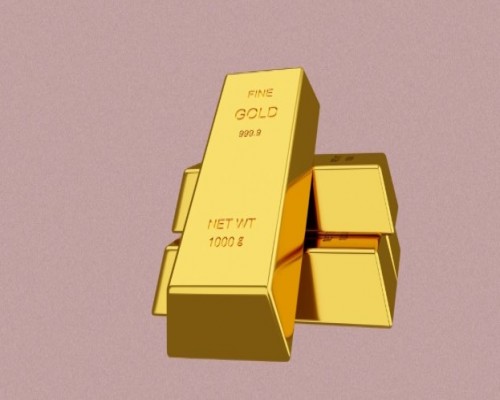
In a groundbreaking achievement that echoes ancient alchemical dreams, a team of international scientists has successfully converted lead (Pb) into gold-like matter under highly controlled lab conditions. The findings, published in the reputed journal Physical Review C, have stunned the global scientific community and opened new frontiers in atomic transformation research.
The team, working at the Jefferson Laboratory in the United States, achieved this transformation using a particle accelerator known as the Free Electron Laser (FEL). By bombarding lead atoms with high-energy particles at extreme speeds, the scientists altered their nuclear structure—an achievement previously considered impossible in practical scenarios.
An Experiment of Unimaginable Scale
The transformation was not instantaneous. It required over 8.6 billion attempts and around 89,000 CPU hours to complete the process successfully. The energy applied modified the proton-neutron configuration of lead atoms, making the material chemically behave like gold in its optical and physical properties.
Though the new substance isn't gold in the economic or jewelry sense, its conductivity, luster, and malleability make it suitable for advanced industrial applications, particularly in aerospace and electronics.
Implications for Mining and Resource Discovery
Experts believe this discovery could revolutionize metal extraction and deep-earth mining. The study may help identify previously untapped deposits of precious metals by understanding atomic behavior under extreme conditions.
"This isn’t just scientific curiosity—it has profound practical potential in materials science and nuclear physics," said lead researcher Dr. Richard Thomason.
Still a Long Way to Commercialization
Despite the achievement, scientists emphasize that the method is currently not economically viable for mass gold production. The real value lies in the precision of nuclear manipulation and its potential spin-offs in quantum computing, defense technology, and nuclear waste management.