
Norway’s Remote Svalbard Archipelago Has More Polar Bears Than People
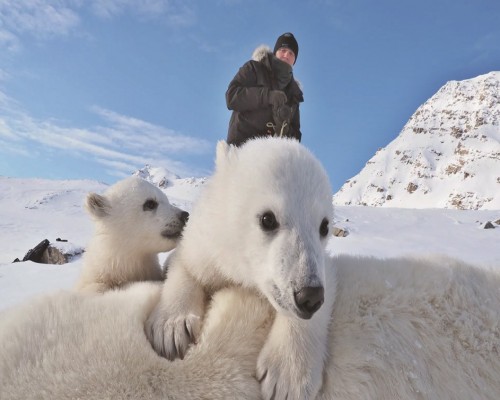
Norway’s Svalbard archipelago is one of the world’s rare inhabited regions where polar bears outnumber human beings. Located deep in the Arctic, the region is known for its extreme climate, long periods of darkness and a fragile natural ecosystem that remains among the most unique on Earth.
Situated between the Norwegian mainland and the North Pole, Svalbard lies approximately 800 kilometres from Norway’s northern coast. Its administrative centre, Longyearbyen, is home to a small population of about 2,400 people. By comparison, the surrounding Arctic region is estimated to have around 3,000 polar bears, making wildlife presence far greater than human settlement.
The region experiences some of the harshest living conditions in the world. For nearly half the year, residents may witness either continuous daylight or prolonged darkness. During winter, temperatures often drop to dangerous levels, and the landscape remains covered with snow and ice for long periods. Despite these challenges, Svalbard has developed into a small but significant Arctic community.
Svalbard is also home to one of the northernmost universities in the world, a church, a brewery and essential civic services. One unusual local practice is that people do not usually lock their homes. This custom is linked to the risk posed by polar bears, as a person in danger may need quick shelter in the nearest available building.
For safety reasons, residents and visitors travelling outside settlements are required to carry a firearm or travel with someone equipped for protection. Polar bears are protected, and shooting them is permitted only in situations of immediate danger. The policy reflects the delicate balance between human safety and wildlife conservation.
Historically, Svalbard has been shaped by coal mining. In 1906, American businessman John Munro Longyear established coal mining operations in the area, and the town of Longyearbyen was named after him. Mining remained the main economic activity for many decades, but the region has gradually shifted towards research, education and tourism.
The archipelago was placed under Norwegian sovereignty through the Svalbard Treaty of 1920. Under this treaty, citizens of signatory countries received certain rights related to residence and commercial activity in the region. As a result, Svalbard has a distinct international character, with people from different countries living and working there.
Today, tourism is a major activity, although it is strictly regulated because of the fragile Arctic environment. Visitors usually arrive by air or by sea, and travel beyond settlements is controlled due to safety and conservation concerns. Environmental rules are strict, and careless behaviour can attract penalties.
Svalbard is also increasingly affected by climate change. Rising temperatures, melting ice and shifting wildlife patterns have made the region a visible indicator of environmental change in the Arctic. Its unusual combination of human settlement, polar wildlife, scientific research and fragile ecology makes it one of the most extraordinary places in the world.