
Scientists Discover 15-Million-Year-Old Shark Fossil, Offering New Insights into Evolution
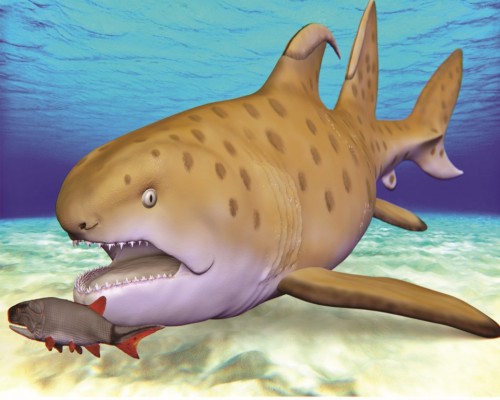
Scientists have discovered a rare fossil of a shark believed to be approximately 15 million years old, shedding new light on the evolutionary history of sharks. The discovery has attracted significant attention among researchers, as it provides valuable clues about how these ancient marine predators evolved over millions of years.
The fossil, identified as belonging to an ancient shark species named Bavariselachus, was discovered in geological formations dating back to the Miocene epoch. Researchers say the specimen has been preserved in remarkably good condition, allowing scientists to closely study its structure and characteristics.
According to experts, the fossil measures about 15 centimeters in length, indicating that the species was relatively small compared to many modern sharks. Despite its modest size, the fossil is considered scientifically important because it provides evidence of previously unknown evolutionary traits among early shark species.
Researchers studying the fossil have observed that the body structure of this ancient shark differs significantly from that of present-day sharks. These differences offer important insights into how shark species gradually diversified and adapted to changing marine environments over millions of years.
The species is believed to have lived in ancient oceans during a period when marine ecosystems were undergoing major evolutionary transitions. Scientists suggest that studying fossils like this one can help reconstruct the evolutionary pathways that led to the development of modern shark groups.
The discovery also highlights that even relatively small marine species can play an important role in understanding the broader history of ocean life. Fossils preserved in good condition allow researchers to examine anatomical features that reveal how different shark lineages evolved and spread across ancient seas.
According to researchers involved in the study, findings from this fossil indicate that several groups of sharks may have evolved along different paths than previously believed. This suggests that the evolutionary history of sharks may be more complex than earlier scientific models had assumed.
Scientists believe the discovery will contribute to ongoing research into prehistoric marine ecosystems and the diversification of early shark species. By examining fossil evidence, researchers hope to gain a clearer understanding of how environmental changes influenced the development and survival of marine predators over millions of years.
The newly discovered fossil underscores the importance of paleontological research in uncovering the hidden history of life on Earth. Each new discovery provides a deeper understanding of ancient ecosystems and the evolutionary processes that have shaped modern biodiversity in the oceans.