
“A Nation’s Birthday Gift: Honoring Modi’s Vision and Legacy”
The Day India Pauses to Celebrate
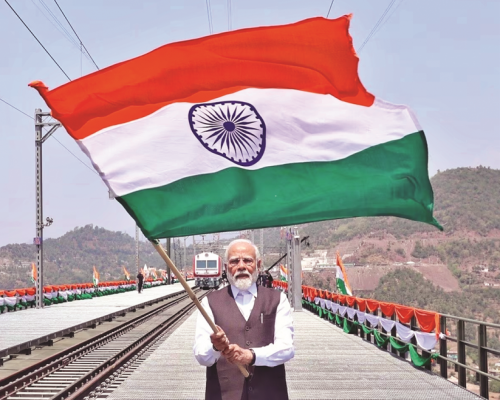
Every year on September 17, India turns a little more introspective, a little more celebratory. It’s not just the birthday of Narendra Damodardas Modi — the country’s 14th Prime Minister — but in many ways a moment to reflect on the arc of the nation under his stewardship. Born in 1950 in the small town of Vadnagar in Gujarat, Modi’s life has become a narrative of transformation — from humble beginnings to commanding global presence.
As he turns 75 in 2025, the significance is not lost on millions. Celebrations across India include public welfare initiatives, cultural events, exhibitions on his life and work, and a reaffirmation of a narrative: that India under Modi is a nation rising, resilient, and ambitious.
This cover story is not mere congratulation, but a reflection — to chronicle his journey, weigh his imprint, and sketch the road ahead.
Part I: The Formative Years — Roots of Resolve
Childhood and Early Influences
Narendra Modi was born on September 17, 1950, in Vadnagar, a modest town in Gujarat’s Mehsana district. He was the third of six children in a family of limited means; his father ran a tea stall at the Vadnagar railway station, and young Narendra too helped the family business in his youth. His early years were shaped by simplicity, hard work, and a spirit of self-reliance.
Education was not easy — he faced financial constraints, moved through local schools, and later completed a master’s degree in political science through distance learning. Even as a young man, Modi associated with the Rashtriya Swayamsevak Sangh (RSS), developing organizational skills, discipline, and ideological grounding.
During India’s Emergency (1975–77), Modi played a role in mobilizing opposition in Gujarat as part of RSS and ideological dissent networks, experiences that honed his political instincts. Over time, he rose in BJP ranks, earning reputation as an organizer, communicator, and campaign strategist.
Gujarat: The Laboratory of Governance
In 2001, Narendra Modi became Chief Minister of Gujarat, succeeding Keshubhai Patel. During his roughly 13-year tenure (2001–2014), he initiated a range of structural, infrastructure, and social reforms that would later inform his national governance style.
Some highlights:
- Irrigation and Water Management: Confronting Gujarat’s water scarcity, Modi oversaw large-scale irrigation projects, check dams, and the Jyotigram Yojana to ensure 24×7 power to agricultural feeders. These interventions aimed to boost farm productivity and rural livelihoods.
- Electricity Access & Reliability: Under Jyotigram, farmers received reliable power supply, a key challenge in many agrarian states. Infrastructure expansion in transmission and distribution was a priority.
- Urban and Rural Infrastructure: Roads, public utilities, rural water systems, and urban planning received focus, improving connectivity, sanitation, and amenities.
- E-Governance & Efficiency: Modi’s Gujarat government emphasized transparency, grievance redressal, and a faster administrative regime. It sought to reduce red tape, adopt citizen-friendly digital tools, and deliver welfare more directly
- Economic Growth Strategy: Gujarat under Modi sought to attract investments, boost industrial clusters, and emphasize trade linkages. The state branded itself for business- and growth-oriented governance.
- Resilience to Crises: Notably, Gujarat under Modi handled the 2002 riots (a deeply contentious episode) and the Bhuj earthquake of 2001, pressing the administrative apparatus for crisis response and rebuilding. (These events also remain sources of scrutiny and controversy, but they shaped his approach to decision-making under stress.)
By the time Modi left for national politics, Gujarat had become a showcase state in many respects — a proving ground of his vision of development, discipline, and grit.
Part II: Rising to National Leadership
The 2014 Ascendancy
When the 2014 general elections came, the Bharatiya Janata Party (BJP) campaigned on development, good governance, and change. Modi, with his reputation as a “doer” and his connect with the grassroots, emerged as the central figure. The BJP won a decisive majority, and he was sworn in as Prime Minister on May 26, 2014. He became India’s first prime minister born after independence.
With the mandate in hand, Modi’s government embarked on an ambitious agenda of reforms, infrastructure, welfare, and diplomatic outreach.
Structural Reforms and Institutional Changes
- NITI Aayog replaces Planning Commission
In December 2014, the Modi government abolished the decades-old Planning Commission, replacing it with NITI (National Institution for Transforming India) Aayog — a more decentralized, cooperative federal body that reports to the Prime Minister’s Office. This shift aimed to move from top-down planning to bottom-up, state-inclusive development strategy. - Ease of Doing Business & Regulatory Simplification
The government aggressively worked to simplify business rules, reduce red tape, rationalize inspections, and ease compliance burdens. India made leaps in the World Bank’s Ease of Doing Business rankings under Modi’s leadership. Reforms in foreign direct investment (FDI) rules, liberalization of key sectors, and improved infrastructure catalyzed investor confidence. The government also instituted performance-based metrics in civil services and linked administrative incentives to outcome-based delivery. - Goods and Services Tax (GST)
One of the most significant tax reforms in India’s history, the GST — launched in 2017 — unified a labyrinth of indirect taxes into a single national system. While challenging to implement, it fundamentally altered India’s fiscal architecture, promoting ease of intra-state trade and reducing cascading taxes. - Digital India & Technology Push
Modi’s government pushed for digital infrastructure and governance: widespread internet access, e-governance services, Aadhaar integration, digital payments, and linking welfare with direct benefit transfers. These moves reduced leakages, promoted transparency, and modernized public services.
The “JAM Trinity” (Jan Dhan bank accounts + Aadhaar identity + Mobile connectivity) became the backbone of financial inclusion and direct transfer schemes.
Several ministries and departments adopted portal-based delivery, e–office, and open data platforms.
Welfare & Social Transformation Programs
From day one, Modi’s governance narrative emphasized “minimum government, maximum governance” and targeted welfare efficiency:
- Pradhan Mantri Jan Dhan Yojana
Launched in 2014, it aimed at universal financial inclusion — opening bank accounts for the unbanked, issuing debit cards, and enabling micro-savings. Over time, more than 40–50 crore (400–500 million) accounts have been opened, bringing millions into the banking system.
This also allowed direct subsidy transfers and welfare payments to reach beneficiaries sans intermediaries. - Swachh Bharat Mission (Clean India Mission)
One of Modi’s signature initiatives, launched in 2014, it aimed to eradicate open defecation, build millions of toilets, and improve sanitation across rural and urban India. Over time, this has yielded results in improved hygiene, public health, and civic pride.
The campaign also included behavioral change outreach, waste management, and community participation.
By mid-2020s, India announced that nearly all rural households had access to toilets.
Sanitation infrastructure, solid waste management, and city cleanliness programs extended across the country. - Pradhan Mantri Ujjwala Yojana
To address health and environmental concerns, the government provided free LPG (liquid petroleum gas) connections to poor households, enabling clean cooking free from smoke and harmful emissions. This reduced indoor air pollution and improved women’s health outcomes. - Ayushman Bharat / Pradhan Mantri Jan Arogya Yojana
Launched in 2018, this is one of the world’s largest public health insurance schemes — providing hospitalization cover to tens of millions of families. It combines primary health center strengthening, health and wellness centers, and insurance coverage, aiming for universal healthcare access. - PM-Kisan & Farmer Support Initiatives
The Modi government emphasized direct support to farmers via Pradhan Mantri Kisan Samman Nidhi (PM-Kisan), offering direct cash transfers to landholding farmers.
Other initiatives include Soil Health Cards, Pradhan Mantri Fasal Bima Yojana (crop insurance), and promotion of e-NAM (electronic national agricultural market) to integrate agriculture markets. - Skill India / PM Kaushal Vikas Yojana
Recognizing India’s youth dividend, the government rolled out massive skill training programs to improve employability and align labor with industry needs. Under PMKVY, millions of youths have been trained in various trades. - Housing, Infra & Connectivity
Ambitious urban housing programs (such as “Housing for All”), rural road connectivity (Pradhan Mantri Gram Sadak Yojana upgrades), electrification in remote regions, and expansion of rail, air, and port infrastructure have been central planks.
The government claims electrification of all villages and provision of power to households — some successes on that front, though challenges remain.
Crisis Management & Pandemic Response
Modi’s tenure has confronted severe tests:
- Demonetization (2016)
In November 2016, Modi announced demonetization of ₹500 and ₹1000 banknotes with limited notice, aiming to curb black money, counterfeit currency, and promote digital payments. The move was bold and controversial — causing short-term disruption but triggering structural shifts in cash usage and digital finance adoption. - COVID-19 Pandemic & Vaccination Drive
India’s response to the COVID-19 crisis stands as one of its defining challenges. The government imposed a nationwide lockdown, ramped up testing infrastructure, supported migrant logistics, and undertook one of the world’s fastest vaccine rollouts.
The vaccine drive — with indigenous vaccines (Covaxin, others) and partnerships — aimed to cover hundreds of millions. Despite supply, distribution, and equity challenges, India often touted itself as a global vaccine supplier.
The relief packages, food security provisions, and economic stimulus measures were also vital in cushioning shock to vulnerable populations. - Other Disasters & Response
Natural calamities (floods, cyclones, earthquakes) have tested India’s state resilience. Modi’s government pushed for disaster preparedness, integrated response systems (e.g. National Disaster Response Force), and faster reconstruction processes.
Foreign Policy & Global Role
Under Modi, India’s foreign diplomacy has been assertive, proactive, and image-oriented — seeking to reclaim centrality in global affairs:
- Act East / Neighborhood First
Modi’s approach emphasized strengthening ties with immediate neighbors (Sri Lanka, Nepal, Bangladesh, Bhutan, Myanmar) through infrastructure, trade, and cultural engagement.
Projects like the Chabahar port (Iran), connectivity corridors, and cross-border energy pipelines aimed to cement economic ties in India’s region. - Global Forums & Summits
India under Modi has taken leadership roles in forums like G20, BRICS, Quad, International Solar Alliance (ISA), Acting for Global Commons, and climate action diplomacy.
During India’s G20 presidency, the country emphasized a “human-centered view,” supply chain resilience, and multilateralism. - Strategic Partnerships
India strengthened strategic and defense cooperation with the U.S., Japan, Australia, France, UAE, Israel, and Russia. Supply chains, defense procurement, joint exercises, and technology sharing became key pillars.
The India-U.S. relationship deepened under frameworks like the Quadrilateral Security Dialogue (Quad) and Indo-Pacific security architecture.
With China, Modi balanced diplomacy and firmness — managing border tensions, trade issues, and strategic posturing. - Soft Power & Cultural Outreach
Global promotion of yoga (International Day of Yoga, launched in 2014), cultural diplomacy, diaspora engagement, and Indian language outreach have enhanced India’s soft power.
The first International Yoga Day saw ~36,000 people in Delhi alone breaking world records in mass yoga.
Modi’s own brand of “punchy diplomacy,” global tours, and influencer-level public persona have elevated India’s visibility.
Part III: Eleven Years In, Markers of Legacy
By 2025, Modi has served over 4,000 days as Prime Minister, becoming India’s third longest-serving PM after Nehru and Indira Gandhi. The BJP-led NDA alliance has garnered sustained electoral successes, and his image as a leader of transformation has solidified.
Here are some hallmark achievements and signature transformations often associated with his era:
Economic Growth &Macrostability
- India under Modi has often led among large economies in GDP growth rates, with robust post-pandemic recovery.
- Strong macroeconomics: maintaining fiscal discipline, inflation control, increasing foreign reserves, and external demand resiliency.
- Growth of manufacturing, infrastructure investment, and digital economy have strengthened India’s global competitiveness.
- Over the years, India moved upward in global indices of competitiveness, doing business, and investment climate.
Sanitation, Drinking Water & Health Gains
- More than 12 crore toilets have been constructed since 2014, significantly reducing open defecation.
- Tens of crores of households have received piped water connections or tap water under schemes like Jal Jeevan Mission.
- The Ayushman Bharat scheme has extended health coverage to millions, bringing financial protection from catastrophic medical costs.
- Health and wellness centers, screening, noncommunicable disease prevention, and telemedicine have been expanded into rural and semi-urban areas.
Poverty Alleviation & Social Inclusion
- The government claims that over 25 crore people have been lifted out of poverty during his tenure.
- Subsidies, direct transfer schemes, rural employment guarantee (MGNREGA), housing, electrification, and digital inclusion contributed to rural economic uplift.
- Targeted support for women, marginalized groups, and remote communities have been part of the outreach narrative.
Transformative Political Decisions
- Abrogation of Article 370 & Reorganisation of Jammu & Kashmir
In 2019, the government revoked the special status of Jammu & Kashmir under Article 370, reorganizing the state into union territories. This bold move was billed as restoring integration and equity. - Repeal of Triple Talaq, Uniform Civil Code Discussions
The Modi government passed legislation banning instant triple talaq for Muslim women, advancing gender justice within Muslim personal law. - Legislative Reforms & Constitutional Decisions
Reforms to labor laws, bankruptcy codes, insolvency, urban governance, and administrative consolidation have been introduced to modernize India’s legal edifice. - Centralization & Executive Restructuring
Critics observe that Modi’s governance style involves strong central control, direct oversight of key appointments, and delegating significant authority to the Prime Minister’s Office.
The use of ordinances, oversight of bureaucratic alignments, and ensuring alignment across ministries reflect a determined approach to execution.
Global Standing & Diplomacy
- India’s voice on the global stage has grown. At international summits, forums, and multilateral institutions, Modi has positioned India as a responsible, proactive player.
- Under India’s G20 presidency (2023–24), Modi emphasized resilience, supply chain robustness, developing-country aspirations, and human-centric development.
- India’s strategic autonomy — balancing ties with the U.S., Russia, China, and other powers — often finds a firm yet flexible voice in his diplomacy.
Cultural Revival & National Identity
- Modi has promoted narratives of cultural resurgence, heritage restoration, and India’s civilizational strengths, weaving heritage sites, language, and tradition into national aspirations.
- Initiatives like “Ek Bharat, Shreshtha Bharat,” heritage conservation, temple restorations, and tourism expansion seek to link soft identity with national development.
- The idea of “New India” — aspirational, dignified, self-reliant (Atmanirbhar Bharat) — has become a recurring motif in speeches, policies, and brand identity.
Part IV: The 75th Birthday & Reflection
As Modi crossed the 75-year threshold in September 2025, celebrations and initiatives underscored the narrative of service and legacy:
- On his birthday, Modi launched welfare programs such as Swasth Nari, Sashakt Parivar and Rashtriya Poshan Maah from Dhar in Madhya Pradesh, alongside laying the foundation for the PM MITRA textile park.
- His birthday is observed as Sewa Pakhwada (15 days of service) by BJP and allied states — encouraging blood donation drives, health camps, cleanliness campaigns, and public service outreach.
- In Vadnagar — his hometown — his extended family and locals organized cultural programs, health camps, cleanliness drives, and exhibitions on his life.
- Across states, drone shows, exhibitions, and special events trace his journey and achievements.
- Political leadership, both domestic and international — from dignitaries like Putin, Giorgia Meloni, and others — sent warm greetings, acknowledging India’s growing stature and Modi’s role.
In remarks from Dhar, Modi invoked national pride and resolve: “This is New India — it does not fear blackmail,” he said, referring to recent geopolitical pressures. As he stood on that platform, the spectacle was not just of festive celebration, but of a leader staking a claim to continuity, vision, and resolve.
Part V: Leadership Style, Critiques & Balances
No long tenure is immune to critique or complexity. A balanced cover story must acknowledge strengths, challenges, and the tensions inherent in ambitious governance.
Strengths of Modi’s Leadership
- Decisiveness & Action Orientation: Modi is often praised for his willingness to take bold, even disruptive, decisions (e.g. demonetization, abrogation of Article 370). His governance style is anchored in urgency and execution.
- Electoral Connect & Mass Mobilization: His communication, mass rallies, social media outreach, and ability to shape narratives have helped him sustain popular support and political momentum.
- Integrated Agenda & Vision: Rather than piecemeal reforms, Modi has aimed for a coherent development arc — linking infrastructure, welfare, identity, and diplomacy under a unifying “New India” framework.
- Administrative Discipline: His reliance on performance, data, monitoring, and rigorous oversight has fostered an environment in many ministries of accountability and target orientation.
- Global Branding: He transformed India’s external image from a passive regional player to a confident global actor — hosting leaders, shaping alliances, and shaping global debates.
Challenges, Critiques & Structural Risks
- Centralization & Bureaucratic Strain: Some critics argue that Modi’s leadership style concentrates power in the Prime Minister’s Office, with ministries given less autonomy, and bureaucratic dissent discouraged.
- Implementation Gaps & Disparities: Across India’s vast stretch, inequalities remain — rural-urban divides, state-level variation in governance capacity, lagging social outcomes in some regions, and local bottlenecks.
- Economic Vulnerabilities: Structural issues in agriculture, job creation, informal sector, healthcare, and education continue to challenge India’s ambition for inclusive growth.
- Social Polarization & Identity Politics: Some critics posit that emphasis on Hindu identity, cultural nationalism, and assertive majoritarian narratives have strained India’s pluralistic character.
- Media Freedom & Dissent Space: Observers note a constrained environment for independent media, civil society, and dissenting voices under his rule.
- Legacy Risks: The weight of expectations is high — sustaining momentum over long tenure invites fatigue, policy fatigue, and opposition pushback.
Still, Modi and his supporters counter that transformation at scale inevitably faces resistance and friction, and that bold-governance often demands trade-offs in pace and politics.
Part VI: What Lies Ahead — Vision & Next Frontiers
As Modi enters his late seventies, what lies ahead is as important as what already is. The future trajectory of his leadership and India’s destiny intertwine.
Towards 2047: The India of the 100th Birthday
Modi often evokes the year 2047 — the centenary of India’s independence — as a milestone. His ambition is clear: to make India a $30-40 trillion economy, a global technological hub, a manufacturing superpower, and a force in sustainable development.
Green Energy & Climate Leadership
- India’s role in climate resilience, renewable energy, carbon capture, and sustainable development will be central. Modi aims for greater solar, wind, green hydrogen, and energy storage capacity.
- Projects like the International Solar Alliance (ISA) and global climate diplomacy will remain strategic priorities.
Next-Gen Infrastructure & Technology
- Smart cities, high-speed rail corridors, hyperloops, modern metros, and integrated transport networks are on the horizon.
- Digital architecture, AI, 5G, quantum tech, data sovereignty, and emerging domains (space, biotech) will be core to India’s future economy.
Manufacturing & Self-Reliance
- The ambition of Atmanirbhar Bharat (self-reliant India) suggests massive focus on indigenous manufacturing, reducing import dependencies, strengthening value chains, and integrating India into global supply chains.
Education, Health & Human Capital
- Overhauling public health systems, boosting preventive care, primary infrastructure, and telemedicine reach.
- Educational reforms, vocational skilling, research university models, and talent retention will be critical to harness India’s youth.
Social Harmony & Inclusive Governance
- For Modi to leave a lasting legacy, bridging fault lines — caste, region, religion, gender — will be vital.
- Deepening participatory governance, strengthening institutions, and safeguarding civil liberties will test India’s maturity.
Institutional Legacy & Succession
- A signature legacy will be whether Modi can build institutions, not personalities — nurturing successors, systems, accountability beyond his own era.
- The balance between centralized leadership and institutional diffusion may define whether India’s institutions outlive individual leaders.