

Artemis-2 Set to Travel Beyond the Moon, Launch Scheduled for April
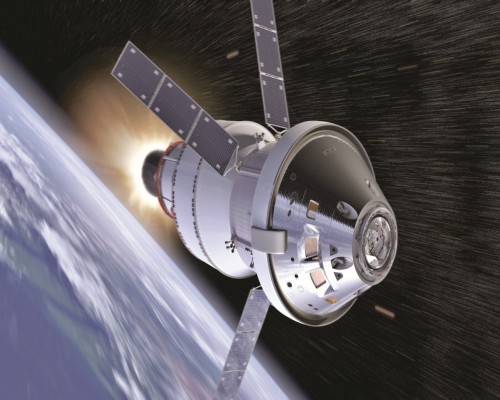
The United States is preparing for a landmark deep-space mission as Artemis-2 moves toward its scheduled launch in April. The mission will mark a historic return of astronauts to lunar orbit and will venture farther than previous crewed missions, signaling a major step forward in human space exploration.
Led by NASA, Artemis-2 is part of the broader Artemis program aimed at establishing a sustained human presence on and around the Moon. Unlike the uncrewed Artemis-1 mission, Artemis-2 will carry astronauts aboard the Orion spacecraft, sending them on a journey beyond low Earth orbit and into deep space.
The mission profile involves launching from the Kennedy Space Center aboard the Space Launch System (SLS) rocket. After reaching Earth’s orbit, the Orion spacecraft will use its propulsion system to set course for a lunar flyby trajectory. The crew is expected to travel approximately 41,541 miles beyond the Moon at its farthest point, making it one of the most distant crewed space missions in history.
The astronauts will not land on the lunar surface but will perform a close flyby before returning to Earth. The round trip is expected to last around 10 days. During the mission, the crew will conduct critical tests of spacecraft systems, life-support equipment, and operational procedures required for future lunar landings.
NASA has confirmed that the Artemis-2 crew includes Commander Reid Wiseman, Pilot Victor Glover, Mission Specialist Christina Koch, and Canadian astronaut Jeremy Hansen. Their mission will test human performance and spacecraft capabilities in deep-space conditions, laying the groundwork for Artemis-3, which is planned to attempt a crewed lunar landing.
Inside the Orion spacecraft, astronauts will operate a fully digital cockpit with advanced touch-screen controls and integrated mission systems. The spacecraft is designed to endure the harsh radiation environment of deep space while maintaining life-support systems capable of sustaining crew members for extended durations.
The Artemis program is considered a foundational step toward eventual missions to Mars. By demonstrating reliable deep-space travel, testing new technologies, and refining operational protocols, Artemis-2 will contribute vital data for long-term exploration objectives.
Officials describe the upcoming mission as a historic milestone that reconnects human spaceflight with deep-space exploration beyond Earth’s orbit. As preparations enter their final stages, Artemis-2 stands poised to become a defining chapter in the next era of space exploration.