

Breakthrough: China Produces First Cloned Yak
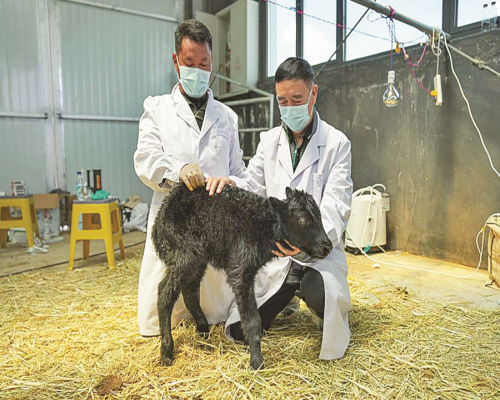
In a significant scientific achievement, researchers from the Chinese Academy of Sciences have successfully created the world’s first cloned yak, an animal native to high-altitude Himalayan regions. The male calf was delivered via surgical procedure on July 10, weighing 33.5 kilograms at birth, and is reported to be in stable health.
The cloning process was undertaken to preserve and enhance desirable genetic traits of yaks, which are vital for the livelihood of communities in high-altitude regions due to their role in providing milk, meat, and transport. Scientists believe this breakthrough could lead to improved breeding methods, ensuring stronger and more resilient livestock capable of thriving in extreme environments.
According to the research team, the cloning process involves transferring the nucleus of a somatic cell into an egg cell whose nucleus has been removed, followed by stimulating cell division to create an embryo. This embryo is then implanted into a surrogate mother. The cloned yak shares identical genetic material with the donor animal, making it a perfect genetic replica.
Ordinarily, yaks face reproductive challenges due to their harsh habitat, and selective breeding is a slow process. Cloning offers a way to accelerate genetic improvements, potentially boosting productivity, disease resistance, and adaptability to climate change. The success of this project marks a major milestone in livestock genetics, particularly for high-altitude animal husbandry.
Scientists noted that while cloning technology has been successfully used for other animals in the past, such as sheep, cattle, and goats, this is the first successful attempt with a yak. The achievement opens new avenues for research into cloning other highland species and could have far-reaching implications for the future of sustainable farming in cold, mountainous regions.