
Foundation for a Developed India Being Laid: PM
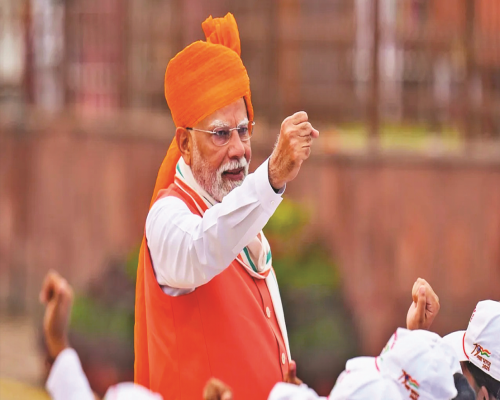
Prime Minister Narendra Modi has said that India is steadily laying the foundation of a developed nation by focusing on easing the tax burden for citizens and businesses. After providing relief in income tax earlier, the government has now rationalized GST rates to make goods and services more affordable.
From Burden to Relief
The Prime Minister explained that in earlier times, people were heavily burdened with complex and multiple taxes, which stifled growth and added hardships for ordinary families. “We have moved away from that approach and are instead working to simplify taxation and provide direct benefits to the common people,” he said.
Under the new GST regime, the four-slab structure has been reduced to just two—5% and 18%. Essential goods such as food items, medicines, and dairy products are either exempt or taxed at the lowest slab, while only luxury and demerit goods face higher rates, up to 40%.
Benefits for Households and Economy
The Prime Minister noted that these reforms would ensure more disposable income for households, reduce inflationary pressures, and improve ease of doing business. He emphasized that a simplified GST framework would not only help the middle class but also empower farmers, women, and youth by reducing costs in agriculture, healthcare, and education.
Long-Term Vision
Highlighting India’s broader growth agenda, the Prime Minister said that GST 2.0 is part of the larger vision for a “Viksit Bharat” (Developed India). The tax reforms, coupled with infrastructure development and digital transformation, are creating a strong economic base for the next 20–25 years.
“Every reform is designed to make life easier for ordinary citizens while strengthening India’s competitiveness globally,” he stated, adding that these steps will bring long-lasting benefits to future generations.