
Four New Namo Cities to Be Developed in NCR
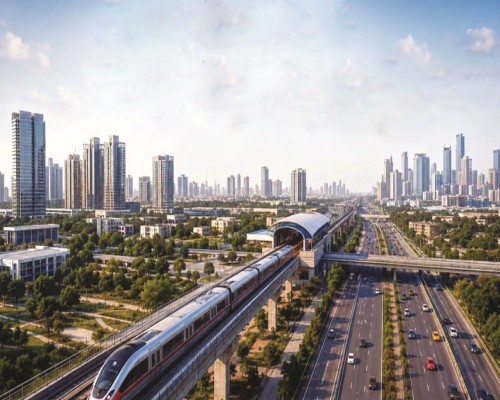
Four new greenfield cities will be developed in the National Capital Region under a major planning decision taken by the NCR Planning Board. The proposed cities will be named Namo Cities and will be developed to reduce population pressure on Delhi and other existing urban centres in the NCR.
The decision is aimed at ensuring that no city remains outside the National Capital Region while creating planned alternatives for future urban growth. The new cities are proposed to be developed around the Eastern Peripheral Expressway and Western Peripheral Expressway, which will provide strong road connectivity and support balanced development in the region.
Each proposed city will be developed with an estimated investment of around ₹5,000 crore over the next five years. Environmental standards will be given special importance during construction, and the cities will be planned as modern, green and sustainable urban centres.
At present, the population of the NCR is around 7.5 crore, and it is estimated to reach around 15 crore over the next 15 years. In view of this expected increase, the Planning Board has discussed the need for new urban centres that can absorb future population growth and reduce congestion in existing cities.
NCR to Be Divided Into Three Zones
The NCR Planning Board has agreed to divide the region into three zones on the basis of transport facilities and development requirements. The move is intended to improve connectivity among all NCR cities and support the development of new road networks within and around the region.
During the meeting, a proposal was also placed to exclude Bharatpur district of Rajasthan from the NCR, but the board rejected the proposal. However, it was agreed that Bharatpur and Haryana’s Karnal district would be placed in the third zone. Environmental restrictions related to pollution would apply only in the core zone, while economic restrictions would be discussed separately for the remaining areas.
Four States Asked to Submit Proposals
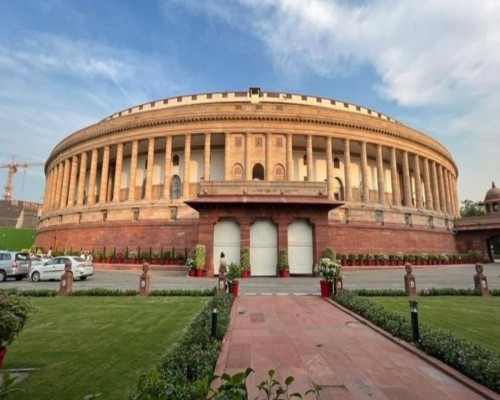
Union Housing and Urban Affairs Minister Manohar Lal chaired the NCR Planning Board meeting at Vigyan Bhawan, New Delhi. Haryana Chief Minister Nayab Singh Saini and Delhi Chief Minister Rekha Gupta were also present, along with senior ministers and officials from other concerned states.
The Union Minister said the meeting discussed the NCR Regional Plan 2041 in detail. Another meeting is expected to be held within two months, after which the final announcement regarding the plan may be made.
According to the board, the responsibility of identifying land for the new cities will be given to the four state governments that are part of the NCR. These include Delhi, Uttar Pradesh, Haryana and Rajasthan. The concerned states will be asked to send proposals for the development of Namo Cities in their respective NCR regions.
The Union Minister said the states adjoining Delhi have already been developed, and there is now a need to plan the next phase of growth in a systematic manner. He added that urban population in NCR is currently around 57 per cent and may rise to nearly 67 per cent by 2041.
Counter-Magnet Areas Identified to Control Congestion
Officials informed the board that nine surrounding areas have also been identified as Counter Magnet Areas to control congestion and reduce pressure on Delhi-NCR. These areas include Hisar, Ambala, Kota, Jaipur, Patiala-Rajpura, Kanpur-Lucknow, Bareilly, Gwalior and Dehradun.
These cities are located outside the highly congested metropolitan region and are expected to help divert migration and economic pressure away from Delhi and NCR. The objective is to create alternative growth centres where industries, employment opportunities and urban facilities can be developed in a planned manner.
Focus on Environment and Balanced Development
The proposed Namo Cities are expected to be planned as green, modern and self-sufficient cities. Pollution control, planned transport, road connectivity, basic infrastructure, employment generation and urban services will remain key components of the project.
The decision is being seen as an important step toward long-term urban planning in North India. Once implemented, the project may help reduce congestion in Delhi-NCR, create new investment opportunities, generate employment and provide better living options for the growing population of the region.