
Government Aims to Bring Every Citizen Under Health Insurance Coverage by 2033
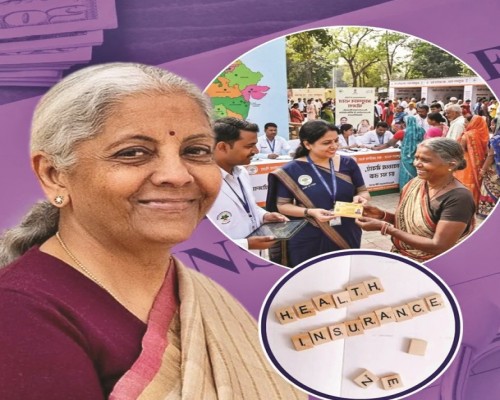
The Government has set an ambitious target of bringing every citizen in India under the ambit of health insurance by the year 2033, signalling a major long-term push toward universal health coverage. The announcement reflects a policy direction aimed at expanding access to financial protection in healthcare, particularly for underserved and rural populations.
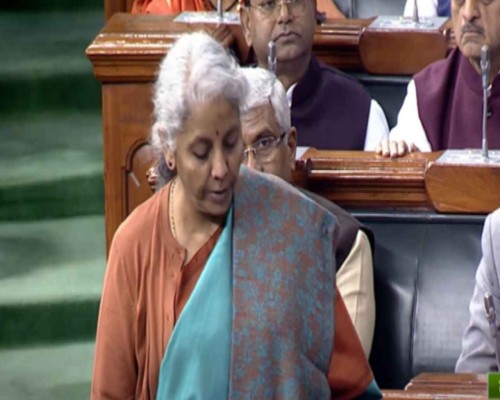
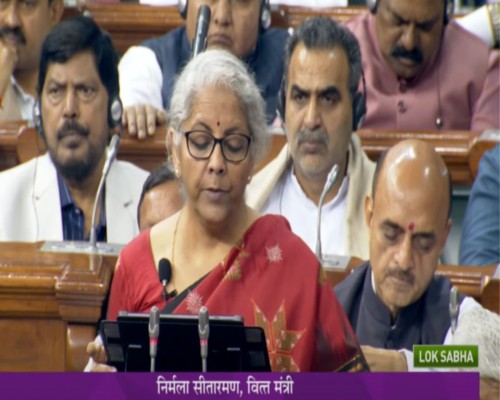
The objective was highlighted by Finance Minister Nirmala Sitharaman while responding to questions related to health insurance in Parliament.
Universal Health Insurance as a National Priority
According to the government, achieving broad-based health insurance coverage is now a strategic priority, with special emphasis on ensuring that rural and economically vulnerable communities are not left out of the system.
Officials have indicated that universal coverage cannot be achieved unless health insurance penetration expands substantially beyond urban and formal-sector populations. As a result, the government’s focus is increasingly shifting toward rural inclusion and localised implementation models.
Gram Panchayats to Play a Key Role
A major part of the expansion strategy will involve taking health insurance deeper into rural India through the gram panchayat network. The government has reportedly set a target of extending health insurance outreach to around 25,000 gram panchayats as part of this effort.
This approach reflects an attempt to decentralise awareness and access, using local governance structures as a base for insurance penetration and enrolment support.
Regulatory Support for Expansion
The report notes that the Insurance Regulatory and Development Authority of India (IRDAI) had issued a notification in 2024 under which gram panchayats would be treated as a basic unit for insurance coverage expansion. This is expected to help insurers and policymakers create more targeted and location-specific implementation strategies.
Such a model could improve the mapping of uncovered populations and make health insurance delivery more efficient in remote and underserved regions.
Affordability for the Poor Under Focus
A key challenge in expanding health insurance remains affordability, particularly for low-income households. The government has indicated that efforts are being made to keep health insurance premiums affordable for the poor and economically weaker sections.
This suggests that future policy design may focus not only on enrolment but also on ensuring that coverage remains financially accessible and practically usable for vulnerable groups.
A Shift Toward Inclusive Healthcare Financing
The government’s stated target reflects a broader shift in India’s healthcare policy—from treatment-based intervention toward risk protection and financial preparedness. Expanding insurance coverage is increasingly being viewed as essential to reducing out-of-pocket medical expenditure, preventing medical debt, and improving access to formal healthcare systems.
If implemented effectively, universal insurance coverage could significantly strengthen household resilience against medical emergencies and long-term treatment costs.
A Long-Term National Goal
The 2033 target represents a long-term policy commitment rather than an immediate rollout, and its success will depend on multiple factors including awareness, affordability, regulatory clarity, insurer participation, digital access, and local administrative capacity.
Still, the declaration marks an important step in signalling the government’s intention to widen the reach of financial protection in healthcare across all sections of society.
Toward a More Secure Public Health Future
As India continues to grapple with rising healthcare costs and uneven access to medical services, the push for universal health insurance coverage could emerge as one of the most consequential social policy goals of the coming decade.