
Government May Extend Relief Measures for War-Affected MSMEs Amid Emerging Economic Pressures
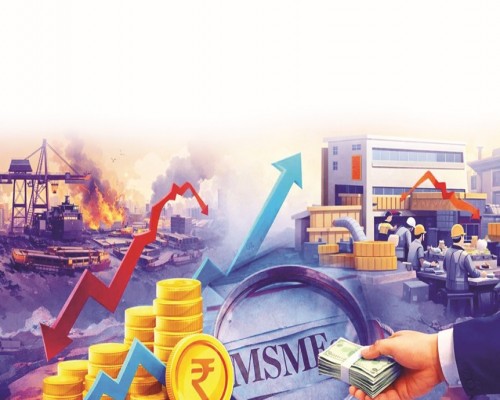
Micro, Small, and Medium Enterprises (MSMEs) impacted by ongoing global geopolitical tensions may receive additional relief from the government, with discussions underway on extending financial support and easing repayment obligations. The move comes as part of broader efforts to stabilize the domestic economy and protect vulnerable business segments from external shocks.
Proposal for Loan Relief and Emergency Credit
Officials are considering providing extended timelines for loan repayments to small businesses, along with the possibility of offering additional credit under government-backed guarantees. Banks may be encouraged to facilitate fresh lending to MSMEs, particularly those facing liquidity constraints due to disrupted supply chains and rising input costs.
The government has reportedly been in continuous consultation with industry bodies to assess the extent of the impact and identify sectors requiring immediate support. While large industries remain relatively stable, smaller enterprises are experiencing increasing financial stress.
Impact of Global Conflict on Domestic Economy
The ongoing conflict in West Asia has begun to affect global supply chains, particularly in the energy and food sectors. Rising fuel prices and disruptions in essential imports have contributed to inflationary pressures, impacting production costs across industries.
Data indicates that foreign institutional investors have withdrawn significant capital from Indian markets in recent months, reflecting concerns over global instability. This has further contributed to economic uncertainty and increased pressure on domestic businesses.
Sector-Specific Challenges
Industries heavily dependent on petrochemicals and energy inputs are among the most affected. Sectors such as plastics, chemicals, textiles, and synthetic materials have reported rising costs and reduced margins. The shortage of natural gas and increasing energy prices have also begun to disrupt manufacturing operations.
Export-oriented industries are facing additional challenges, as global demand weakens and logistical disruptions persist. Industry representatives have emphasized that recovery to pre-crisis production levels may take considerable time, even after conditions stabilize.
Consideration of Emergency Credit Schemes
Experts suggest that the government may reintroduce or expand emergency credit schemes similar to those implemented during the COVID-19 pandemic. Such measures could provide immediate liquidity support and help businesses sustain operations during the period of uncertainty.
However, officials have indicated that a detailed assessment of the situation is still ongoing, and any relief measures will be calibrated based on the severity and duration of the impact.
Existing Support Measures
The government has already announced a financial package aimed at reducing export costs, including a ₹500 crore initiative to offset rising fuel prices. The package is expected to help exporters manage increased logistics expenses and maintain competitiveness in international markets.
Outlook and Industry Expectations
Industry stakeholders have welcomed the possibility of relief but have stressed the need for timely implementation. They have highlighted that prolonged disruptions could lead to job losses and reduced industrial output if adequate support is not provided.
While the full extent of the impact is yet to be determined, policymakers are closely monitoring developments and remain engaged with industry representatives to formulate appropriate responses.
The evolving situation underscores the need for flexible and responsive economic policies to safeguard MSMEs, which form a critical backbone of the country’s industrial and employment landscape.