
India Achieves Major Milestone as First Nuclear Power Unit Receives New Lease of Life
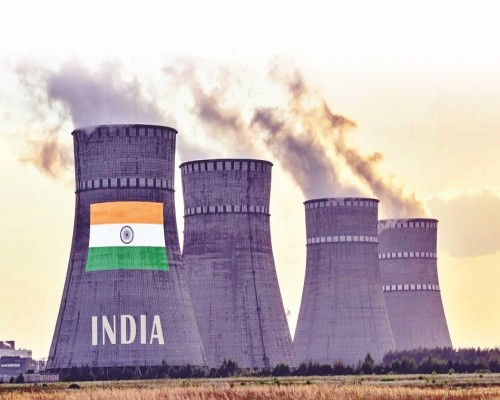
India has marked a significant achievement in its nuclear energy sector with the successful modernization and life extension of one of its earliest atomic power units. After undergoing a comprehensive seven-year refurbishment process, the unit has been reconnected to the national power grid, signaling a major technological and operational breakthrough.
The refurbished reactor is Unit-1 of the Tarapur Atomic Power Station (TAPS) in Maharashtra. Originally commissioned in 1969, it is among the country’s oldest operational nuclear power facilities. The unit has a generation capacity of 160 megawatts and has now been granted an extended operational life following extensive upgrades.
The modernization exercise was undertaken by the Nuclear Power Corporation of India Limited (NPCIL). The project involved upgrading critical systems, enhancing safety mechanisms, and replacing aging components with advanced, indigenously developed technology. Officials stated that the overhaul incorporated improved safety protocols and modern instrumentation systems to align with current regulatory standards.
With this milestone, India has become one of the few countries capable of successfully refurbishing and extending the life of a Boiling Water Reactor (BWR). The accomplishment underscores the country’s growing expertise in nuclear engineering and its commitment to strengthening energy security through technological self-reliance.
The Tarapur unit had been temporarily shut down in 2020 to facilitate the life-extension process. The refurbishment included structural improvements, modernization of control systems, and enhancements in reactor safety mechanisms. Authorities emphasized that the upgraded unit now meets contemporary safety and performance benchmarks.
Officials highlighted that the successful revival of the Tarapur unit demonstrates India’s capability to manage complex nuclear infrastructure using largely domestic expertise. The initiative is also expected to reduce dependence on energy imports and contribute to stable power generation as part of the nation’s broader clean energy goals.
The development aligns with India’s long-term nuclear power expansion strategy, which aims to increase the share of nuclear energy in the overall electricity mix. By extending the life of existing reactors while simultaneously developing new ones, the country seeks to ensure consistent, low-carbon energy supply.
Experts view the modernization of the Tarapur unit as a landmark achievement that reinforces confidence in India’s nuclear energy programme. The project reflects advancements in engineering, safety management, and operational efficiency, marking a new chapter in the evolution of the country’s atomic energy capabilities.