
India Adopts Firm Stand Against Threats as Diplomatic Relations with U.S. Strain
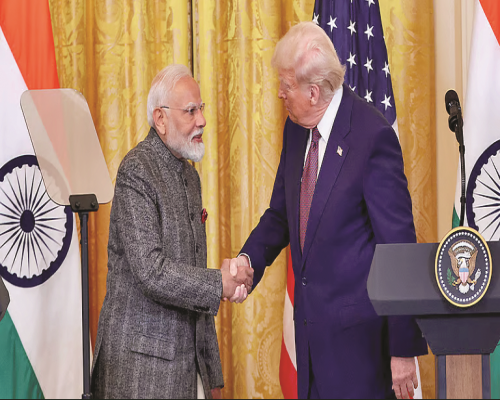
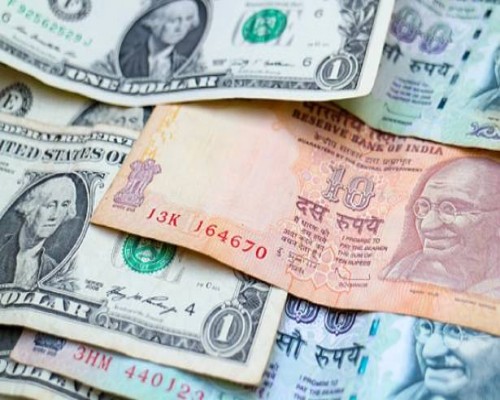
India has taken a strong stance in response to recent U.S. threats and trade measures, signalling that it will not compromise on its strategic autonomy. Tensions have escalated after U.S. President Donald Trump sharply increased tariffs on Indian goods and hinted at further punitive steps over India’s continued purchase of Russian oil.
Diplomatic sources indicate that New Delhi is preparing a comprehensive strategy to safeguard national interests, which includes strengthening alliances with key partners and diversifying trade relations. Government officials stress that India will not accept unilateral pressure and will respond in accordance with its own economic and strategic priorities.
The move comes amid concerns that the tariff dispute could derail broader U.S.–India relations, which had been expanding in areas such as defence cooperation, technology partnerships, and counterterrorism. While both countries have benefited from growing economic ties, experts warn that prolonged tensions could impact joint initiatives and diminish mutual trust.
Challenging Times Ahead for India
Analysts describe the current situation as one of the most challenging periods in recent Indo-U.S. relations. To navigate this phase, India will need to prioritise strong relationships with other major economies, including those in Europe, East Asia, and the Global South. Diversifying trade markets and reducing overreliance on any single country is seen as crucial.
No Hasty Decisions
Sources within the Ministry of External Affairs have clarified that no abrupt decisions will be taken. Instead, India plans to weigh each diplomatic and trade move carefully, avoiding reactive measures that could escalate the situation further. The emphasis will be on calculated, long-term strategies rather than short-term retaliation.
Foreign policy experts also point out that while the U.S. remains an important strategic partner, India’s firm response is necessary to protect its sovereignty and to send a clear message that it will not bow to coercive tactics.