
India Develops First Indigenous AI-Based Anti-Drone System ‘Shatashi’
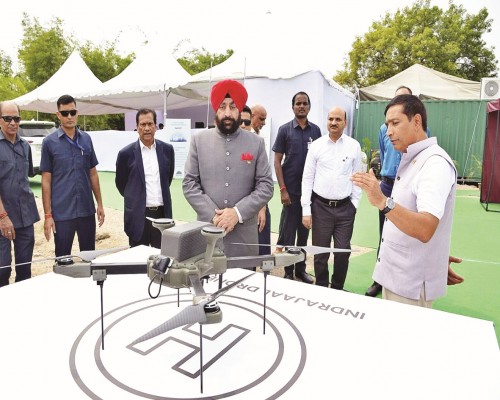
India has developed its first fully indigenous artificial intelligence–based anti-drone system, named “Shatashi,” marking a significant advancement in the country’s defence technology capabilities. The system has been developed by researchers at the Indian Institute of Technology (IIT) Kanpur and is designed to detect and neutralize hostile drones with high precision.
The AI-driven technology represents a major step toward strengthening India’s defence infrastructure against the growing threat of unmanned aerial vehicles (UAVs). Drone technology has increasingly been used in surveillance, smuggling, and military operations, making counter-drone systems an important part of modern security strategies.
According to the developers, the Shatashi system can identify suspicious drones from a distance of about 1.5 kilometers and take action to neutralize them. The system uses advanced artificial intelligence algorithms to analyze drone movement patterns and distinguish potentially hostile devices from other aerial objects.
The development was carried out under the guidance of IIT Kanpur professor Dr. Indranil and his research team. The project focuses on integrating artificial intelligence with surveillance and defence technologies to create an effective and automated counter-drone solution.
One of the notable features of the Shatashi system is its relatively low development cost, estimated at approximately ₹25 to ₹30 lakh. This cost is significantly lower than many existing anti-drone technologies currently used in defence operations.
At present, security forces often rely on radar-based detection systems to identify drones in the airspace. While radar technology is effective in many situations, it can have limitations in detecting small drones flying at low altitudes or in complex environments. Additionally, radar-based systems often involve high installation and maintenance costs.
The AI-based Shatashi system is designed to overcome some of these limitations. By using intelligent detection algorithms, the system can identify drones even when they fly close to the ground or attempt to avoid radar detection.
Researchers involved in the project stated that details of the system have been shared with defence authorities. After successful testing and evaluation, the technology may be considered for deployment by the Indian armed forces.
If adopted by the military, the system could help reduce India’s reliance on imported anti-drone technologies from countries such as the United States and Israel. Developing indigenous defence technologies is seen as an important step in strengthening India’s strategic autonomy and self-reliance in defence manufacturing.
The development also aligns with the broader national initiative to promote indigenous defence innovation under programs encouraging domestic research and technological development.
Experts believe that AI-based surveillance and defence technologies will play an increasingly important role in modern warfare. As drone usage expands across both civilian and military sectors, counter-drone systems are becoming essential tools for protecting critical infrastructure, military bases, and sensitive installations.
The Shatashi system represents a significant example of how Indian research institutions are contributing to the development of advanced defence technologies. By combining artificial intelligence with indigenous engineering capabilities, the project demonstrates the potential for locally developed solutions to address emerging security challenges.