
India Launches E85 Fuel to Accelerate Clean Energy Transition and Reduce Fuel Costs
New High-Ethanol Fuel Expected to Strengthen Energy Security, Support Farmers, and Lower Carbon Emissions
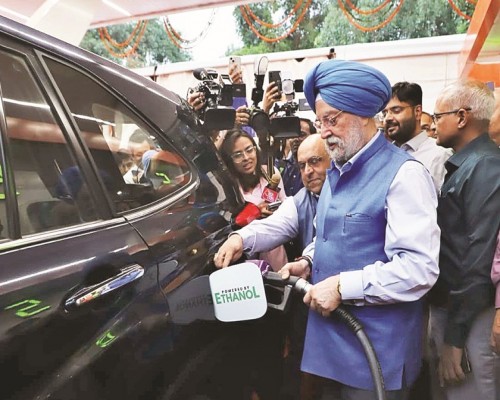
India has taken a significant step toward enhancing energy security and promoting cleaner transportation by officially launching E85 fuel, a high-ethanol blended fuel designed for flex-fuel vehicles. The initiative forms part of the country's broader strategy to reduce dependence on imported crude oil, encourage the use of renewable fuels, and support sustainable economic growth.
The new fuel was formally introduced by the Ministry of Petroleum and Natural Gas as part of India's expanding ethanol-blending programme. E85 fuel contains a substantially higher proportion of ethanol than conventional blended fuels and is intended specifically for vehicles equipped with flex-fuel technology.
What Is E85 Fuel?
E85 is a fuel blend containing approximately 80–85 percent ethanol and 14–19 percent petrol, making it one of the highest ethanol-content automotive fuels introduced in the Indian market. Unlike conventional petrol, E85 is designed for specially engineered flex-fuel vehicles capable of operating on varying ethanol blends.
The introduction of E85 represents an important milestone in India's efforts to diversify its energy sources and promote environmentally friendly transportation solutions.
Lower Fuel Costs for Consumers
One of the most notable features of E85 fuel is its pricing advantage. Government officials have indicated that the fuel has been introduced at a price significantly lower than conventional petrol, with estimates suggesting a difference of approximately ₹20 per litre.
The pricing strategy is intended to encourage the adoption of flex-fuel vehicles and increase consumer acceptance of ethanol-based fuels. By making renewable fuels more affordable, policymakers hope to accelerate the transition toward cleaner mobility solutions.
Expansion of E85 Fuel Infrastructure
The rollout of E85 fuel has begun through a limited number of fuel stations, with plans for a rapid nationwide expansion. Authorities have outlined an ambitious roadmap to increase the availability of E85 across the country over the coming years.
The government aims to progressively expand the distribution network, making the fuel accessible to a much larger segment of consumers as flex-fuel vehicle adoption increases. The initiative is expected to play a key role in achieving India's long-term ethanol blending and energy diversification targets.
Benefits for Farmers and the Rural Economy
A major objective of the E85 programme is to create stronger demand for domestically produced ethanol, much of which is derived from agricultural feedstocks such as sugarcane, maize, and other biomass sources.
Industry experts believe that increased ethanol production could generate substantial economic benefits for farmers by creating additional markets for agricultural produce.