

India Targets 3-Nanometre Chip Manufacturing by 2032
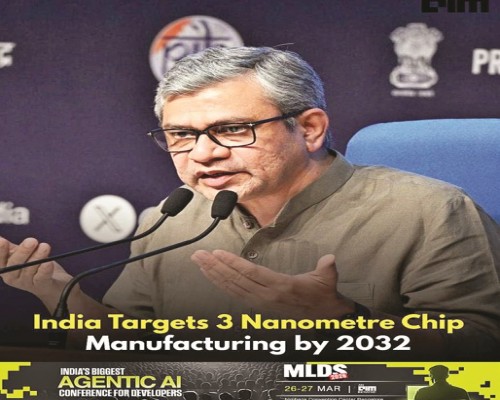
India has set an ambitious target to begin manufacturing advanced 3-nanometre semiconductor chips by 2032, marking a major step in strengthening the country’s domestic electronics and semiconductor ecosystem.
Union Electronics and Information Technology Minister Ashwini Vaishnaw stated that the government is working toward enabling the production of high-tech, small-node chips within the next decade. These chips are widely used in smartphones, computers, networking systems, and advanced digital infrastructure.
The minister explained that under the second phase of the Design Linked Incentive (DLI) Scheme, the government will focus on six major categories of chip development: computing, radio frequency, networking, power electronics, sensors, and memory. The objective is to support domestic companies in developing 70–75 percent of technology products locally, thereby reducing import dependence.
Following consultations with 24 selected chip design firms under the DLI scheme, the government outlined its roadmap to achieve both design and manufacturing capabilities in advanced semiconductor nodes. While chip design activities are already underway within the country, manufacturing at cutting-edge nodes such as 3 nanometres will require the development of advanced fabrication infrastructure.
Vaishnaw emphasized that India must simultaneously strengthen both chip design and fabrication capabilities to build a robust semiconductor ecosystem. He noted that the government intends to focus on six major systems to comprehensively develop the semiconductor design ecosystem, which will in turn accelerate electronics manufacturing across sectors.
The move aligns with India’s broader push to become a global hub for electronics production and semiconductor manufacturing. By promoting local fabrication and innovation, the government aims to enhance supply chain resilience, attract global investment, and boost high-value technology exports.
Industry experts observe that 3-nanometre technology represents one of the most advanced semiconductor manufacturing standards globally. Achieving this capability would place India among a select group of nations operating at the forefront of chip technology.
The initiative reflects a long-term strategy to integrate advanced semiconductor production with domestic electronics manufacturing, ensuring technological self-reliance and strengthening India’s position in the global digital economy.