
India–U.S. Tariff War: What Changed, Who Gets Hit, and What Comes Next
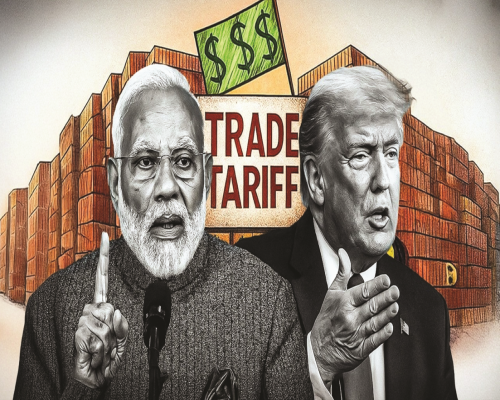
India–U.S. Tariff War: What Changed, Who Gets Hit, and What Comes Next
Trade ties between India and the United States have lurched into their worst crisis in years after President Donald Trump doubled duties on many Indian goods to as high as 50%, linking the move to New Delhi’s continued purchases of Russian oil and stacking the new levy on top of the administration’s “reciprocal tariff” regime. India has condemned the step as “extremely unfortunate,” while exporters brace for order cancellations and price shocks in their biggest market.
What exactly did Washington do?
- July 31 & August 7, 2025: The White House’s reciprocal-tariff orders took effect, shifting many partners (including India) onto country-specific tariff rates under an April 2 framework that set a baseline 10% levy and later raised/varied it by country. For India, this framework amounted to roughly 25% on many items beginning August 7.
- August 6, 2025: President Trump signed a separate executive order imposing an additional 25% “oil-related” tariff on imports “of articles of India,” effective 21 days after Aug. 6 (i.e., from Aug. 27–28, depending on entry), with limited carve-outs for in-transit shipments and items already covered by Section 232 (e.g., steel/aluminum). In practice, that stacks with the reciprocal tariff, taking many lines to ~50%. Trump has also said there will be no new trade talks with India until the tariff dispute is addressed.
Why now? The stated U.S. rationale
The August 6 executive order cites national-security powers under the International Emergency Economic Powers Act (IEEPA) and ties India’s tariff hike to its continued imports of Russian oil. The order explicitly authorizes a 25% ad valorem duty and notes the rate is in addition to other applicable tariffs, confirming the stacking effect with reciprocal duties.
India’s response
India’s External Affairs Ministry called the move “extremely unfortunate,” stressing purchases are driven by energy security and market factors; New Delhi says it will “take all necessary steps to protect its national interests.” Prime Minister Narendra Modi has publicly signaled resistance to pressure that harms Indian farmers and other domestic constituencies.
India has, for now, avoided immediate retaliation, while exploring support measures for affected exporters and recalibrating diplomatic channels; some high-level defense and trade engagements are being reassessed pending clarity on tariffs.
The economic stakes — and who gets hit first
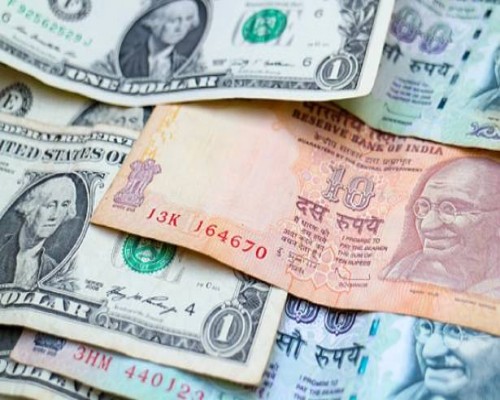
The U.S. is India’s single-largest export destination, accounting for about 18% of India’s merchandise exports in FY2023-24; U.S. goods imports from India totaled$87.3 billion in 2024. A broad 50% rate therefore bites into a deep artery of India’s external demand.
Near-term exposure by sector (based on tariff scope now public and buyer behavior this week):
- Textiles & Apparel: U.S. buyers have paused or put on hold orders following the first 25% tranche on Aug. 7; exporters warn of severe disruption, with comparative disadvantage versus Vietnam/Bangladesh expected to widen as the second 25% layer kicks in later this month.
- Gems & Jewellery: Highly exposed; the U.S. is a $10 billion market for Indian gems/jewelry (2024). A 50% border tax is a direct price shock.
- Auto components: Mixed exposure; some passenger-vehicle parts face around 25% under carve-outs, while others climb toward 50%, crimping margins for major suppliers.
- Electronics/Phones:Partly shielded for now — smartphones appear exempt under the current line-by-line scope, reflecting supply-chain investments by large OEMs — but suppliers remain on watch for rule changes.
- Pharmaceuticals: Also largely exempt at this stage, limiting risk to generics shipments that are strategically important to U.S. healthcare.
Macro lens: Analysts estimate India’s $64 billion in U.S.-bound goods could see meaningful price erosion; early commentary pegs potential growth drag if shipments materially slow. Markets have been volatile, though the rupee’s immediate reaction has been muted given anticipation of the move.
Timetable and mechanics businesses must track
- Aug 7, 2025: Country-specific reciprocal tariffs took effect (India ~25% on many lines).
- Aug 27–28, 2025: The additional 25% IEEPA tariff becomes effective 21 days after Aug 6 (with limited in-transit relief until Sept 17 entries).
- Carve-outs: Items already subject to Section 232 (like steel/aluminum) and certain articles listed in Annex II of the April EO are excluded from the Russia-oil tariff; humanitarian/informational materials are also excepted.
The politics: quotes and positioning
- Trump: After announcing the extra 25%, he told reporters, “We did it with India. We’re doing it probably with a couple of others,” and signaled higher rates if needed; he has declared no further trade negotiations while the tariff issue stands.
- Modi: Facing domestic pressure, he has vowed publicly to protect farmers, dairy producers and fishermen, even at political cost, and is pushing back on U.S. pressure tied to Russia.