

ISRO’s ‘Baahubali’ Rocket to Launch American Satellite into Space
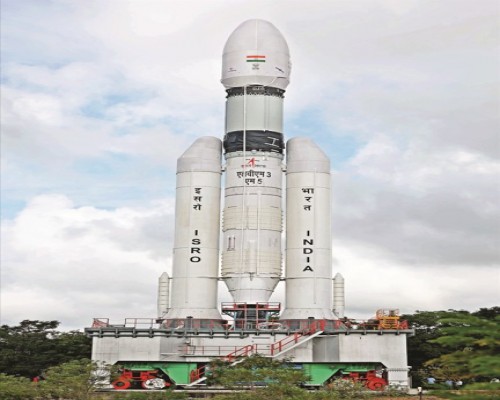
India is set to further strengthen its position in global space services with the launch of an American satellite aboard ISRO’s most powerful rocket, LVM3—popularly known as the “Baahubali” launch vehicle. The mission marks another major milestone in international space cooperation and highlights India’s growing role as a reliable commercial launch partner.
The LVM3 rocket will carry a 6.5-tonne American communications satellite, BlueBird-6, into orbit. The satellite has been developed by US-based company AST SpaceMobile and is designed to deliver advanced mobile connectivity directly to smartphones, particularly in remote and underserved regions. This launch represents one of the heaviest commercial payloads ever entrusted to an Indian rocket.
BlueBird-6 is being launched as part of a commercial agreement under ISRO’s launch services arm, NewSpace India Limited (NSIL). According to mission details, the satellite will be placed into its designated orbit using the LVM3, which is India’s heaviest-lift launch vehicle and is also used for human spaceflight missions under the Gaganyaan programme.
The satellite is described as one of the largest commercial communications satellites ever built, with a massive deployable antenna structure measuring approximately 2,400 square feet. Once operational, it will support direct-to-cell communication technology, enabling mobile connectivity without the need for traditional ground towers. The satellite is capable of carrying payloads of up to 8,000 kilograms and supports advanced data transmission systems with significantly higher capacity than conventional satellites.
Mission data indicates that BlueBird-6 will provide around ten times greater data capability compared to earlier satellites of its category. Its design allows for high-resolution imaging and precise Earth monitoring, with the ability to scan large areas of the planet at frequent intervals. The satellite will also support next-generation communication services, including voice, data, and emergency connectivity in regions with limited terrestrial infrastructure.
This mission builds on earlier cooperation between ISRO and NASA, including previous joint satellite launches and scientific missions. Prior collaborative projects have included Earth-observation satellites and space research payloads, reinforcing a long-standing partnership between the two space agencies.
Officials involved in the programme have emphasized that the launch demonstrates India’s technical maturity in handling complex, high-value commercial missions. The successful deployment of such a large and sophisticated satellite further positions ISRO as a competitive player in the global launch market, alongside major international space agencies and private launch providers.
The LVM3 rocket, developed by ISRO, is capable of placing heavy payloads into low Earth orbit and geosynchronous transfer orbit. Its reliability and performance have made it a preferred choice for strategic, scientific, and now high-end commercial missions. The current launch is also expected to deepen space cooperation between India and the United States while opening new avenues for commercial satellite services.
With this mission, India not only showcases its technological capabilities but also reinforces its emergence as a trusted global partner in advanced space operations. The launch is being viewed as a significant step in expanding India’s footprint in the international satellite launch market and strengthening its role in shaping the future of space-based communication.