

NISAR Satellite to Provide Precise Data on Crops and Soil Conditions
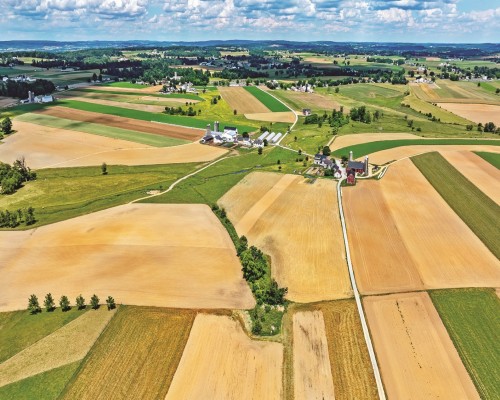
The upcoming launch of the NASA-ISRO joint Earth observation satellite, NISAR (NASA-ISRO Synthetic Aperture Radar), promises to be a game-changer for farmers not only in India but across the globe. The satellite will provide highly accurate data that can be used to monitor crop growth, plant health, soil moisture levels, and much more.
Daily Data Output of 80 Terabytes
NISAR is scheduled to be launched this year from the Indian spaceport in southern India. Once operational, it will generate up to 80 terabytes of data per day, enabling detailed observation of Earth's surface. The satellite will orbit the Earth every 12 days, capturing high-resolution images with a spatial resolution of 10 meters.
According to ISRO, the satellite will provide:
- Accurate assessment of crop types and their current growth stages.
- Soil condition and moisture estimation to aid in predicting crop yield and irrigation needs.
- Disaster monitoring to evaluate agricultural losses due to natural calamities like floods or droughts.
Focus on Agriculture and Climate
NISAR is equipped with two synthetic aperture radars (L-band and S-band), making it the first satellite of its kind to be jointly used by NASA and ISRO for Earth observation. The data will help detect even minute surface deformations and track glacier movement.
The information will be especially useful in:
- Planning irrigation and fertilizer use.
- Monitoring deforestation and changes in land cover.
- Enhancing weather and climate forecasting models.
This initiative aims to significantly boost farm productivity by enabling data-driven decisions in agriculture, making it no less than a boon for farmers.