
Painting a Future – Students Lead the Way
Perhaps the most heartening campaign during the Mahotsav was the “Painting on Cotton Bags” movement. From March 1 to 26, over 50,000 students from 600+ schools across Ghaziabad, Noida, Hapur, Meerut, and Saharanpur participated.
Children painted recycled cotton bags with environmental messages like:
- Save Water, Save Life
- Hindon Hamari Maa Hai
- Stop Plastic, Start Living
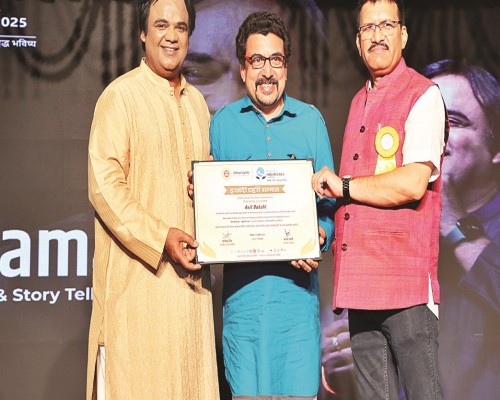
These bags—stitched from old clothes by local women—became both art and activism. The initiative not only fostered creativity but also sustainability. The top 100 entries were awarded on April 12 during the Mahotsav's closing event.
“It’s not about bags. It’s about belief,” said Rashi Sharma, a Class 9 student from Rajkiya Balika Vidyalaya.
Culture and Consciousness – An Evening to Remember
Reviving the Spirit of the Hindon through Art and Emotion
On the evocative evening of April 12, Hindi Bhawan in Ghaziabad became the epicenter of cultural resurgence, blending ancient tradition with contemporary consciousness. The occasion was not just a cultural event—it was an awakening. Organized under the theme "Culture and Consciousness," the event was a tribute to the soul of River Hindon, bringing art, activism, and awareness together in a deeply moving celebration.
A River’s Tale Through Dance: Srotasvini
The highlight of the evening was the poignant dance-drama “Srotasvini”, directed by the distinguished Kathak exponent Dr. Samiksha Sharma. In this powerful five-act performance, the journey of the Hindon River was brought to life through the language of Kathak—its mythological origin, its vibrant past, its silent suffering, and a hopeful call for revival.
Each act of Srotasvini offered a reflective pause and evoked deep emotions:
- Birth: Emerging from the womb of the Himalayas, the river is portrayed as a pure stream born from the divine energy of Goddess Kali—a symbol of sacred beginnings.
- Flow: Echoing with the primal rhythm of Lord Shiva’s Tandav, the river flows with the roar of life, representing continuity and cosmic energy.
- Struggle: As a witness to the bloodshed during the 1857 Revolution, the Hindon transforms into a river of sacrifice—a silent participant in India’s fight for freedom.
- Lament: The tragedy of industrial pollution is portrayed with heart-wrenching clarity—the extinction of aquatic life, the contamination of waters, and the mourning of a river now suffocating in silence.
- Awakening: The final act resounds with hope and collective resolve—a call for revival, a song of restoration. The message is clear: the river will sing again, if we, as a society, choose to act.
This emotionally charged performance was more than an artistic spectacle—it was a reminder. A reminder that if timely efforts are not made, our future too might drown in apathy.
The Voice of the River: Nadi Rorahi Hai
Another emotional high point was the poetic video screening of “Nadi Rorahi Hai” (The River Weeps), created by students. This short film depicted the river’s agony through heartfelt poetry, stunning visuals, and stark realities. The young voices served as an urgent plea for environmental responsibility—a call from the next generation to the present one.
Aloknama and Shiv Tandav: Merging Poetic Grace with Divine Energy
The soulful evening also featured a deeply emotional poetic recitation of “Aloknama”, composed by renowned poet Alok Srivastava. The verses, echoing the river’s pain and societal apathy, stirred a reflective silence across the auditorium. Many were visibly moved as the poet’s words painted images of a crying river and a sleeping civilization.
This was followed by a majestic live performance of the Shiv Tandav Stotram. With local artists rendering the cosmic dance of Shiva, the hall was filled with a spiritual vibrance that transcended the physical performance. The thunderous rhythm, devotional energy, and mythic symbolism brought about a surge of consciousness—connecting ecological concerns with cultural spirituality.
Beyond Applause: A Night of Reflection
What set the evening apart was not merely the talent on display, but the introspection it inspired. The walls of Hindi Bhawan echoed not just with claps, but with questions—about responsibility, culture, and the fate of our natural heritage.
The event seamlessly wove together art, environmental activism, and civic consciousness. It stood as a testimony to the power of culture in inspiring change and awakening communities to their duty towards nature.
Final Reflections
The cultural evening at Hindi Bhawan proved to be a powerful narrative tool in the mission to rejuvenate the Hindon River. Through the language of dance, poetry, film, and music, it emphasized that change begins with awareness, and awareness begins with emotion.
By bringing together artists, thinkers, students, and citizens, this event ignited a collective resolve—that the Hindon, though wounded, is not beyond healing. And if the river finds a voice in our art, perhaps it will find its flow again in our actions.