
Supreme Court Allows Passive Euthanasia for First Time in Landmark Ruling
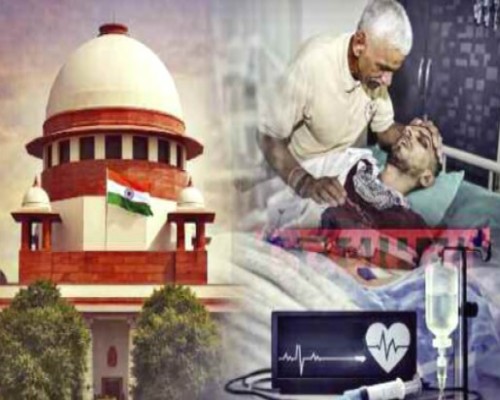
In a landmark and deeply consequential judgment, the Supreme Court has, for the first time, permitted passive euthanasia in India, opening a new legal and ethical chapter in the country’s approach to end-of-life care. The ruling is being seen as a major intervention in the debate over dignity in death, medical consent, and the prolonged suffering of terminally ill patients.
The decision came in a case involving a severely disabled man from Ghaziabad who had reportedly been bedridden and dependent on life support for over a decade. The Court’s order to withdraw artificial life-sustaining support in the matter has triggered nationwide discussion over the legal, moral, and humanitarian dimensions of assisted end-of-life decisions.
A Case That Reached the Constitutional Core
The case centred on a 32-year-old man who had remained in an extremely critical and irreversible medical condition for nearly 13 years following a road accident. According to the report, the patient had suffered severe neurological and physical damage and was being kept alive through prolonged medical support.
His family had approached the judiciary seeking relief, arguing that there was no realistic prospect of recovery and that continuing life support was only prolonging suffering rather than preserving meaningful life.
After reviewing the medical and legal circumstances, the Supreme Court reportedly concluded that the continuation of artificial life support in such an irreversible condition could not be treated as a humane or meaningful extension of life.
Court Recognises Dignity in Death
In its observations, the Court is said to have emphasised that the constitutional right to life under Article 21 must also be understood in the context of dignity, autonomy, and humane treatment. It reportedly noted that where medical science offers no hope of recovery and the patient remains trapped in irreversible suffering, the law must be sensitive to the distinction between preserving life and merely extending biological existence.
The ruling has therefore been interpreted as an affirmation that dignity in death is also part of constitutional morality and humane jurisprudence.
Passive, Not Active, Euthanasia
It is important to note that the Court’s decision relates specifically to passive euthanasia, not active euthanasia. Passive euthanasia generally refers to the withdrawal or withholding of extraordinary life-sustaining treatment—such as ventilators, artificial feeding, or prolonged invasive support—in cases where recovery is medically impossible.
The Court has not legalised active intervention to cause death. Rather, it has permitted the removal of artificial support under strict legal and medical scrutiny in exceptional circumstances.
A Broader Debate on the “Right to Die”
The judgment has reignited debate over whether India should now move toward a clearer and more comprehensive legal framework governing end-of-life decisions, living wills, and medically supervised withdrawal of treatment.
The Court is also reported to have raised the need for wider consideration of the issue of “freedom to die” or the legal recognition of the right to refuse prolonged suffering in hopeless medical situations. This observation is likely to intensify legal and ethical discussions in the coming months.
Call for Legislative Framework
The judgment also appears to place responsibility on the Union Government to consider bringing in a dedicated law on passive euthanasia. Legal experts have long argued that while judicial rulings provide important guidance, a clear statutory framework is essential to prevent misuse, protect vulnerable patients, and establish transparent medical protocols.
Such a law would likely need to address:
- Medical board approval,
- Family consent,
- Judicial oversight,
- Safeguards against coercion,
- and standards for determining irreversible medical condition.
A Humanitarian and Legal Turning Point
The ruling is being described as a humanitarian milestone because it acknowledges the emotional, financial, and psychological burden carried by families of patients in prolonged vegetative or irreversible states. It also reflects a more mature legal understanding of medical ethics and personal dignity.
At the same time, it raises difficult questions that society, lawmakers, doctors, and families will increasingly have to confront: When does treatment become suffering? What constitutes a life lived with dignity? And who decides when hope has ended?
A Defining Judgment for Indian Jurisprudence
This Supreme Court decision is likely to remain one of the most important judicial interventions in India’s medical-legal history. By permitting passive euthanasia in a carefully scrutinised case, the Court has not merely decided a legal dispute—it has opened a national conversation on compassion, autonomy, and the meaning of a dignified life and death.