
U.S. and EU Importing LNG from Russia While Advising India to Cut Purchases
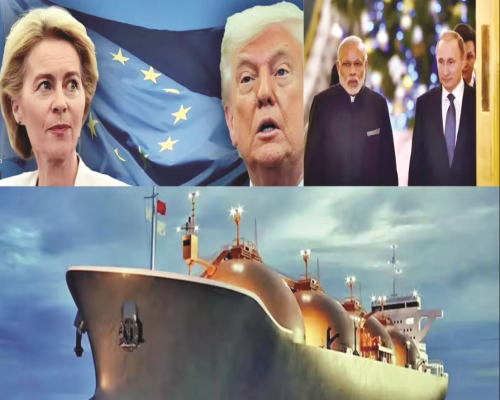
Western nations, particularly the United States and the European Union (EU), have continued to import large volumes of liquefied natural gas (LNG) from Russia, even as they urge India to reduce its trade ties with Moscow. This apparent double standard has drawn criticism from Indian experts, who argue that such policies are driven more by geopolitical convenience than by principles.
According to international energy trade data, EU countries and the U.S. have steadily increased their LNG imports from Russia, despite imposing sanctions on its crude oil sector following the Ukraine conflict. In the first half of 2025, EU member states purchased 37% more LNG from Russia compared to the same period last year. The U.S. has also significantly raised its Russian LNG imports, citing domestic energy requirements.
Analysts highlight that while the West lectures India on diversifying its energy sources, it continues to prioritize its own energy security. The Indian government has maintained that its energy purchases are guided by national interest, affordability, and the need to ensure stable supplies for its growing economy.
Data from the Center for Research on Energy and Clean Air (CREA) shows that the EU and U.S. together spent $10.56 billion on Russian LNG purchases over the past year. This accounted for 87% of Russia’s total LNG exports to global markets. Belgium, Spain, and France were among the top European buyers, while the U.S. increased its intake to meet both industrial and consumer demand.
Experts argue that Western nations’ approach reveals a clear double policy — restricting crude imports from Russia for political signaling while simultaneously expanding LNG trade for economic benefit. This, they say, weakens the moral basis of their criticism toward India’s Russian oil purchases.
India, which imports a fraction of the LNG volumes bought by Western countries, has continued to source discounted Russian crude, helping stabilize domestic fuel prices. Officials note that replacing Russian energy supplies overnight is unrealistic, given India’s rising consumption and limited alternative sources.
The debate has also entered the political arena in India, with opposition leaders accusing the government of failing to adequately counter U.S. President Donald Trump’s recent decision to hike tariffs on Indian goods to 50% over Russian oil imports. Critics argue that New Delhi should highlight the West’s own extensive energy trade with Moscow to counter external pressure.