
When Safety Fails: The Lucknow Coaching Fire and India’s Burning Question of Fire Preparedness
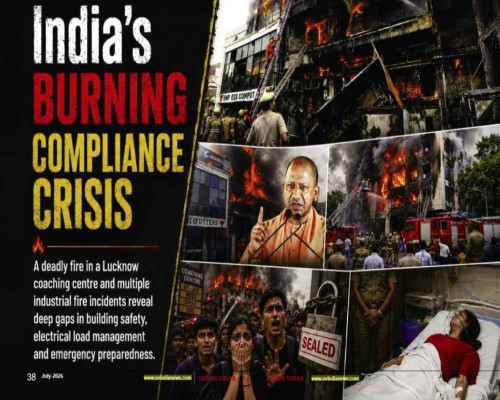
A classroom is meant to be a place of learning, discipline and hope. Students enter coaching institutes with dreams of building a better future, while parents trust that the space where their children spend long hours is safe, lawful and properly supervised. The fire tragedy in Lucknow’s Aliganj area shattered that trust in the most painful manner. A blaze in a commercial building housing a coaching/training institute and other establishments led to the death of 15 people, including several students, and left many injured. The incident has once again raised serious questions about fire safety, building approvals, electrical load, emergency exits, inspections and the accountability of authorities as well as private operators.
The Lucknow incident was not merely a fire accident. It was a warning. It exposed how commercial activities, coaching centres, gaming zones, shops and other establishments can continue to operate in buildings where safety arrangements are either inadequate, ignored, poorly maintained or allegedly non-compliant. The tragedy also came during a month when several industrial and commercial fires were reported across India, including fires in chemical factories, warehouses, textile units, steel plants, pipelines and alleged illegal firecracker storage facilities.
Together, these incidents show that fire safety is not a departmental formality. It is a life-saving obligation. Every fire extinguisher, exit sign, alarm, electrical audit, evacuation drill and fire NOC exists for one purpose: to ensure that people can survive when danger strikes.
Lucknow coaching fire: ambition trapped in smoke
The Lucknow fire broke out in a multi-storey commercial building in Aliganj. The building reportedly housed a coaching/training institute along with other commercial activities. Many students were present in the premises when the fire started. Within minutes, smoke and flames created panic. Some people were trapped inside. Some tried to escape through available routes. Others reportedly had to jump or take desperate measures to save themselves.
The most disturbing part of the tragedy is that students had entered the premises for study, not for risk. They were not responsible for the building design, electrical connection, fire clearance, emergency exit planning or inspection record. Yet, when the system failed, they became the victims.
A coaching institute is not an ordinary private room. It is a public-use space where many students may gather at the same time. Such premises require stronger safety arrangements because crowding, furniture, electrical equipment, air-conditioners, computers, signboards, closed rooms and narrow staircases can quickly turn a small fire into a deadly emergency. If a building has only limited access, poor ventilation, blocked exits, unsafe wiring or excessive load, students may get trapped before help can reach them.
The incident has raised several serious questions. Was the building approved for the nature of activities being carried out inside it? Were the exits sufficient and open? Was the electrical load within the sanctioned limit? Was the fire NOC valid? Were alarms, extinguishers, emergency lights and escape routes available? Was any periodic inspection carried out? Were coaching operators trained in evacuation procedure? Were students ever informed about emergency exits?
These are not technical questions alone. These are questions of life and death.
A building with multiple activities and multiplied risk
Reports and local information indicate that the premises were not being used by only one establishment. Along with the coaching or training activity, other commercial units were also reportedly operating from the same building. This kind of mixed commercial use increases the fire risk when the building has not been designed and maintained accordingly.
A coaching centre brings occupancy risk. A gaming zone brings electrical risk. Shops bring combustible material. Signboards, wiring, packaging, storage, air-conditioning systems and decorative material increase fire load. If such activities are carried out in a compact building without proper fire separation, ventilation, exits and electrical safety, the danger multiplies.
In many urban markets, commercial buildings are expanded or altered over time. Rooms are converted into classrooms. Basements or upper floors are used for coaching. Staircases become narrow due to storage, signage, counters or furniture. Windows are sealed for air-conditioning. Electrical panels are overloaded. Multiple tenants use the same wiring network. Fire extinguishers, if present, may be expired or inaccessible. In such conditions, fire safety exists only on paper.
The Lucknow tragedy shows why authorities must treat coaching institutes, gaming centres and other crowded commercial premises as high-priority inspection categories. Any place where students, children, workers or customers assemble in large numbers must be treated as a life-safety-sensitive establishment.
Electrical overload: a silent danger before the flame
One of the major issues emerging from the Lucknow incident relates to electrical safety. The sanctioned commercial electricity load of the building was reportedly much lower than the actual load being consumed. If this is confirmed by the final investigation, it would point towards a serious safety failure.
Electrical overload is one of the most common reasons behind fires in commercial and industrial buildings. Overloaded circuits heat up. Old or undersized wires become dangerous. Loose connections create sparks. Poor-quality extensions, temporary wiring, illegal joints and excessive use of air-conditioners or heavy equipment can lead to short-circuiting. A building may appear normal from outside, but inside, its wiring may already be under dangerous stress.
In coaching institutes, electrical demand is often high. Air-conditioners, lighting, computers, projectors, CCTV systems, signboards, charging points, fans and backup systems all add to load. If the electrical system is not upgraded according to actual usage, the building becomes unsafe. Sanctioned load is not a mere billing issue. It is a safety parameter.
There are also allegations regarding irregularity in electrical safety documentation. If any safety certificate or NOC is found to be forged, false or obtained through misrepresentation, it should be treated as a grave offence. A fake safety document is not paperwork fraud alone; it puts human lives at risk. Students, customers and workers trust that a running establishment has been lawfully cleared. That trust cannot be allowed to be destroyed by false certificates.
Blocked exits and narrow escape routes: the deadliest failure
Fire kills in many ways, but smoke and trapped movement are among the most dangerous. In several fire tragedies, victims are not burnt first; they are first suffocated, disoriented and trapped. This is why exits are central to fire safety.
Every public-use building must have safe, clearly marked and unobstructed exits. Doors must not be locked during working hours. Staircases must not be used for storage. Emergency lights must function even when power fails. Escape routes must be known to the occupants. In coaching centres, teachers and staff must know how to guide students out quickly.
If one exit is blocked, locked or inaccessible, the entire evacuation plan collapses. In a panic situation, people rush towards the route they know. If that route is filled with smoke, blocked by fire or locked from outside, escape becomes almost impossible.
The Lucknow fire has raised concerns about whether people inside had enough safe exit options. This concern must be investigated in detail. The number of exits, their width, accessibility, direction of opening, signage, lighting and obstruction status must all be examined. A commercial building with multiple establishments cannot depend on a single unsafe staircase.
Why coaching institutes need strict regulation
The coaching industry has grown rapidly across India. From school tuition and entrance exams to skill courses and professional training, coaching centres have become a major part of the education system. But this growth has not always been matched by safety compliance.
Many coaching centres operate in converted residential buildings, market complexes, basements, upper floors, narrow lanes and congested commercial areas. In several cases, the priority is location and rent, not safety. Small rooms are packed with students. Windows are covered. Air-conditioning is installed without load assessment. Corridors become waiting areas. Staircases become crowded during class changeover. There may be no fire alarm, no emergency announcement system, no evacuation plan and no trained staff.
This is unacceptable.
A coaching centre must not be allowed to operate unless it has valid building safety approval, fire safety clearance, proper electrical safety certification, adequate space per student, safe exits, ventilation, emergency lighting, firefighting equipment and trained staff. Parents and students must also be allowed to verify these details before enrolment.
The safety of students cannot depend on assumptions. A coaching institute should display the following information clearly at its entrance:
Valid fire NOC details, building safety certificate, emergency exit plan, maximum permitted occupancy, emergency contact numbers, date of last fire equipment inspection, date of last evacuation drill, and name of the person responsible for safety.
Chief Minister’s direction and the need for permanent audits
After the Lucknow fire, directions were issued for fire safety audits across districts. Special teams were reportedly asked to inspect coaching centres, nursing homes, hospitals, malls, commercial buildings, government buildings and other high-footfall premises. This step is necessary, but it must not remain a temporary reaction.
India has seen this pattern many times. After a tragedy, inspections begin. Notices are issued. Some buildings are sealed. Officials are suspended. Committees are formed. Then, after public attention shifts, enforcement weakens again. This cycle must end.
Fire safety audit should become a permanent, technology-backed and publicly monitored system. Every district should maintain a digital fire safety compliance register. Each high-risk building should have a unique compliance ID. Inspection reports should include photographs, electrical load details, exit status, fire equipment condition, occupancy status and violation history. Repeated violations should lead to closure, prosecution and cancellation of registration.
Most importantly, departments should not work in isolation. Fire department, development authority, municipal body, electricity department, labour department, education department and police must share data. If electricity load exceeds sanctioned capacity, the fire department should be alerted. If a coaching centre operates without registration, the local authority should act. If a building has unsafe alteration, the development authority should not wait for a disaster.
June 2026: a month of fires across the country
The Lucknow tragedy occurred in a month when several other fire incidents were reported across India. These incidents involved different sectors, but the underlying message was the same: safety failures can exist anywhere—inside a classroom, factory, warehouse, pipeline, textile unit, chemical plant or residential area used for illegal storage.
Bhiwadi: oil tanker explosion and factory blaze
In early June 2026, a fire broke out in the industrial area of Bhiwadi after an oil tanker reportedly exploded inside a factory premises. The flames spread to nearby industrial units. Workers present at the site had to escape quickly, and some sustained burn injuries.
This incident highlights the risk of flammable liquids in industrial premises. Oil tankers, chemical drums, fuel storage and solvent handling require strict procedures. There must be safe unloading areas, earthing and bonding, no-smoking zones, trained staff, fire extinguishers suitable for flammable liquids, spill control material and emergency response teams.
Industrial areas must also maintain separation between units. If a fire in one factory can easily spread to another, the layout, boundary wall, storage system and firefighting access must be reviewed.
Haldwani: warehouse fire and worker deaths
A warehouse fire in Uttarakhand in June 2026 resulted in the death of two workers. The incident raised questions regarding fire clearance, alarms, smoke detection and emergency exits.
Warehouses carry high fire load. Cardboard, packaging material, plastic, consumer goods, electronics, batteries and other stock can burn rapidly. Workers inside warehouses may be located deep inside storage aisles, far from exits. If alarms and smoke detectors are absent, precious evacuation time is lost.
Warehouse safety must include automatic fire detection, proper aisle spacing, emergency exits, fire extinguishers, sprinklers where required, trained workers, no blocked pathways, safe battery charging zones and proper electrical maintenance. Third-party logistics operations must also be strictly audited because responsibility cannot be diluted between brand owner, warehouse operator and contractor.
Ahmedabad: chemical factory blast
In June 2026, a chemical factory blast in Gujarat led to deaths and injuries. The incident reportedly involved a chemical process and fire following a blast in factory equipment.
Chemical industries are among the most dangerous workplaces when process safety is ignored. Unlike ordinary fires, chemical fires may involve toxic fumes, explosions, pressure release, corrosive substances and chain reactions. Every chemical factory must maintain material safety data sheets, emergency shutdown systems, flameproof electrical fittings, proper ventilation, safe storage, trained operators, pressure monitoring, gas detection where required and an on-site emergency plan.
A chemical factory cannot depend only on fire extinguishers. It needs process safety management. The smallest deviation in temperature, pressure, mixing sequence or power supply can create catastrophic consequences.
Visakhapatnam steel plant accident
A major industrial accident was reported at a steel plant in Visakhapatnam in June 2026, where a molten metal-related incident caused multiple deaths and injuries.
Steel plants operate under extreme conditions. Molten metal, ladles, cranes, furnaces, high temperature equipment and heavy machinery require disciplined safety systems. Workers in such environments face risks of burns, explosions, splashes, gas exposure and mechanical injury. Contract workers are often more vulnerable because they may not always receive the same level of training as permanent staff.
Such incidents require detailed technical inquiry. Maintenance records, standard operating procedures, permit systems, supervision, contractor safety training, emergency response and equipment condition must all be reviewed.
Jaipur: alleged illegal firecracker storage
In June 2026, a deadly blast and fire were reported in Rajasthan where firecrackers were allegedly stored illegally in a residential area. Several people died in the incident.
Firecracker storage and manufacturing are highly regulated for a reason. Explosive and combustible material cannot be stored in ordinary houses or crowded colonies. Such violations endanger not only workers but also neighbours, children, elderly persons and passers-by. Illegal storage of firecrackers in residential areas should be treated as a major public safety offence.
Authorities must conduct regular checks before festival seasons and also during off-season periods. Illegal firecracker manufacturing and storage often continue quietly in rented rooms, homes and small workshops. Such activities can destroy entire neighbourhoods.
Pune ammunition factory area incident
A young contract worker died after an explosive-related incident at a worksite inside a sensitive industrial premises in Pune. The incident reportedly occurred during civil or construction-related work.
This shows the importance of contractor safety in hazardous locations. Even if a worker is engaged for construction, excavation, cleaning or civil work, the surrounding site may have hidden dangers. Before any excavation, drilling, cutting or demolition work in such premises, the area must be checked and cleared. Permit-to-work systems, hazard identification, supervision and worker briefing are essential.
Contract labour should never be treated as disposable labour. Every worker entering a hazardous site must receive proper safety orientation.
Delhi industrial area fire
A factory fire in Delhi’s industrial area caused major damage and partial structural collapse. Multiple fire tenders were required to control the blaze.
Industrial building fires are especially dangerous when premises are congested, materials are stored without planning, staircases are blocked and structural integrity is weak. When a building collapses during a fire, firefighters also face grave risk. This is why industrial units must not only focus on fire extinguishing systems but also building stability, storage load and access for fire vehicles.
Ghaziabad chemical factory fire
A chemical factory fire in Ghaziabad led to thick smoke and panic in nearby areas. Multiple fire engines were required to control the situation.
Chemical fires are not limited to factory boundaries. Smoke from chemicals can affect nearby residents, shops, schools and workers in surrounding units. Local administrations must ensure that chemical units maintain updated inventories of chemicals, emergency contact details, safety data sheets and evacuation plans. Firefighters must know what material is burning before deciding the firefighting method.
Ludhiana textile unit fire
In June 2026, a textile unit fire in Punjab continued for many hours and required extensive firefighting efforts. Textile units are highly vulnerable because cloth, yarn, fibre, packaging material and dust can catch fire and spread quickly.
The key safety issues in textile units include housekeeping, storage height, blocked exits, absence of sprinklers, electrical overload, combustible dust, old wiring and poor separation between production and storage areas. A textile factory may appear harmless compared to a chemical factory, but its fire load can be extremely high.
Bengaluru chemical unit fire
A chemical factory fire was reported in Bengaluru’s industrial area towards the end of June 2026. No major casualties were reported because the unit was reportedly closed at the time, but the fire still exposed the risk of chemical storage and industrial fire spread.
The absence of casualties should not reduce the seriousness of such incidents. Timing often decides the human toll. A fire that breaks out on a weekly holiday may damage property; the same fire during working hours may kill workers. Safety cannot depend on luck.
Haldia pipeline fire
A fire in a naphtha pipeline at an industrial facility in West Bengal injured several workers and created a serious emergency situation. Naphtha is highly flammable, and pipeline fires can spread rapidly if not isolated in time.
Pipeline safety requires leak detection, pressure monitoring, emergency isolation valves, preventive maintenance, trained response teams and off-site emergency planning. Nearby communities must also be included in emergency preparedness wherever hazardous pipelines pass close to residential areas.
Common failures behind different fires
The June 2026 fires occurred in different sectors, but several common failures are visible.
The first is weak compliance. Buildings and factories often continue operations despite missing, expired or questionable safety documents. Compliance becomes a file exercise rather than a real safety system.
The second is electrical negligence. Overload, poor wiring, unauthorized extensions, old panels and lack of periodic electrical audits are common causes of fires.
The third is poor exit management. Locked doors, blocked staircases, narrow passages and absence of emergency lighting turn small fires into mass-casualty events.
The fourth is lack of training. Workers, students and staff often do not know what to do when fire breaks out. Without mock drills, people waste precious minutes collecting belongings, calling relatives or waiting for instructions.
The fifth is hazardous storage. Chemicals, fuel, cloth, packaging, firecrackers, gas cylinders and industrial materials must be stored according to safety rules. When they are stored casually, fire becomes uncontrollable.
The sixth is delayed enforcement. Notices without follow-up do not save lives. If a building is unsafe, action must be timely. If an illegal unit is operating, it must be shut before tragedy occurs.
Fire safety norms are written in human loss
Every fire safety norm has a reason. They are not unnecessary formalities. They are survival mechanisms.
Fire alarms exist because early warning saves lives. Emergency exits exist because the main entrance may be blocked. Staircase width matters because crowds need space to escape. Emergency lighting matters because power often fails during fires. Electrical load approval matters because overload causes heating and sparks. Fire extinguishers matter because small fires can be controlled before they spread. Sprinklers matter because they suppress fire at an early stage. Ventilation matters because smoke kills quickly. Mock drills matter because panic reduces survival.
When these norms are ignored, the building becomes a trap.
What coaching centres must immediately do
Every coaching centre in India should conduct an urgent safety review. The review must include building approval, fire NOC, electrical safety certificate, sanctioned load, classroom occupancy, exit width, staircase condition, emergency lighting, fire extinguishers, alarm system, ventilation and staff training.
No coaching centre should run in a basement, closed room, unauthorized floor or unsafe building. No class should be held in a room where students cannot escape quickly. No door should be locked during class. No staircase should be used for storage. No electrical system should be loaded beyond its capacity. No institute should admit students without a displayed safety plan.
Coaching centres should conduct fire drills at least twice a year. Students should be told where to go during an emergency. Teachers should be trained to guide evacuation. Reception staff should know emergency numbers. Fire extinguishers should be visible and accessible. Safety instructions should be displayed in simple language.
What industries must learn from June 2026
Industries must stop treating safety as an expense. Safety is a core operational requirement. A factory that ignores safety is not saving money; it is accumulating risk.
Every industrial unit should conduct annual fire safety audits and electrical audits. High-risk units should conduct them more frequently. Chemical factories must review process safety. Textile units must improve housekeeping and storage. Warehouses must install detection and alarm systems. Steel plants must strengthen high-risk operation protocols. Firecracker units must be strictly licensed or closed. Pipeline operators must maintain emergency isolation systems.
Contract workers must receive proper training. Many industrial deaths involve contract labour because they are placed in hazardous jobs without sufficient safety knowledge. The principal employer and contractor must both be held accountable.
Role of authorities
Authorities must move from reactive enforcement to preventive governance. Fire departments should not only issue NOCs but verify continued compliance. Development authorities must act against unauthorized construction and illegal change of use. Electricity departments must monitor abnormal load consumption and alert safety authorities. Labour departments must inspect worker safety arrangements. Education departments must regulate coaching institutes. Police must act against forged certificates and illegal hazardous storage.
There should be a shared safety database. If one department detects a violation, all relevant departments must be informed. A building with excess electrical load, no fire NOC and high public footfall should automatically become a priority inspection case.
Public awareness is equally important
Parents and students must also become safety-aware. Before enrolling in a coaching centre, they should ask whether the institute has fire clearance, building approval, emergency exits and evacuation plan. Workers should report blocked exits and unsafe wiring. Residents should inform authorities about illegal firecracker storage or hazardous industrial activity in residential areas. Customers should avoid crowded establishments where exits are locked or blocked.
Safety is not only the responsibility of the fire department. It is a shared social duty.
From condolence to correction
After every tragedy, condolences are offered. Compensation is announced. Inquiries are ordered. But unless the system changes, another fire will create another headline, another inquiry and another list of victims.
The Lucknow coaching fire must not become just another memory. It should lead to a permanent national campaign for safe coaching centres and safe commercial buildings. The June 2026 industrial fires should push every industry to review its fire and emergency systems.
The lives lost in Lucknow demand more than sympathy. They demand accountability, reform and prevention.
A student entering a classroom must be safe. A worker entering a factory must be safe. A customer entering a shop must be safe. A resident living near an industrial unit must be safe. This is not a privilege. It is a basic right.
Fire safety is not about documents. It is about escape routes that open, alarms that work, wires that do not burn, buildings that do not trap, and systems that act before flames rise.
The final lesson is clear: every unsafe building is a future disaster waiting for a spark. Every ignored notice is a warning unheard. Every locked exit is a crime against life. And every fire tragedy should remind the country that safety norms are not optional—they are the difference between survival and death.