
YEIDA Identifies 500 Acres Each for Development of Japan City and Singapore City Near Noida
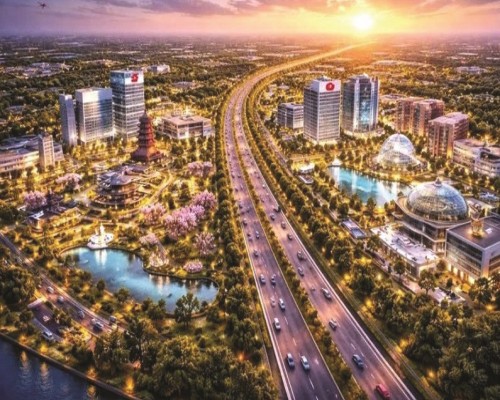
The Yamuna Expressway Industrial Development Authority (YEIDA) has proposed the development of two major international-themed urban projects—Japan City and Singapore City—near the Yamuna Expressway region. As part of the plan, approximately 500 acres of land have been earmarked for each project, marking a significant step toward expanding the region’s industrial and urban infrastructure.
According to official communication issued by the authority, a formal proposal related to the development of these two projects has been submitted to the state administration. The initiative aims to promote international collaboration and attract foreign investment while creating specialized urban and industrial hubs inspired by the planning and development models of Japan and Singapore.
Officials from YEIDA stated that the land required for both projects has already been identified within the authority’s jurisdiction. A detailed plan for land acquisition and project implementation has also been prepared. The proposal has been forwarded for further administrative approval and evaluation.
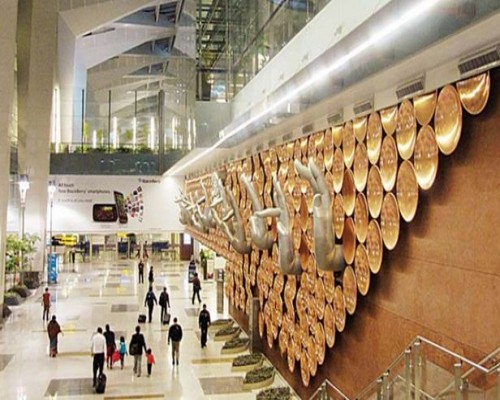
The decision is part of broader development efforts linked to the Yamuna Expressway region, which has been emerging as a major industrial and infrastructure corridor in Uttar Pradesh. With several large-scale projects already underway—including the Noida International Airport and multiple industrial parks—the region is being positioned as a key center for economic growth and global investment.
According to the development authority, Sector-5 of Greater Noida has been proposed for the Japan City project, where approximately 500 acres of land have been identified. Similarly, Sector-7 of Greater Noida has been proposed for the Singapore City project, with another 500 acres allocated for the development.
These sectors are already part of a broader master plan for industrial expansion. Under the authority’s development framework, both areas have been designated as multifunctional industrial zones, capable of accommodating manufacturing facilities, technology parks, commercial infrastructure, and integrated urban facilities.
The proposed projects are expected to follow advanced urban planning models that integrate industrial development with residential, commercial, and social infrastructure. Authorities aim to develop these areas as modern, globally competitive business ecosystems capable of attracting international companies and investors.
The initiative is also expected to encourage stronger economic partnerships with Japan and Singapore, both of which have been key investment partners in India’s infrastructure and industrial sectors. Japan has been involved in several major infrastructure projects in India, including high-speed rail initiatives and industrial corridors, while Singapore has contributed expertise in urban planning, financial services, and smart city development.
Officials indicated that the projects could be developed under an Engineering, Procurement and Construction (EPC) model, which would allow specialized developers and infrastructure firms to participate in the construction and development process.
If implemented successfully, the Japan City and Singapore City projects could significantly enhance the global profile of the Yamuna Expressway region. The development is expected to attract multinational companies, generate employment opportunities, and strengthen the region’s role as a major investment destination.
The projects also align with the broader vision of transforming the Yamuna Expressway area into a major economic and industrial hub. With improved connectivity, expanding infrastructure, and increasing interest from global investors, the region is emerging as one of the fastest-growing development corridors in northern India.
Authorities believe that the establishment of internationally themed industrial and urban clusters could accelerate economic growth while encouraging technology transfer, innovation, and greater global integration in the region’s industrial ecosystem.