
Zojila Tunnel Breakthrough Achieved, Major Connectivity Boost Expected for Ladakh
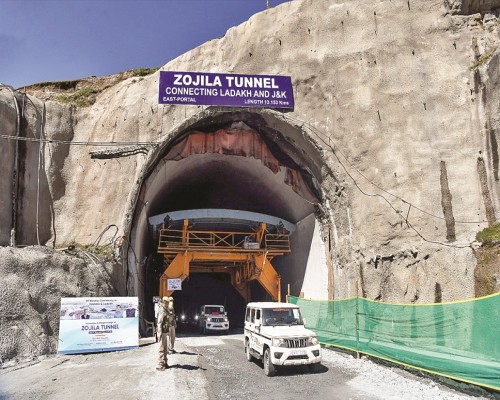
India has achieved a major engineering milestone in the Himalayan region with the successful breakthrough of both ends of the Zojila Tunnel, one of the country’s most strategic infrastructure projects. The breakthrough marks an important step toward providing all-weather road connectivity between Kashmir and Ladakh.
The Zojila Tunnel is being constructed at an altitude of 11,578 feet and will be 13.153 kilometres long. The project is located around 24 kilometres from Sonamarg and is being developed to ensure uninterrupted connectivity between Srinagar and Leh, especially during harsh winter months when heavy snowfall often blocks the existing road.
The final 2.5-metre section of the tunnel was broken through in the presence of Union Road Transport and Highways Minister Nitin Gadkari, Jammu and Kashmir Lieutenant Governor Manoj Sinha, Union Minister of State Dr Jitendra Singh and other officials. The development has been described as a historic achievement for road connectivity, national security and economic activity in Ladakh.
Travel Time to Reduce Sharply
Once completed, the tunnel will significantly reduce travel time in the region. The journey through this difficult stretch, which presently takes nearly three hours in challenging weather and road conditions, is expected to be completed in about 15 minutes after the project becomes operational.
The tunnel will also help maintain connectivity during winter, when the Srinagar–Leh highway often remains closed due to snowfall and avalanches. This will allow tourists, local residents, traders, security forces and essential supplies to move more reliably throughout the year.
Strategic Importance for the Country
The Zojila Tunnel is considered extremely important from a national security point of view. Ladakh shares sensitive borders with China and Pakistan, and reliable road connectivity is essential for the movement of defence personnel, equipment and supplies.
The tunnel will strengthen India’s logistical capacity in the region and reduce dependence on weather-sensitive routes. It will also improve access to forward areas and support faster mobilisation in strategically important zones.
Union Minister Nitin Gadkari said the completion of the breakthrough was a proud moment and described the project as a major step toward transforming connectivity in the Himalayan region.
Key Facts About the Project
The Zojila Tunnel is part of the Srinagar–Leh highway project and is being developed with a modern approach to mountain road construction. It is designed as a two-lane tunnel and will have a carriageway width of around 9.5 metres. The tunnel height has been mentioned as around 7.57 metres.
According to the report, the project also includes an 18-kilometre approach road between Sonamarg and Baltal. Once the tunnel and approach roads are completed, connectivity between Kashmir and Ladakh will become safer, faster and more dependable.
The tunnel is being developed at an estimated cost of around ₹6,800 crore. The project began in 2020 and has faced several engineering challenges due to difficult terrain, extreme weather, falling rocks and sub-zero temperatures.
Project Faced Difficult Himalayan Conditions
The construction work faced major challenges due to the high-altitude location, weak rock formations, heavy snowfall and cold weather conditions. The project site lies in one of the most difficult mountain regions of the country, making tunnelling work technically demanding.
Engineers and workers had to continue construction in adverse conditions, including freezing temperatures and the risk of landslides. Despite these challenges, the breakthrough has been achieved, bringing the project closer to completion.
Gateway to Ladakh to Remain Open Throughout the Year
The Zojila Tunnel is expected to keep the gateway to Ladakh open in all seasons. At present, the region often remains cut off during winter due to closure of the highway. Once the project is completed, it will help ensure year-round movement of people, goods, medicines, fuel and essential supplies.
The project is also expected to boost tourism and employment opportunities in Ladakh and Kashmir. Better connectivity will support hotels, transport services, local markets and other businesses linked to travel and tourism.
The successful breakthrough of the Zojila Tunnel is being seen as a historic achievement in India’s infrastructure journey and a major step toward strengthening connectivity, security and development in the Himalayan region.