
Climate Change Influences Monsoon Patterns: Heavy Rain in Some Areas, Severe Shortage in Others
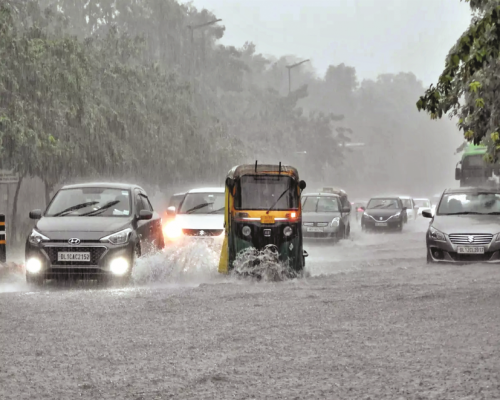
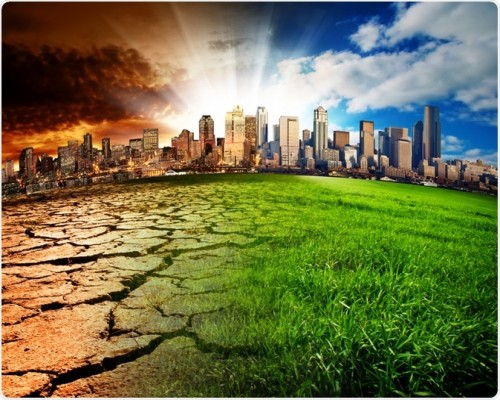
Climate change continues to disrupt natural weather cycles, with this year’s monsoon showing extreme variations in rainfall distribution. While some regions are facing devastating floods, others are suffering from acute water scarcity.
The Indian Meteorological Department (IMD) has reported that between June 1 and July 11, rainfall distribution across the country has been highly uneven. Out of 163 districts in North India, 30 have recorded excessive rainfall, 51 have received above-average rains, while 82 have reported rainfall deficiency.
Punjab, Haryana, and Himachal Pradesh have seen major changes in the rainfall pattern over the past week. Punjab’s 23 districts have collectively recorded 191% above-normal rainfall, while Haryana’s 22 districts have experienced a 68% surplus. Himachal Pradesh has reported a 38% increase compared to normal monsoon levels.
However, the scenario in Rajasthan is different. Of its 33 districts, 29 have received less than average rainfall, and 15 districts are experiencing severe deficit. Western Rajasthan remains particularly dry, with minimal monsoon activity so far.
Meteorologists warn that such uneven rainfall distribution—caused by the growing impact of climate change—could lead to severe agricultural, economic, and ecological consequences in the future.