
Household and Industrial Waste Continues to Pollute Yamuna, Court Flags Serious Lapses
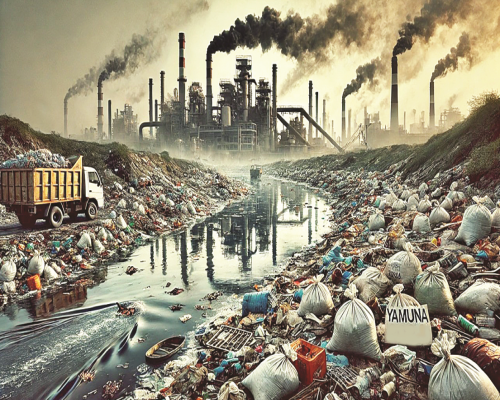
The ongoing discharge of untreated domestic and industrial waste into the Yamuna River has raised serious concerns, with the High Court observing that the situation remains alarming despite repeated directives. The court criticized authorities for failing to implement adequate measures at Sewage Treatment Plants (STPs) and Common Effluent Treatment Plants (CETPs), leading to the continued contamination of one of the country’s most important rivers.
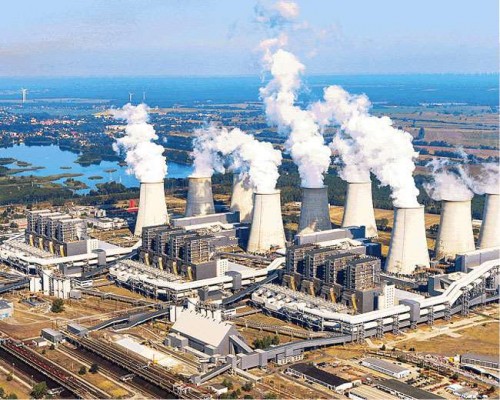
During the recent hearing, the court noted that untreated wastewater containing toxic chemicals and domestic sewage is still being released into the river, posing severe environmental and public health risks. It highlighted that many treatment plants are operating far below their capacity or are non-functional, while several industrial units continue to discharge effluents without proper treatment.
The bench stressed the urgent need for a comprehensive action plan focusing on three key areas:
- Drainage Master Plan: The court directed authorities to upgrade and expand the city’s drainage network and treatment infrastructure. It emphasized that the current system, designed over a decade ago, is inadequate to handle present waste volumes.
- Effective Regulation: The court ordered strict monitoring and enforcement against industrial units and residential complexes found discharging untreated waste. It also called for the installation of real-time monitoring systems at major discharge points.
- Improved STP and CETP Operations: Authorities were instructed to enhance the capacity and efficiency of all treatment facilities and ensure that none remain idle. They must also ensure that all treated water meets prescribed environmental standards before discharge.
The Delhi Pollution Control Committee (DPCC) has been directed to submit a detailed status report by September 19, outlining progress on these fronts. A final compliance review is scheduled for April 2025.
The court’s observations underline a long-standing environmental crisis. Despite significant investments in river cleanup projects, the Yamuna continues to receive large quantities of untreated domestic sewage and hazardous industrial effluents daily. Experts warn that unless immediate corrective action is taken, the river’s ecosystem could suffer irreversible damage, further threatening biodiversity and public health.