
Rainwater Conservation Faces Challenges as Ponds Struggle with Encroachment and Poor Maintenance
Rainwater conservation efforts in rural areas are facing serious challenges as several ponds remain affected by encroachment, poor maintenance, waste dumping and incomplete restoration work. Although administrative efforts have been made to identify and restore water bodies, the condition of many ponds continues to remain worrying.
According to available information, there are around 1,075 ponds in the district. Out of these, 231 ponds were earlier reported to be under encroachment. During the year 2025, action was taken to remove encroachment from these ponds. However, fresh complaints and field conditions indicate that encroachment and misuse of pond land have again started appearing at several places.
The district administration has directed officials to inspect ponds and prepare updated reports. Revenue teams have been instructed to examine the actual condition of water bodies, identify encroachments and submit details for further action. The inspection drive is aimed at ensuring that ponds remain available for rainwater storage, groundwater recharge and local ecological balance.
In several villages, the situation remains poor despite earlier restoration efforts. At some locations, ponds are being used for dumping waste, while at others, pond land has reportedly been occupied or gradually reduced. Such conditions directly affect rainwater conservation, especially during the monsoon season when ponds are expected to collect and store rainwater.
One of the affected areas is Sadullabad, where a pond has reportedly been facing encroachment-related issues. Local residents have complained that illegal occupation near the pond has reduced its natural capacity and affected drainage. Similar complaints have been received from other rural pockets where ponds have either been partially filled or surrounded by waste and construction activity.
In Jalalpur village, the condition of a pond has also raised concern. Waste and garbage can be seen around the pond area, affecting its usefulness and cleanliness. Villagers say that instead of becoming a source of water conservation, such ponds are turning into polluted and neglected spaces. This situation increases the risk of waterlogging, foul smell and health-related problems.
The administration had earlier carried out work for pond beautification and restoration under different schemes. In some cases, boundary work, cleaning and desilting were planned or started. However, in many places, the work could not produce the desired results due to lack of regular monitoring and follow-up maintenance.
The issue is not limited to encroachment alone. Several ponds are also facing problems due to silt accumulation, blocked water channels and poor inflow of rainwater. When natural water routes are obstructed, rainwater is unable to reach ponds properly. As a result, water bodies either remain dry or become filled with waste rather than clean rainwater.
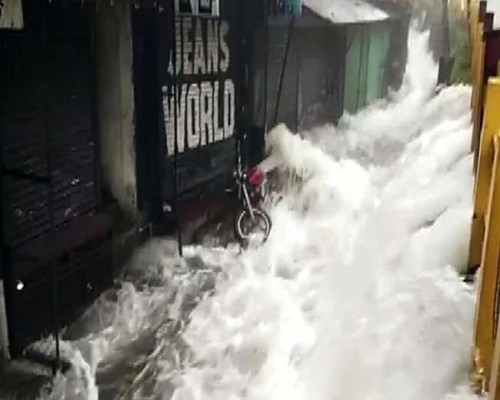
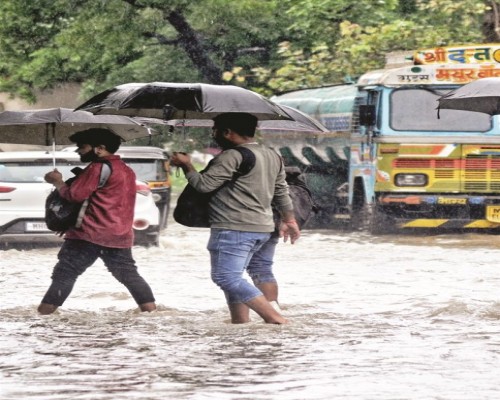
Officials have stated that ponds are important for groundwater recharge and flood control. During heavy rainfall, ponds help store excess rainwater and reduce pressure on drains and low-lying areas. If these ponds are not protected, urban and rural settlements may face increased waterlogging and groundwater depletion.
In recent years, the importance of rainwater harvesting and traditional water bodies has increased due to irregular rainfall patterns and rising water demand. Ponds play a crucial role in maintaining local water balance. They help recharge hand pumps, wells and borewells and also support animals, agriculture and village ecology.
However, the ground situation shows that many ponds are still treated as unused land. Encroachment, dumping of debris and lack of proper fencing have weakened their role. Experts and residents believe that unless strict and continuous action is taken, temporary drives will not be enough to protect these water bodies.
The administration has also faced legal and procedural challenges in some cases. Certain encroachment-related matters are pending before courts, while in other cases land records and on-ground possession require verification. Officials have said that action will be taken after proper identification of pond land and completion of necessary legal formalities.
The matter has also reached monitoring bodies and higher authorities. Earlier, complaints regarding ponds were placed before official forums, after which directions were issued for inspection and restoration. Despite this, reports suggest that many ponds have not been fully freed from encroachment or restored to their original condition.
The district has nearly 200 ponds in rural areas under certain administrative blocks, and several of them require urgent attention. Officials have acknowledged that some ponds are under legal dispute, while others need cleaning, demarcation and protection from fresh encroachment.
Local residents say that merely removing encroachment once is not sufficient. They have demanded proper fencing, regular cleaning, plantation around ponds, installation of information boards and strict action against those who dump waste or occupy pond land. Community participation, they believe, is also necessary to protect these traditional water sources.
The issue of pond protection is directly connected with rainwater conservation. If ponds are revived properly, they can store rainwater, improve groundwater levels and reduce flooding in nearby areas. But if they remain neglected, the district may face both water scarcity and waterlogging problems in the future.
The present situation highlights the need for a sustained and transparent pond management system. Every pond should be properly demarcated, geo-tagged and monitored. Its area, ownership status, encroachment condition and restoration progress should be recorded digitally so that responsibility can be fixed.
Pond conservation must not remain limited to paperwork or seasonal campaigns. It requires continuous administrative supervision, public awareness and strict enforcement. With the monsoon season increasing the importance of water storage, timely protection of ponds has become essential for long-term water security.
The condition of several ponds shows that rainwater conservation is not only about building new harvesting structures but also about protecting existing natural water bodies. Unless ponds are freed from encroachment, cleaned and restored, the goal of effective water conservation will remain incomplete.