
Strict Action on Pollution Violations: Environmental Fines Imposed on Six Thermal Power Plants
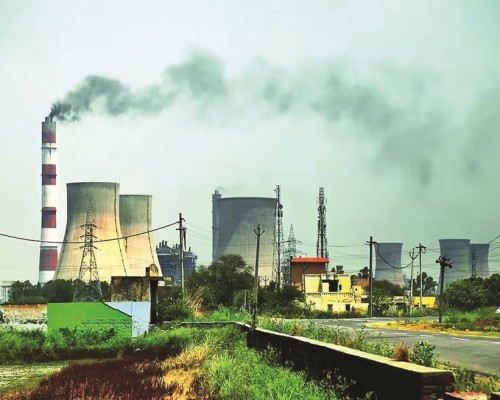
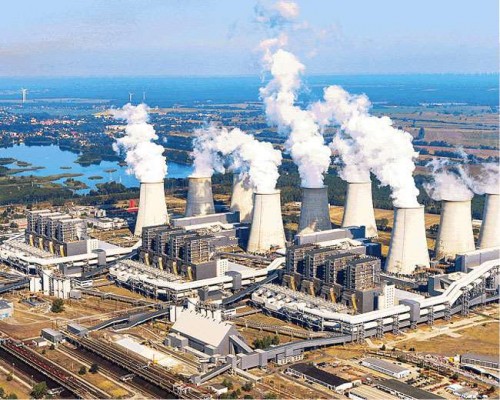
Regulatory authorities have intensified enforcement measures against industrial pollution, imposing significant environmental penalties on multiple thermal power plants for non-compliance with prescribed norms. The action has been taken by the Commission for Air Quality Management (CAQM), which identified serious violations related to biomass co-firing regulations in coal-based power plants operating within a 300-kilometre radius of the National Capital Region (NCR).
A total environmental compensation of approximately ₹61.85 crore has been levied on six thermal power plants for failing to adhere to mandated guidelines. These plants were required to use a minimum percentage of biomass—primarily pellets made from agricultural residue such as stubble—alongside coal in their fuel mix. The policy aims to reduce air pollution caused by stubble burning and promote sustainable energy practices. However, investigations revealed that the concerned plants did not meet even the minimum target of biomass blending, which had been set at less than three percent for the relevant period.
The highest penalty, amounting to ₹33.02 crore, has been imposed on Talwandi Sabo Power Plant in Punjab. Other plants penalized include Panipat Thermal Power Station (₹8.98 crore), Deenbandhu Chhotu Ram Thermal Power Plant in Yamunanagar (₹6.69 crore), Rajiv Gandhi Thermal Power Plant in Hisar (₹5.55 crore), Guru Hargobind Thermal Power Plant in Bathinda (₹4.87 crore), and Harduaganj Thermal Power Station in Aligarh (₹2.74 crore).
The enforcement action stems from violations observed during the financial year 2024–25, when these facilities failed to comply with mandatory co-firing norms. Under government regulations, thermal power plants are required to utilize at least five percent biomass pellets derived from agricultural residue, particularly paddy stubble, as part of their fuel consumption. This initiative is a critical component of broader efforts to tackle seasonal air pollution caused by stubble burning in northern India.
The CAQM has directed all defaulting plants to deposit the imposed penalty by April 15, 2026, and submit proof of compliance. The commission also noted that these entities had not demonstrated sufficient effort or seriousness in adhering to regulatory instructions, despite clear directives and ample time for implementation.
The move signals a stricter regulatory stance aimed at ensuring accountability and compliance within the power sector. It also reinforces the importance of integrating cleaner practices into industrial operations to address environmental challenges. Authorities are expected to continue close monitoring of such facilities and may initiate further action if compliance levels do not improve.
This development highlights the increasing emphasis on environmental governance and the urgent need for industries to align with sustainability mandates. Failure to comply not only results in financial penalties but also contributes to long-term environmental degradation, particularly in regions already grappling with severe air quality issues.