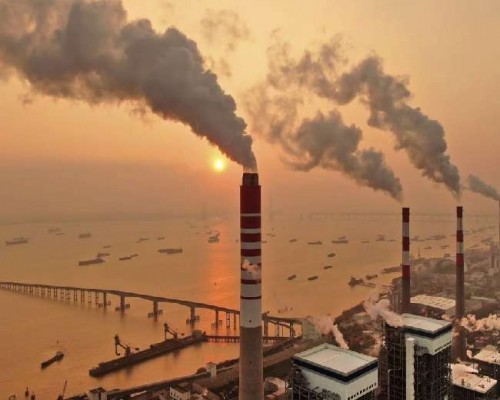

World Faces Severe Crisis if Greenhouse Gas Emissions Are Not Curbed, Warns Global Climate Study
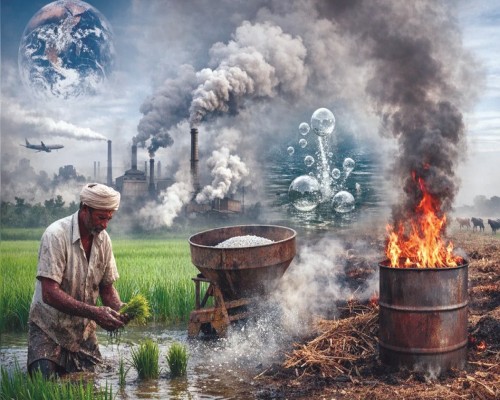
A new international climate assessment has warned that the world could face a severe humanitarian and environmental crisis by the end of the century if greenhouse gas emissions are not significantly reduced. The report highlights that rising global temperatures could trigger widespread food insecurity, extreme weather events, and large-scale environmental disruptions.
According to the study, continued high levels of greenhouse gas emissions may push the global climate toward dangerous thresholds. If current trends continue, the world could face a serious crisis by the year 2100, affecting billions of people and placing enormous pressure on food systems, ecosystems, and global economies.
The findings suggest that more than 1.16 billion people could be exposed to severe climate risks, including extreme heat, droughts, and declining agricultural productivity. Among them, over 600 million children may be particularly vulnerable to climate-related challenges.
Researchers warn that climate change could significantly increase the risk of food insecurity in the coming decades. If greenhouse gas emissions remain unchecked, more than 2 billion people could face food shortages and nutrition-related challenges by the end of the century.
The study emphasizes that climate change is already affecting millions of people worldwide. In 2025 alone, approximately 295 million people experienced severe hunger, a situation driven by a combination of climate-related disasters, conflict, displacement, and economic instability.
Scientists note that the impacts of climate change are likely to intensify in the coming decades, particularly in regions that already face economic or environmental vulnerabilities. The report identifies Africa as one of the regions most at risk, where rising temperatures and changing rainfall patterns could threaten agricultural production and food security.
Projections suggest that by 2099, African regions could experience severe food shortages if climate mitigation efforts are not strengthened. Changes in rainfall patterns, rising temperatures, and environmental degradation could significantly reduce agricultural yields and increase the risk of famine.
The report also highlights the growing importance of advanced analytical tools in studying climate risks. Researchers used sophisticated modelling techniques, including artificial intelligence-based predictive systems, to estimate the potential impact of climate change on food systems and human populations.
These models integrate multiple sources of climate and socio-economic data, enabling scientists to simulate possible future scenarios. Such predictive tools help governments and policymakers understand the scale of potential risks and design strategies to reduce climate-related vulnerabilities.
Experts stress that immediate action is required to reduce greenhouse gas emissions and transition toward sustainable energy systems. Investments in renewable energy, climate-resilient agriculture, and sustainable development strategies are considered essential for mitigating the risks associated with global warming.
The study also emphasizes the need for international cooperation to address climate challenges. Coordinated global policies, technological innovation, and financial support for vulnerable countries will be critical to limiting the long-term impacts of climate change.
Without strong mitigation measures, scientists warn that the combined effects of climate change—including rising temperatures, extreme weather, water shortages, and food crises—could create complex humanitarian challenges across multiple regions.
However, researchers note that the worst outcomes can still be avoided if governments take decisive action to reduce emissions, strengthen climate adaptation strategies, and promote sustainable development.
The report concludes that addressing climate change is not only an environmental challenge but also a critical global priority for ensuring food security, economic stability, and the long-term well-being of human societies.